
A slippery deck is almost never a problem with the timber. It is a thin biological film on the surface, and once that is understood the fix becomes obvious.
What makes a deck slippery
Algae, lichen and mould. These form a film that becomes extremely slick when wet, and they grow anywhere that stays damp and shaded.
Wet leaves, which are a serious hazard in autumn and are frequently underestimated.
Pollen and general dirt, which feed the algae.
Standing water where the deck has no fall or the gaps have blocked.
Frost, which no treatment prevents.
Note what is not on the list. Grooved boards are not meaningfully less slippery than smooth ones, and the grooves hold the debris that causes the problem.
Cleaning it properly
Start by clearing the deck completely, including the gaps between boards, which trap debris and stop water draining.
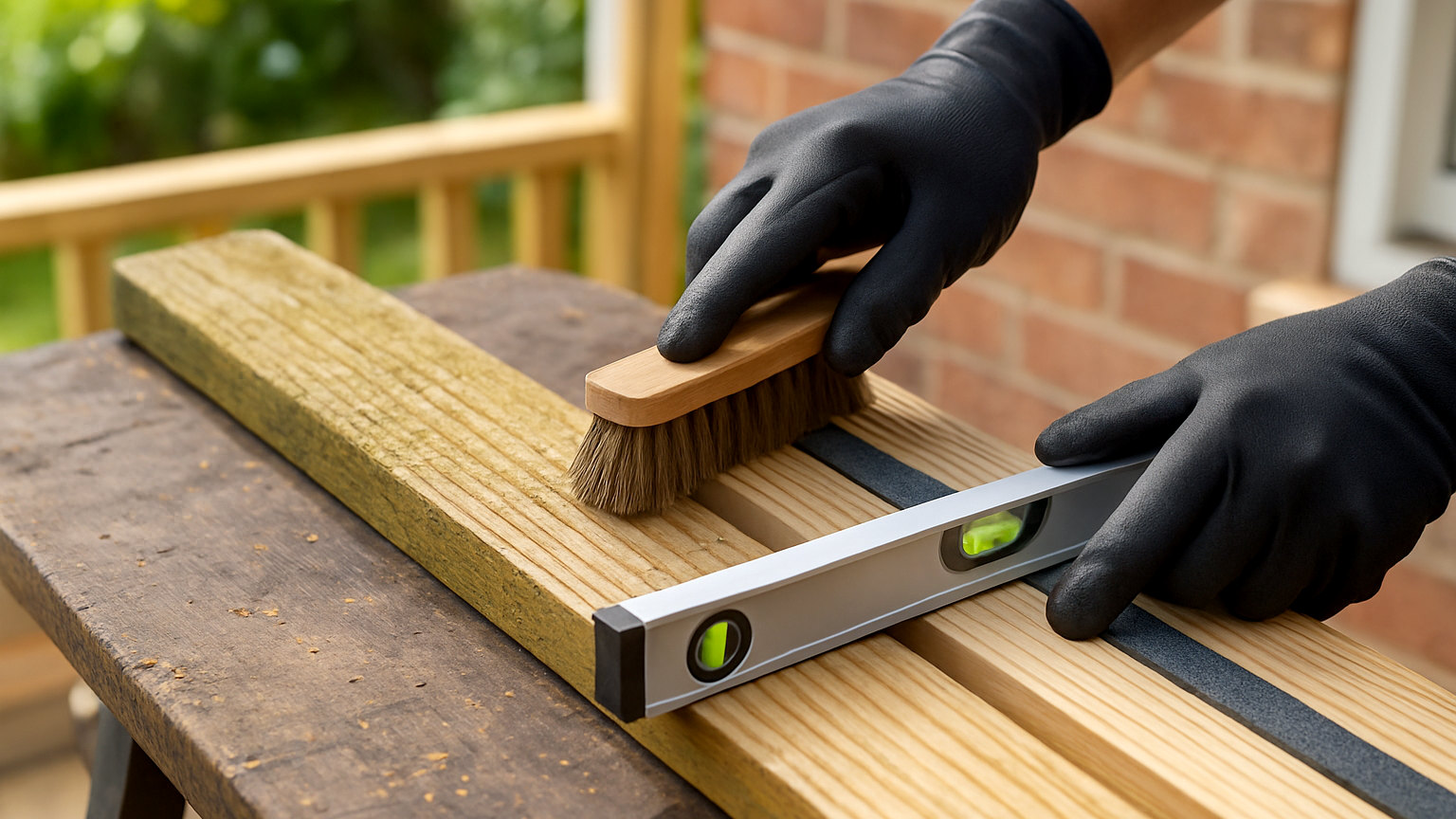
Sweep thoroughly, then use a stiff brush along the grain with a proprietary deck cleaner or a hot detergent solution.
Follow with a fungicidal wash, and let it dwell as the instructions say. Brushing removes the visible growth; the fungicide kills what is left in the timber and delays regrowth considerably.
Rinse thoroughly and let the deck dry fully.
Pressure washing, carefully
A pressure washer is effective and does real damage when used badly.
Use a wide fan nozzle, keep the lance well back, and move continuously along the grain.
A narrow jet held close raises the grain and tears soft fibres out of softwood, leaving a rough surface that holds more dirt and grows more algae than before.
Never use a turbo or pencil jet on decking.
Expect to sand lightly afterwards, and allow several dry days before applying any finish.
Stopping it coming back
The aim is to keep the surface dry and in the light.
Cut back overhanging branches and shrubs so sun and air reach the boards.
Keep the gaps between boards clear so water drains through rather than sitting.
Clear leaves promptly in autumn rather than letting them lie.
Check the fall still works, and deal with any hollow that holds a puddle.
Move planters occasionally, since the patch beneath stays permanently damp and is where growth starts.
Apply a finish containing a biocide, and reapply on schedule rather than when the deck looks bad.
Anti-slip strips and inserts
These genuinely work and are worth fitting in the right places.
Inserts are aggregate faced strips set into routed grooves in the board, giving a flush surface and a permanent grip.
Surface strips screw or bond on top of the board and are quicker to fit but create a small trip edge.
Anti-slip paint or coating containing a fine aggregate covers the whole surface and needs redoing periodically.
Fit them where they matter most rather than everywhere: every step tread nose, the threshold at the door, and any regular walking route. Steps are where the great majority of deck falls happen.
Mesh and matting
Rolls of anti-slip mesh can be laid over an existing deck and fixed down.
They are effective and cheap, and they look like what they are. Reasonable as a temporary measure or on a utility area, less so on a deck you sit out on.
They also trap debris underneath, so lift and clean them periodically.
When the boards are past it
Where the surface has been pressure washed rough, or the timber is furred, splitting and holding water, cleaning gives only a short reprieve.
Sanding back to sound timber and refinishing restores grip for several years, and is worth doing on a sound frame.
Where boards are cupped, split and soft, replacing the boards on a good frame is a straightforward job and solves it permanently.
A realistic routine
Clear leaves and debris through autumn and winter.
Wash and treat with a fungicidal cleaner each spring.
Recoat every one to three years depending on exposure.
Keep the anti-slip strips on the steps in good condition, and replace them when the aggregate has worn smooth.


