
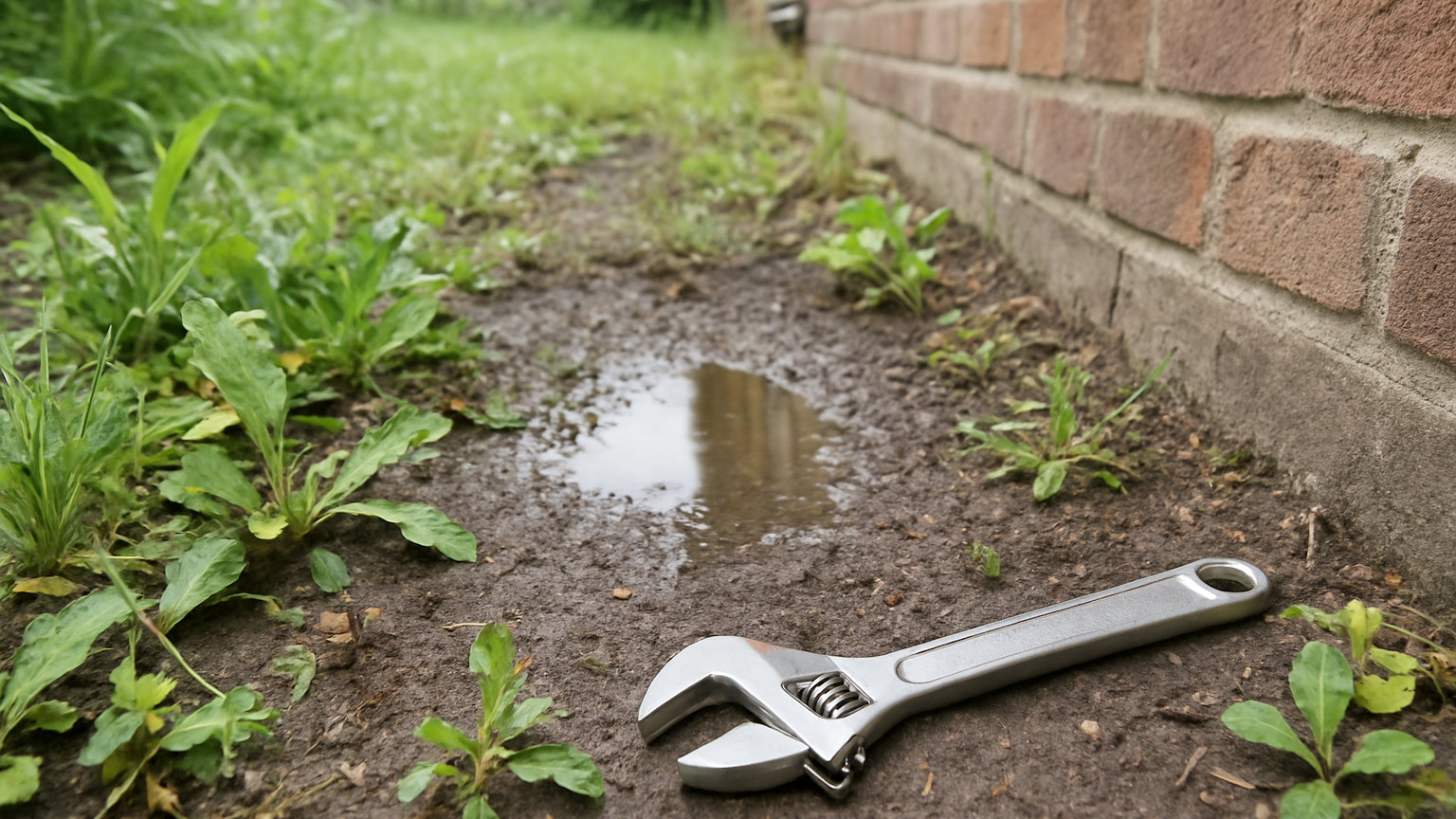
The ground under a deck is invisible once the boards go down and impossible to get at afterwards, which makes it the part of the job most worth doing properly.
What actually damages a deck from below
Still, damp air. A frame in a sealed, humid void rots from the underside while the top surface looks perfect.
Standing water. Ground that holds water keeps the timber closest to it permanently wet.
Vegetation. Weeds and brambles push up between boards, and bramble in particular will find its way through anything.
All three are dealt with before the frame is built, or not at all.
Clearing the ground
Strip off turf and the top layer of organic material across the whole footprint, plus a margin around the edge.
Remove perennial weed roots properly rather than turning them over. Bindweed, couch grass, ground elder and bramble all regrow from fragments.
Take the level down enough that there will be a genuine air gap under the joists once the frame is built.
Grub out any tree seedlings and cut back roots only where they are small and the tree is not significant.
Levelling and falls
The ground does not need to be flat, since the frame carries the level, but it does need to be even enough that nothing touches.
Grade the ground so water runs away from the house rather than collecting under the middle of the deck.
Fill hollows that would hold puddles, and remove high spots that would touch a joist.
Compact any made up ground properly, since loose fill settles and takes pad foundations with it.
Weed membrane
Lay a woven landscape membrane over the whole area, overlapping joins generously and turning it up slightly at the edges.
Use a permeable woven membrane rather than plastic sheet. Plastic stops water draining away and creates exactly the standing water problem you are trying to avoid.
Pin it down so it does not shift while the frame is being built.
Cut around post positions rather than leaving gaps, since weeds find any opening.
Gravel over the membrane
A layer of 50mm or so of coarse gravel over the membrane is worth the effort.
It holds the membrane down, drains freely, suppresses anything that gets through, and stops mud splashing up onto the underside of the boards.
It also makes the void under the deck much less attractive to rats, which prefer soft ground they can burrow in.
Use an angular gravel rather than rounded pea shingle, which migrates.
Drainage
Where ground is heavy clay or already prone to sitting wet, deal with it before building.
A shallow land drain running to a soakaway, or simply regrading so water sheds to one side, is far easier now than later.
Check where the deck will discharge rainwater running off the boards, and make sure it is not against a wall or a fence post.
Never run deck drainage towards the house.
Keeping air moving
This matters as much as anything else.
Leave a gap of at least 100mm between the ground and the underside of the joists, and more where you can.
Do not enclose the deck edges completely. Where skirting or fascia is fitted for appearance, use a slatted or vented design rather than a solid panel.
Leave airflow paths across the deck, not just around the edge, so air can actually move rather than sitting in a pocket.
Avoid banking soil or planting right up against the deck edge, which blocks ventilation and holds moisture.
Foundations sitting on the ground
Concrete pads, slabs or pier blocks should sit on compacted ground or a compacted sub-base, not on topsoil or membrane alone.
Cut the membrane where a pad lands, place the pad on solid ground, and patch the membrane around it.
Check each pad is level and at the correct height before anything is built on it, since adjusting later means dismantling.
Things to deal with now
Move or extend any downpipe that discharges into the area.
Reroute a gully or make provision to keep it accessible.
Run any cable for deck lighting in conduit while the ground is open, since adding it afterwards means lifting boards.


