
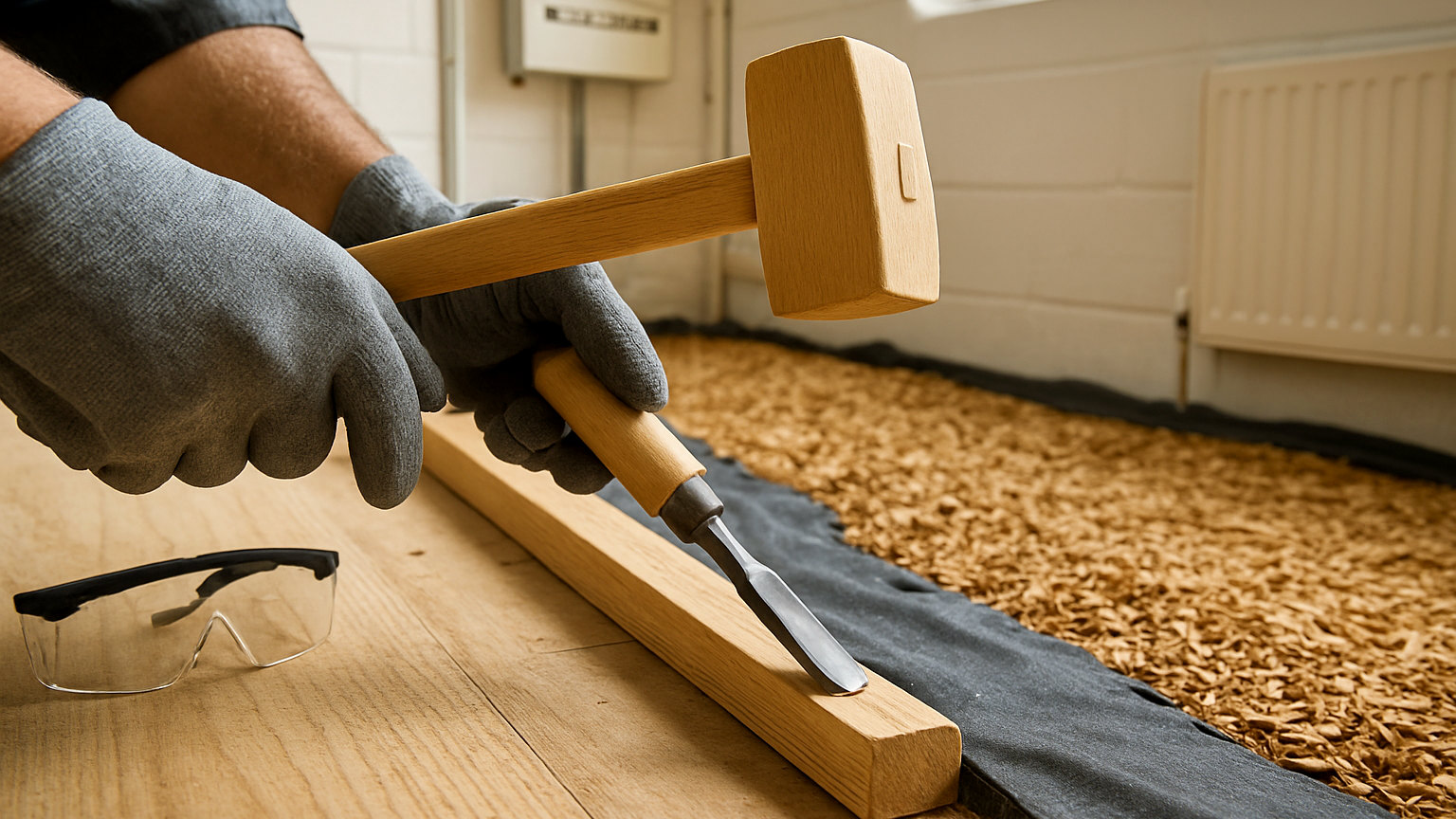
A bark path costs a fraction of a paved one, goes down in an afternoon and suits an informal garden. It also disappears into the soil if the groundwork is skipped.
Where it works
Woodland and informal areas, between borders, and around a vegetable plot.
Anywhere a hard path would look wrong or cost too much.
On routes used in dry weather rather than daily in winter.
It is soft underfoot, quiet, permeable, and it suppresses weeds as a side effect.
Where it does not
Main routes to a front door, where it treads into the house.
Anywhere a wheelchair, pushchair or heavily loaded barrow is used, since it gives underfoot.
Steep slopes, where it washes downhill in heavy rain.
Deeply shaded permanently wet areas, where it breaks down quickly and grows fungi.
Choosing the material
Bark chippings are the usual choice, graded by size. Larger grades last longer and are more comfortable underfoot than fine bark.
Woodchip from a tree surgeon is far cheaper, frequently free, and breaks down faster. It may contain leaf and green material, which composts quickly.
Play grade bark is screened and certified for safety surfacing and costs considerably more.
Avoid anything containing sawdust or fines, which compacts and holds water.
Fresh woodchip is fine on a path, though it draws nitrogen from the soil if dug in, so keep it on the surface.
Preparing the ground
Strip the turf and the top layer of vegetation along the route.
Remove perennial weed roots properly, since bramble, bindweed and couch grass all push through.
Dig out to around 100mm to 150mm below the surrounding level, so the finished bark sits roughly flush rather than heaped up.
Level and lightly firm the base.
Membrane
Lay a permeable woven landscape membrane over the whole route, overlapping joins by at least 150mm.
Use a permeable membrane rather than plastic sheet. Plastic stops water draining and turns the path into a channel.
Turn the membrane up slightly at the edges and pin it down.
The membrane stops the bark mixing into the soil, which is what turns an unlined bark path into a muddy strip within two seasons.
Edging
Bark migrates, so the edge does the work.
Timber boards on stakes, steel or plastic edging, or log roll all work.
The edge should stand proud of the finished bark by around 20mm to 30mm, so the material is contained.
Use pressure treated timber rated for ground contact, and treat it as a component that will need replacing eventually.
On a curve, steel or plastic edging follows the line far more easily than timber.
Depth
Spread the bark to around 50mm to 75mm deep.
Deeper is not better. It shifts underfoot, feels unstable and takes far more material.
Rake it level rather than compacting it.
Calculate volume as length times width times depth. A path 10 metres by 1 metre at 75mm needs three quarters of a cubic metre, which is around three bulk bags.
Maintenance
Expect to top up annually, since bark composts down and gets carried away on shoes.
Rake it level periodically and redistribute from the edges back to the middle.
Hand weed the seedlings that germinate in the bark itself, which no membrane prevents.
Where it becomes compacted and dark, turn it or replace the top layer.
Expect a full replacement every three to five years, and the old material makes excellent mulch for borders.
Practical points
Buy in bulk bags rather than small sacks, which cost several times as much per cubic metre.
Have it tipped as close to the route as possible, since barrowing bark is light but bulky.
Lay it on a dry day, since wet bark is heavy and clumps rather than raking level.
Stepping stones within bark
Setting occasional slabs or log rounds into a bark path gives firm footing on the most used line while keeping the informal appearance.
Bed them on a compacted sub-base rather than directly on the membrane, or they will sink and rock.
Set them slightly below the bark level so they are not a trip hazard as the surrounding material settles.


