
The spread in fence lifespans is enormous, and almost all of it comes down to three things: the timber treatment, how the posts were set, and whether water is allowed to sit anywhere.
Realistic lifespans
These assume ordinary conditions and basic maintenance.
Waney lap panels, dip treated: five to eight years.
Waney lap panels, pressure treated and maintained: eight to twelve years.
Closeboard panels: ten to fifteen years.
Site built close board: fifteen to twenty five years, with individual boards replaced along the way.
Timber posts, pressure treated, set properly: ten to twenty years.
Timber posts, dip treated or set badly: five to ten years.
Concrete posts and gravel boards: thirty years or more, frequently outlasting several sets of panels.
Composite panels: twenty years plus, with little maintenance.
What shortens a fence most
Timber in contact with soil. Panels sitting on the ground and posts surrounded by soil and mulch stay permanently damp, and no treatment survives that indefinitely.
Concrete that holds water. A post set in a dished concrete collar sits in a puddle for its whole life.
Shallow posts. These fail mechanically rather than by rotting, usually in the first serious gale.
Untreated cut ends. Every cut exposes untreated timber, and end grain absorbs water far faster than a face.
Solid panels on an exposed site, which take wind loads they were never designed for.
Heavy climbers, which add weight, increase wind area and hold moisture against the timber.
What extends it most
Pressure treated timber specified for the correct use class, with ground contact grades used below ground.
Gravel boards keeping panels clear of the soil.
Drainage under the post and concrete sloped away above ground.
Post caps and capping rails protecting end grain from above.
Regular retreatment, concentrating on the bottom of the fence and the cut ends.
Keeping planting and soil clear of the base.
Signs a fence is near the end
Posts that flex noticeably at ground level when pushed.
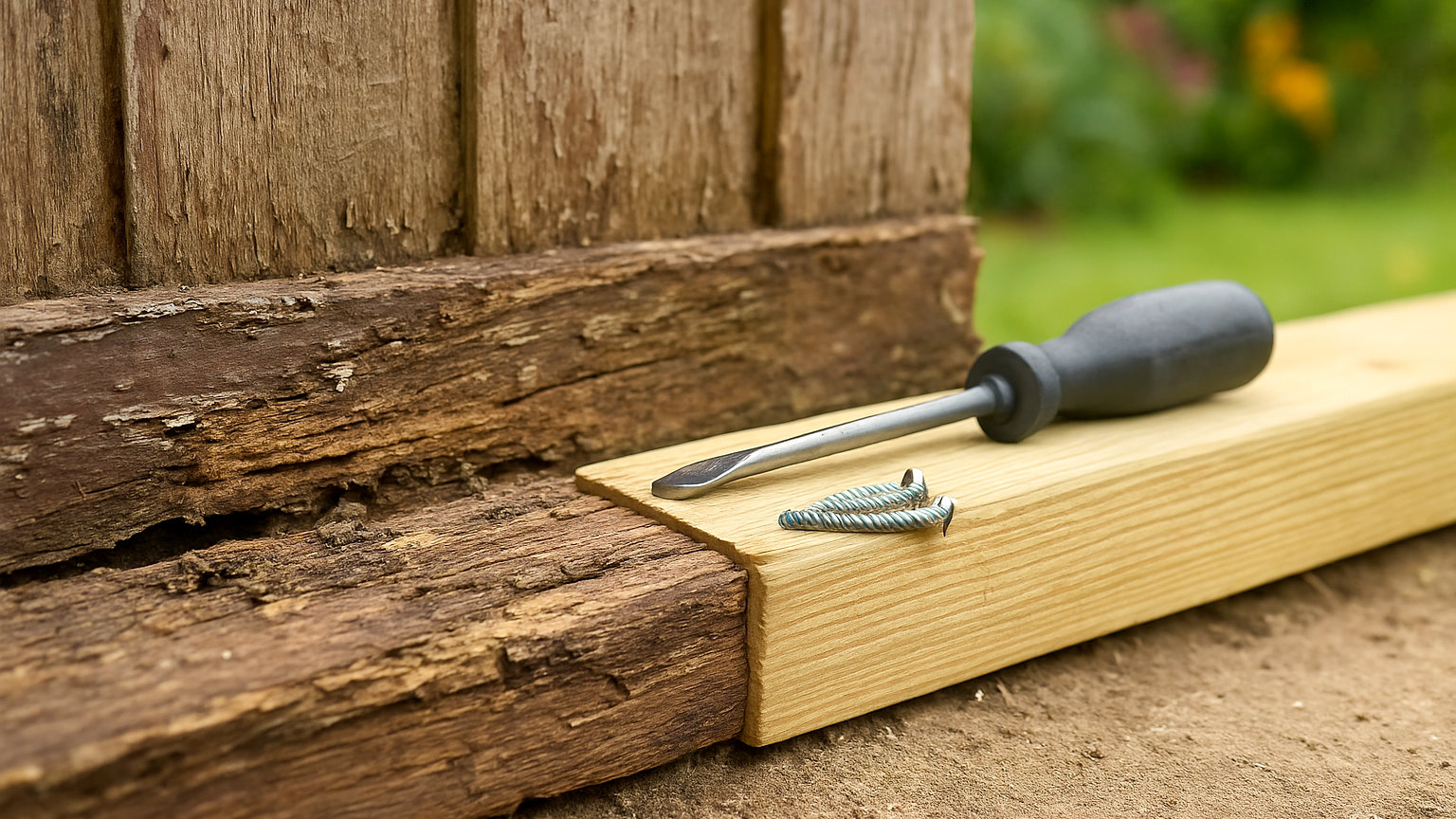
Soft timber that takes a screwdriver easily at the base.
Several posts failing within a year or two of each other, which means the whole run is the same age and the same condition.
Panels with frames coming apart at the corners, or slats detaching in numbers.
Widespread splitting and grey fibrous surfaces that no longer take a coating.
Concrete posts with cracks running from the slots or with reinforcement showing.
Guarantees and what they cover
Pressure treated timber is frequently sold with a fifteen or twenty five year guarantee against rot and insect attack, and the figure is used heavily in marketing.
Read what it actually covers. Guarantees almost always apply to the timber only, not the fence, and they exclude mechanical failure, storm damage and anything cut on site without the cut end being treated.
Many are conditional on the timber being used within the correct use class, so a panel grade post used in the ground voids the cover.
Claims usually require the original receipt, which is worth filing with the rest of the paperwork for the house.
Treat the guarantee as a statement of expected quality rather than an insurance policy.
Repair or replace
Repair when the failure is isolated, the rest of the run tests sound, and the fence is comfortably within its expected life.
Replace when the same section has failed twice, when several posts are soft, or when you are spending a weekend a year on it.
Doing a whole run at once is disruptive but usually cheaper per metre than repeated repairs, and it is the moment to fix whatever caused the early failure.
Getting value from a replacement
Concrete posts and gravel boards with timber panels is the combination that gives the longest practical life for the money, because the parts that rot are cheap and easy to change and the parts that hold the fence up never rot at all.
Spending the extra on longer posts and better treatment is almost always worth it, since the labour of building the fence is the same either way.
Where the budget is limited, put it into posts and gravel boards rather than into the panels.


