
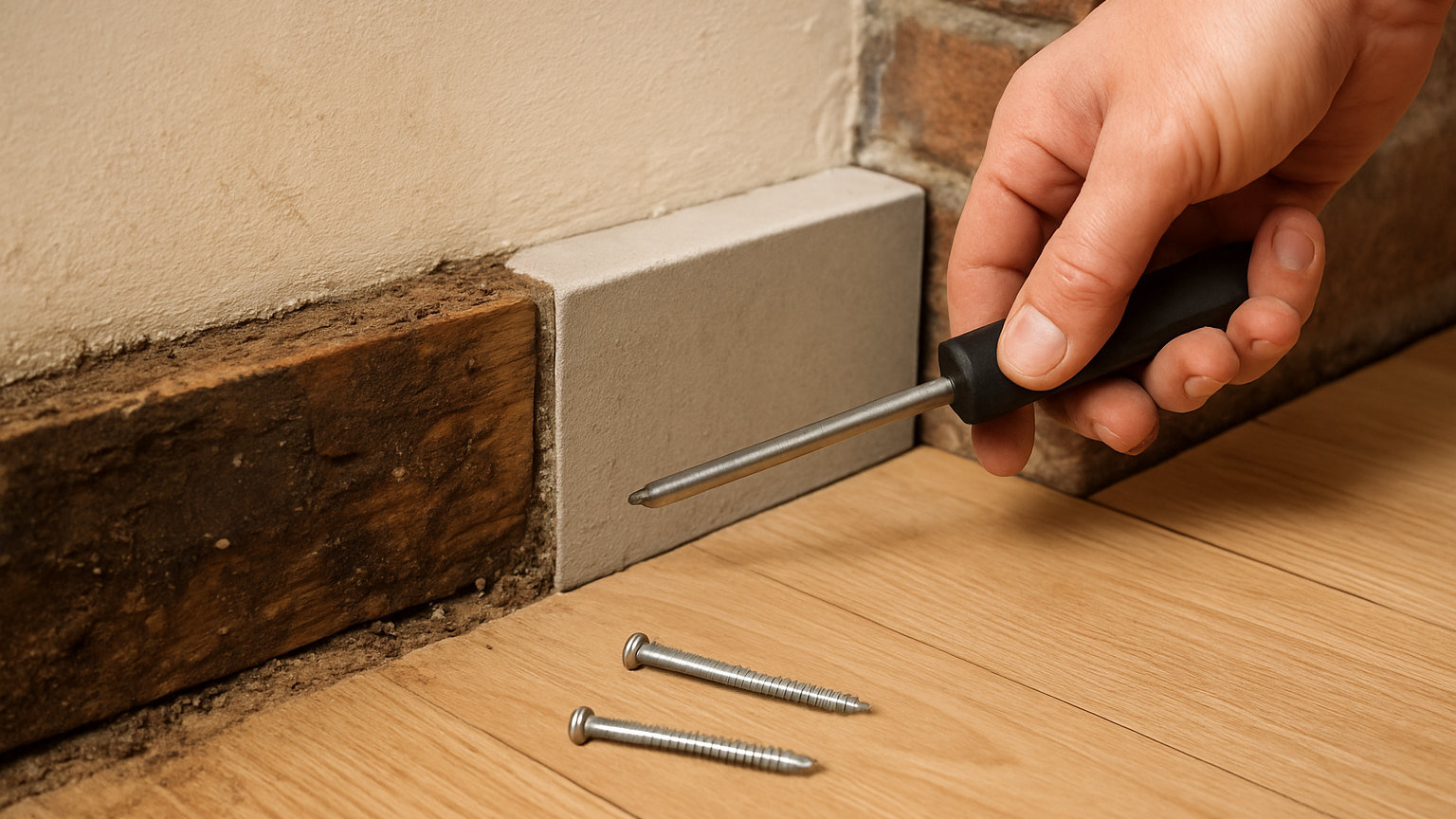
A gravel board is a plain strip along the bottom of a fence, usually 150mm deep, and it is the component most often left out to save money. It is also the reason some fences last twenty years and others rot from the bottom in six.
What the board is actually for
It keeps the panel out of contact with the ground. Timber in contact with soil wicks moisture continuously and never dries, which is precisely the condition rot needs.
The board takes that punishment instead, and it is designed to be sacrificial. When it eventually fails, you replace a cheap strip rather than a panel.
It also closes the gap at the bottom of the fence, which matters for pets, for keeping leaves and rubbish from blowing through, and for appearance on an uneven lawn.
On a sloping or terraced garden it doubles as a low retaining element, holding soil or mulch back from the panel.
Timber gravel boards
Usually 150mm by 22mm pressure treated softwood, fixed between posts.
Cheap, easy to cut and easy to replace, and they match a timber fence visually.
Specify a use class rated for ground contact, which is a higher grade than the panels need. An ordinary dip treated board in soil lasts a couple of years.
Expect to replace them periodically, which is the point of them.
Concrete gravel boards
Precast reinforced concrete, normally 150mm deep, slotting between concrete posts or fixed to timber posts with brackets.
They do not rot at all and will outlast several sets of panels.
They are heavy, and a full length board is a two person lift. They also need a level bed, since concrete does not flex to follow the ground.
On a boundary that has to last, concrete boards with concrete posts and timber panels is the most durable common combination.
Fitting between concrete posts
Boards drop into the slot from above before the panel goes in, so they must be fitted as the fence is built rather than added later without lifting panels.
Level the ground along the line first. Any high spot stops the board seating and leaves the panel above sitting proud.
Check each board is level along its length, not just that it fits.
Fitting to timber posts
Timber boards are screwed to a cleat or batten fixed to the inside face of each post, or fixed directly into the post end grain, which is weaker.
Use a cleat where you can. It gives a much better fixing and it makes replacement straightforward later.
Use stainless or heavily galvanised screws. Ordinary screws corrode quickly in treated timber in ground contact, and modern preservatives are aggressive to plain steel.
Leave a small gap between board and panel so water is not trapped between the two.
Dealing with slopes and uneven ground
Ground is never flat along a fence line, and the board is where that is resolved.
On a gentle fall, step each board down slightly at each post so the panels stay level and the gaps stay small.
On a steeper fall, use two boards stacked at the low end, or a deeper 300mm board, rather than leaving a triangular gap.
Where soil is retained behind the board, remember it is a fence component and not a retaining wall. Anything more than about 150mm of retained soil needs a proper retaining structure, not a gravel board, or the fence will be pushed over.
Keeping them working
Clear soil, mulch, leaves and planting away from the board once or twice a year, since the board can only protect the panel if it is not itself buried.
Check timber boards each spring with a screwdriver and replace them before they collapse and let the panel down onto the ground.
Treat the board when you treat the rest of the fence, paying attention to cut ends and the back face.
Retro-fitting to an existing fence
Possible where the panels can be lifted, and worth doing if the panels are still sound but sitting in the soil.
Lift the panel, dig out the soil to create the space, fit cleats and a board, then refit the panel higher. The extra height at the top is usually absorbed by the post, though check it does not take the fence over the planning limit.


