
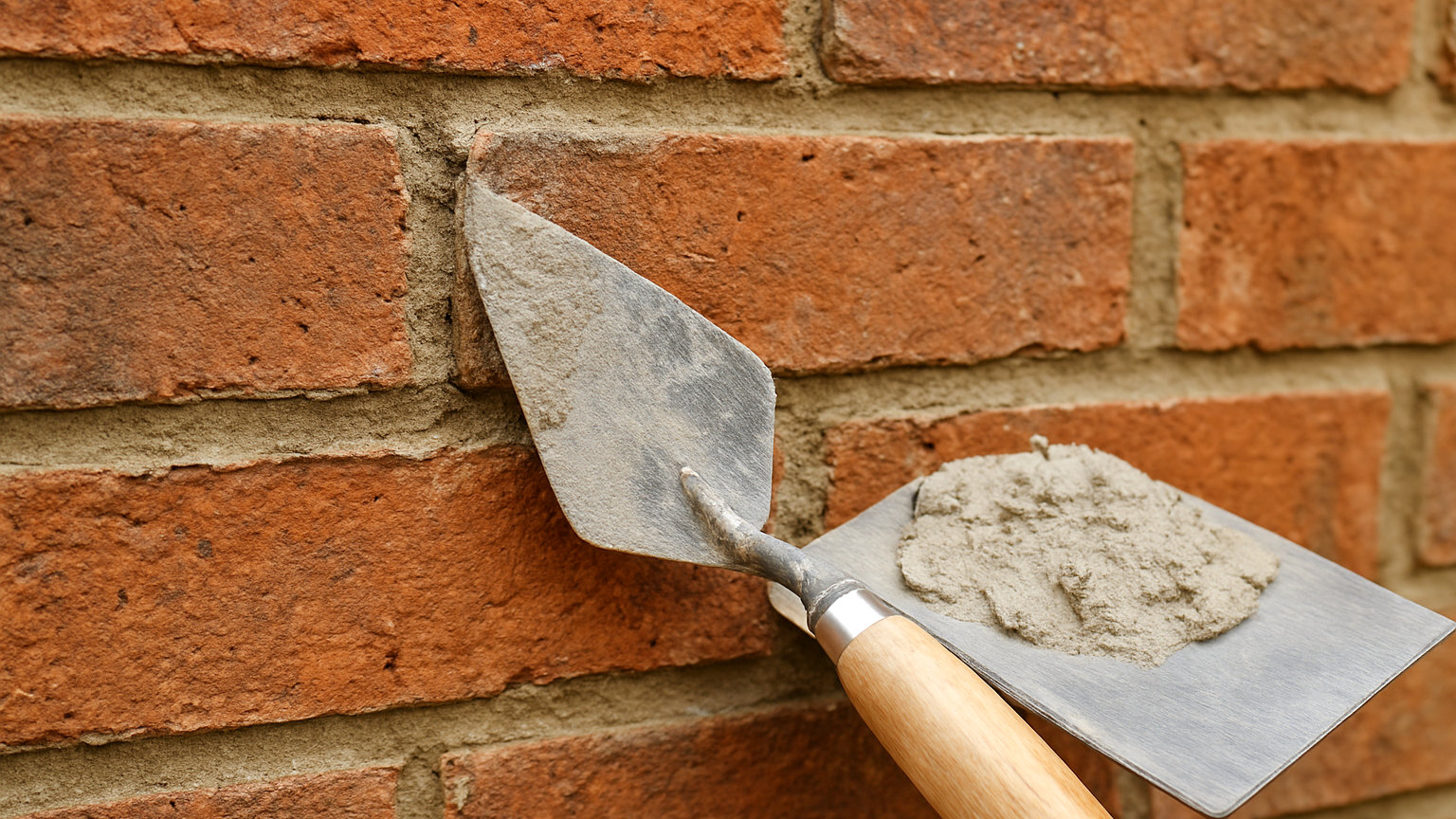
Repointing is a straightforward job that is regularly done badly, and the two common failures are not raking out deep enough and using a mortar far too strong.
When repointing is needed
Mortar that has receded noticeably behind the brick face.
Joints that are soft, crumbling or can be raked out with a finger.
Gaps letting water into the wall.
What is not a reason is appearance alone. Sound mortar that looks weathered is doing its job, and repointing a wall that does not need it damages the bricks in the process.
Test a few joints with a screwdriver. If the mortar resists, leave it.
Why strong mortar causes damage
Mortar should always be weaker than the brick, so movement and moisture are taken by the joint rather than the unit.
A hard cement pointing applied to an older soft brick wall traps moisture in the brick and forces it to escape through the brick face instead.
The result is spalling, where the brick face blows off, and it is far more expensive to fix than the pointing ever was.
Cement pointing on a lime built wall is one of the commonest causes of damage to older masonry.
Matching the mortar
For ordinary modern brickwork above the damp course, 1 cement : 1 lime : 6 sand is a sensible general mix.
For older or soft bricks, use a weaker mix with more lime, or a lime only mortar.
Below the damp course, 1 cement : half lime : 4 sand.
Colour comes mainly from the sand. Take a sample of the existing mortar to the merchant and try local building sands.
Mix test batches, let them dry fully, and compare. Wet mortar is always darker than cured mortar, and judging colour wet is how mismatches happen.
Raking out
This is most of the work and the part that decides the result.
Rake the joints to a depth of at least twice the joint width, so around 20mm to 25mm for a 10mm joint.
A shallow scrape leaves nothing for the new mortar to grip and it falls out within a couple of years.
Use a plugging chisel and a small hammer for control, or a raking tool.
An angle grinder is fast and dangerous to the brickwork, since it takes the arrises off and leaves visible cuts. If used at all, it should only follow the joint centre and be finished by hand.
Remove dust and loose material thoroughly with a brush.
Preparing the wall
Dampen the joints before pointing, so the brick does not suck water out of the fresh mortar.
The wall should be damp, not running wet.
In hot weather, damp it again as you work along.
Deal with the cause of any failure first. Repointing under a missing coping, or where soil is banked against the wall, is temporary.
Filling the joints
Use a pointing trowel or a pointing iron and a hawk.
Fill the perpends first, then the bed joints, pressing the mortar firmly right to the back of the raked joint in layers rather than one deep fill.
Compact it well, since air pockets are where water sits and frost works.
Work in small areas so the mortar reaches the right firmness before finishing.
Finishing the joint
Wait until the mortar is thumbprint hard, firm but still workable.
Match the existing profile. A bucket handle joint is the best general choice outdoors because the tool compacts the surface and it sheds water.
Weatherstruck joints also shed water well.
Avoid recessed or raised strap pointing on a garden wall, which hold water.
Brush lightly across the joints once the surface has dried enough not to smear.
Protecting the work
Cover the wall in hot sun, rain and wind while the mortar cures.
Do not point in frost or when frost is forecast within twenty four hours.
Keep it damp in hot weather for a couple of days so it cures rather than dries.
Practical points
Work in sections you can complete in a session, since a break in the middle of a run shows.
Keep the brick faces clean, and remove smears before they set.
Wear gloves and eye protection. Cement and lime burn skin, and raking out sends fragments at the face.
Dry cutting or grinding mortar produces silica dust, so use water suppression or proper respiratory protection.


