
Painting metal is a question of what is underneath. Get the rust removal and the primer right and almost any topcoat works; get them wrong and the best paint in the world will bubble within a year.
Identify the metal
This decides the primer, and the wrong primer simply will not stick.
Mild steel, which is most railings and gates, rusts and needs a rust inhibiting primer.
Galvanised steel has a zinc coating. Ordinary primers do not adhere to it and it needs a mordant solution or a specific galvanised metal primer.
Cast iron, common on older railings and gates, is brittle and often carries many layers of old paint.
Aluminium does not rust but oxidises, and needs an etch primer.
A magnet distinguishes ferrous from non-ferrous in a second.
Removing rust
This is the work, and shortcuts here are why metal jobs fail.
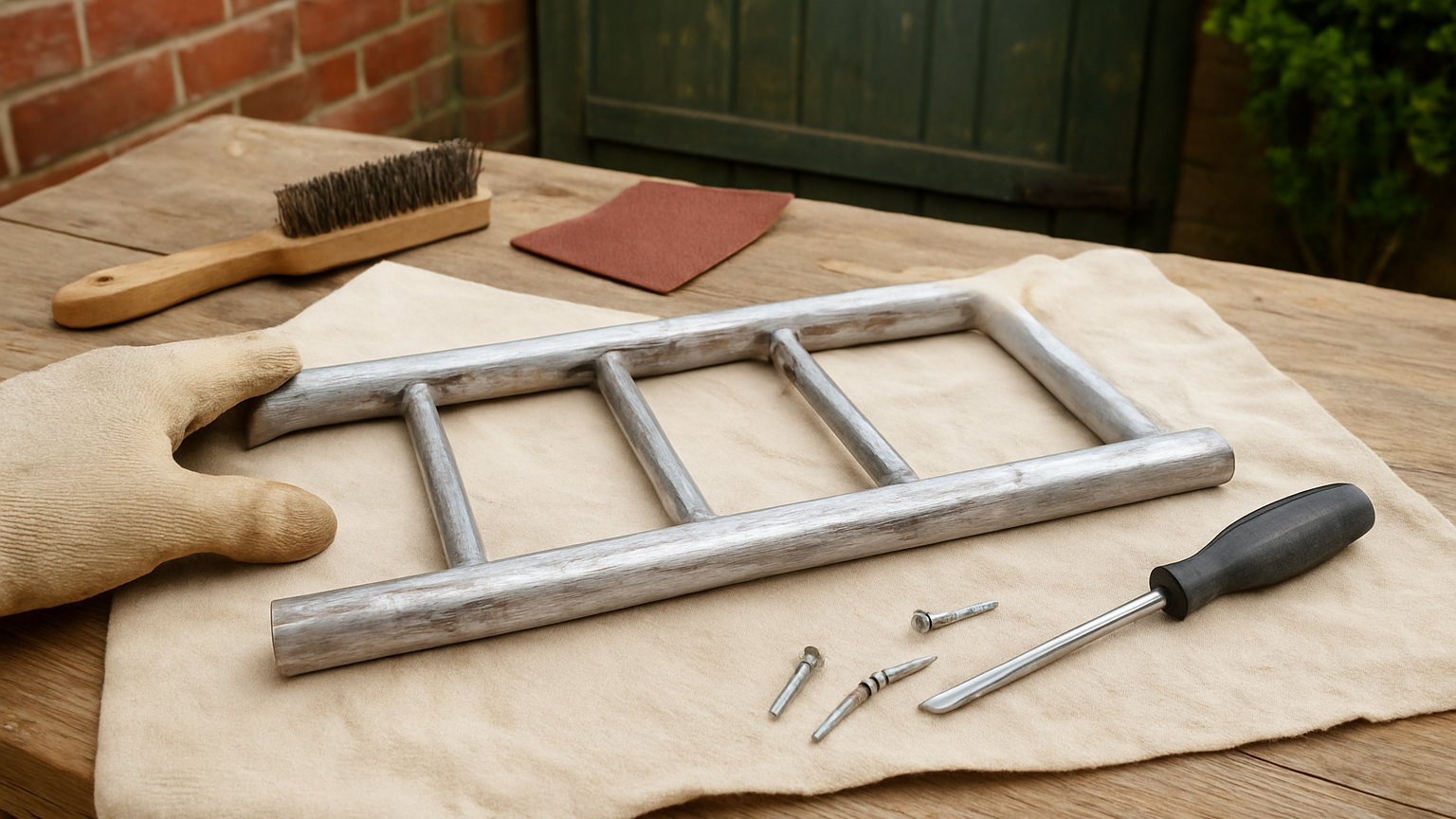
Remove loose and flaking rust with a wire brush, scraper or abrasive.
For anything substantial, a wire cup or twisted knot wheel on an angle grinder is far faster, and a needle gun handles heavy scale.
Take it back to bright metal wherever you can. Rust left under a coating continues to expand and pushes the paint off from beneath.
Where bright metal is not achievable in pitted areas, use a rust converter, which chemically stabilises the remaining rust into a paintable surface. Follow the dwell time and overcoat within the stated window.
Degrease afterwards, since hands, oil and old wax all prevent adhesion.
Lead paint on older metalwork
Victorian and Edwardian railings frequently carry lead based paint under later coats.
Do not dry sand, grind or burn it off. Test with a lead paint kit first.
Where lead is present, use wet methods or a chemical stripper, collect all debris on sheeting, and keep children and pregnant women well away.
Priming
Prime the same day the metal is cleaned, since bright steel begins to flash rust within hours in damp air.
Use a zinc phosphate or similar rust inhibiting primer on steel, applied thinly and evenly.
Use the correct primer for galvanised and aluminium rather than a general purpose one.
Get primer into every joint, crevice, bolt head and the backs of sections, since these are where water collects and rust restarts.
Two coats of primer on exposed work is worth the extra hour.
Direct to metal paints
Modern direct to rust and direct to metal coatings combine primer and topcoat and are genuinely convenient.
They work well over stable, tightly adhered rust after brushing back, and they are not a substitute for removing loose material.
They save time on railings with a lot of intricate detail.
Read whether the product needs a topcoat for ultraviolet resistance, since some fade if left as a single coat.
Topcoating
Oil based metal paints give a hard durable finish and are traditional on railings.
Water based exterior metal paints stay flexible, dry quickly and keep their colour better.
Stay within one system so primer and topcoat are compatible.
Apply two thin coats rather than one heavy one. Paint runs readily on vertical bars and the runs are very visible.
Working method
Work from the top down, doing the intricate sections first and the flat faces last.
Use a narrow brush for detail and a wider one for rails.
Pay attention to the undersides of horizontal rails and the tops of finials, where water sits.
Sheet the ground and any paving beneath, since metal paint marks stone permanently.
Follow the shade round rather than working in hot sun, which skins the paint before it flows.
Where railings meet stone or concrete
Railings set into stone with lead or mortar rust at the joint, and the expanding rust cracks the stone.
Clean the joint out, treat the metal and seal it so water cannot sit there.
Cracked stonework around a railing base is a warning sign and needs dealing with before it splits the stone apart.
Maintenance
Inspect annually and touch in any chip immediately, since one break in the film starts the whole cycle again.


