
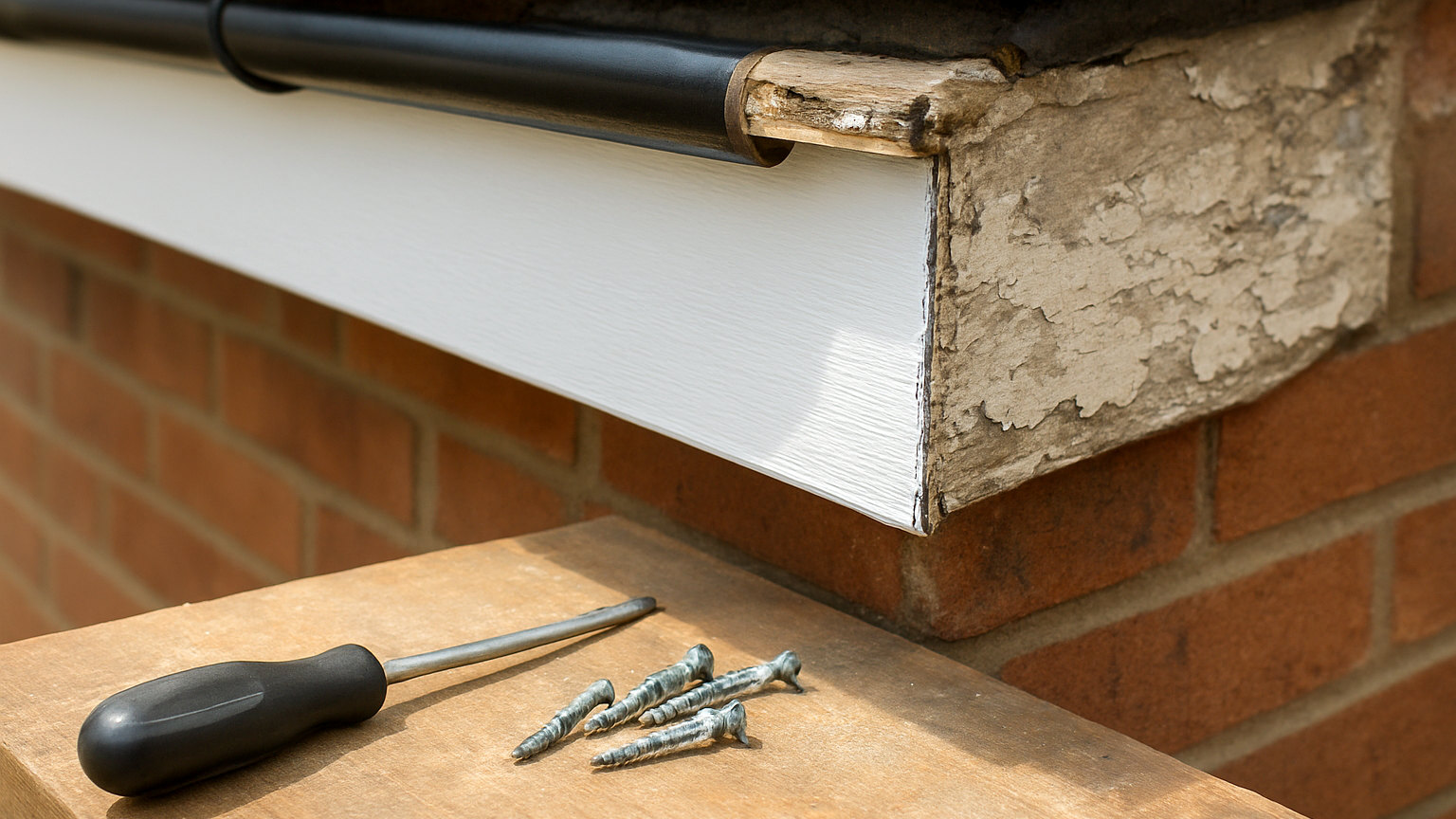
Fascias and bargeboards take more weather than any other timber on a house, sit directly under the gutter line, and are the hardest part to reach. That combination is why they are usually the first thing to fail.
Check the timber first
Before planning any painting, probe the timber with a screwdriver, particularly at the ends, at joints, and behind the gutter.
Sound timber resists. Soft timber that takes the blade is rotten and painting it achieves nothing.
Pay closest attention to the fascia directly behind the gutter, which stays wet whenever a joint leaks and is invisible from the ground.
Check the bargeboard ends at the apex and at the eaves, where end grain is exposed.
Where rot is extensive, the boards need replacing rather than decorating, and that is a different job.
Deal with the gutters first
There is no point painting timber that is about to be rained on from above.
Clear the gutters, check every joint for leaks by running water through, and repair or replace failing sections.
Check the gutter brackets are secure and that the fall is correct.
Doing this first also means the gutter is off the critical path if it turns out to need replacing.
Access
This is the part that decides whether the job is sensible.
A ladder is workable for a single storey and for short runs, provided it is footed properly, tied where possible and moved frequently rather than reached from.
A scaffold tower is far better for anything more than a short run, since it gives a platform, somewhere to put materials and no temptation to overreach.
For a two storey house, or anything at gable height, hire scaffolding or a tower, or get the job done by someone with proper access.
Never work off a ladder resting on a gutter, and never lean a ladder against plastic guttering.
Falls from height are the most common cause of serious injury in home maintenance, and fascia work puts people at exactly the wrong height.
Preparation
Wash down to remove dirt, algae and the black streaking that collects under gutters.
Treat organic growth with a fungicidal wash and rinse.
Scrape back flaking paint to a firm edge and feather the edges with abrasive.
Sand bare timber smooth and remove all dust.
Assume paint on anything pre-1980 may contain lead. Do not dry sand or burn it off; test first and use wet methods or a chemical stripper if it is present.
Cut out and repair small areas of rot with a two part wood repair system.
Priming and end grain
Knot any bare softwood with knotting solution, then prime.
End grain absorbs water many times faster than a face, so every cut end, mitre and joint needs generous priming, ideally two coats.
Prime the back edges and any surface that will be enclosed before fixing anything back.
Caulk the joints between boards and between board and wall with an exterior flexible sealant, after priming and before topcoating.
Working order
Work from the top down: bargeboards, then soffits, then fascias, then the gutter if it is being painted.
Do one elevation at a time and finish it.
Cut in behind the gutter with a narrow brush or a cranked radiator brush, since that strip is where failure starts.
Follow the shade around the house rather than working in hot sun.
Paint choice
A good exterior wood paint system, either a traditional oil based undercoat and gloss, or a modern water based exterior satin.
Water based exterior paints stay flexible, resist yellowing and dry quickly enough to get two coats on in a day, which matters when access is hired.
Two topcoats over primer is the minimum on exposed elevations.
uPVC fascias
Plastic boards are usually a cleaning job rather than a painting one.
Where they are chalky, faded or a colour you dislike, they can be painted with a specialist uPVC primer and paint system, which is a commitment to repainting thereafter.
Clean thoroughly and degrease first, since nothing adheres to weathered plastic otherwise.


