
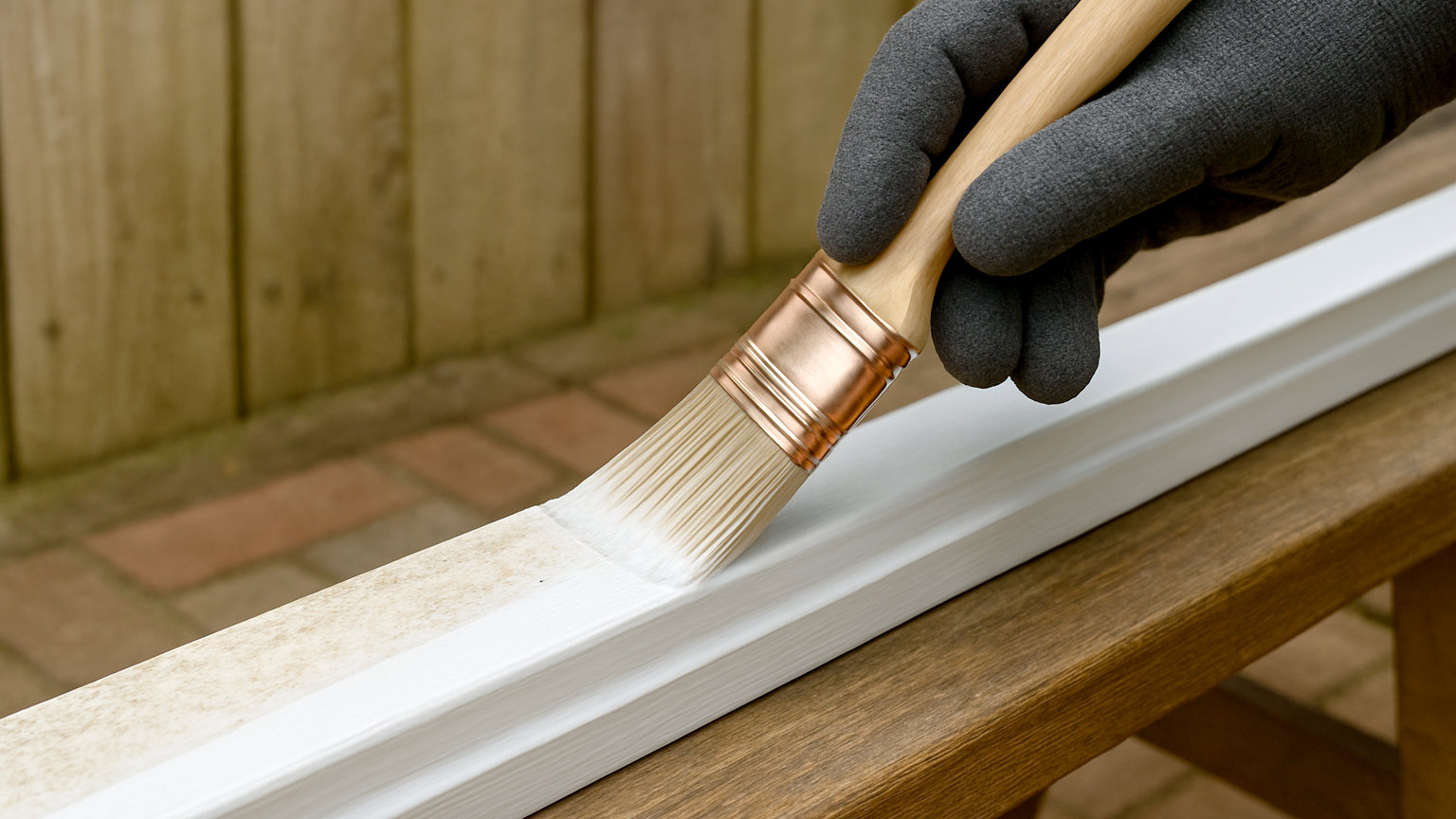
Painting uPVC used to be considered impossible. Modern adhesion primers have changed that, though the result depends almost entirely on preparation and on accepting what you are taking on.
Why plastic is difficult
uPVC has a smooth, low energy surface that gives paint nothing to key into.
It also moves considerably with temperature, expanding and contracting far more than timber, so any coating has to stay flexible.
Weathered uPVC develops a chalky surface layer as the top few microns degrade in ultraviolet light. Paint applied over that chalk bonds to the chalk, not the plastic, and peels away with it.
Before deciding
Check the frames are sound. Painting will not fix failed seals, misted double glazing, dropped hinges or a warped door.
Consider the alternatives. A proper uPVC restoration cream removes oxidation and can bring a chalky white frame back remarkably well, at a fraction of the cost and with no commitment.
Replacement frames are expensive; painting is cheap, and vinyl wrapping sits between the two.
Painting is effectively permanent. Once painted, the frames must be repainted periodically, and stripping paint off uPVC is unpleasant.
Check whether the windows are still under guarantee, since painting them will usually void it.
Preparation
This is ninety per cent of the job.
Wash thoroughly with detergent and rinse.
Remove all chalking by abrading the surface with a fine abrasive pad or 240 grit paper until the chalky layer has gone and the surface is uniformly dull.
Degrease with a solvent cleaner or a proprietary uPVC degreaser, using clean cloths and turning them frequently. Silicone, polish residue and mould release agent all prevent adhesion.
Do not touch the cleaned surface with bare hands afterwards, since skin oils are enough to cause a failure.
Mask the glass, the seals, the hinges and the handles carefully, using a good quality low tack tape.
Primer
Use a primer specifically formulated for uPVC or for low adhesion plastics.
These are usually solvent based and work by slightly softening the surface so they can bond.
Apply thinly and evenly, and respect the overcoating window on the tin. Many adhesion primers must be topcoated within a specified period, after which adhesion drops away.
Do not skip the primer and rely on a self priming topcoat unless the manufacturer specifically approves it for uPVC.
Topcoat
Use a flexible exterior paint from the same system as the primer, so compatibility is not in question.
Two thin coats give a far better finish than one heavy one, and thin coats are less likely to run on a vertical smooth surface.
Spraying gives by far the best finish on frames, and needs thorough masking and calm weather.
Brushing works with a good synthetic brush and a paint that flows, applied in long single strokes without overworking.
Colour and heat
This matters more than people expect.
Dark colours absorb heat and uPVC distorts when it gets hot. A white frame painted dark grey or black can reach temperatures that cause bowing, particularly on a south facing elevation with large sealed units.
Several manufacturers produce solar reflective formulations specifically to address this. Use one if you want a dark colour.
Check what the paint system says about dark colours on plastic before committing.
Seals and moving parts
Keep paint off rubber seals, which it stiffens and eventually cracks.
Keep it out of hinges, locks and the friction stays, and off the faces where the sash closes against the frame.
Do not close a painted window or door until the paint has cured properly, or it will stick and tear.
Afterwards
Allow a full cure before cleaning the frames, usually a week or more.
Wash with mild detergent only, and avoid solvent cleaners.
Expect to inspect annually and to recoat every five to ten years depending on exposure.
Realistic expectations
A properly prepared and primed uPVC paint job holds up well, and a poorly prepared one fails within a season, usually peeling in sheets.
The difference is almost entirely in the degreasing and abrading, not in the paint.
Do one small frame first, leave it a few months through some weather, and see how it behaves before committing to the whole house.


