
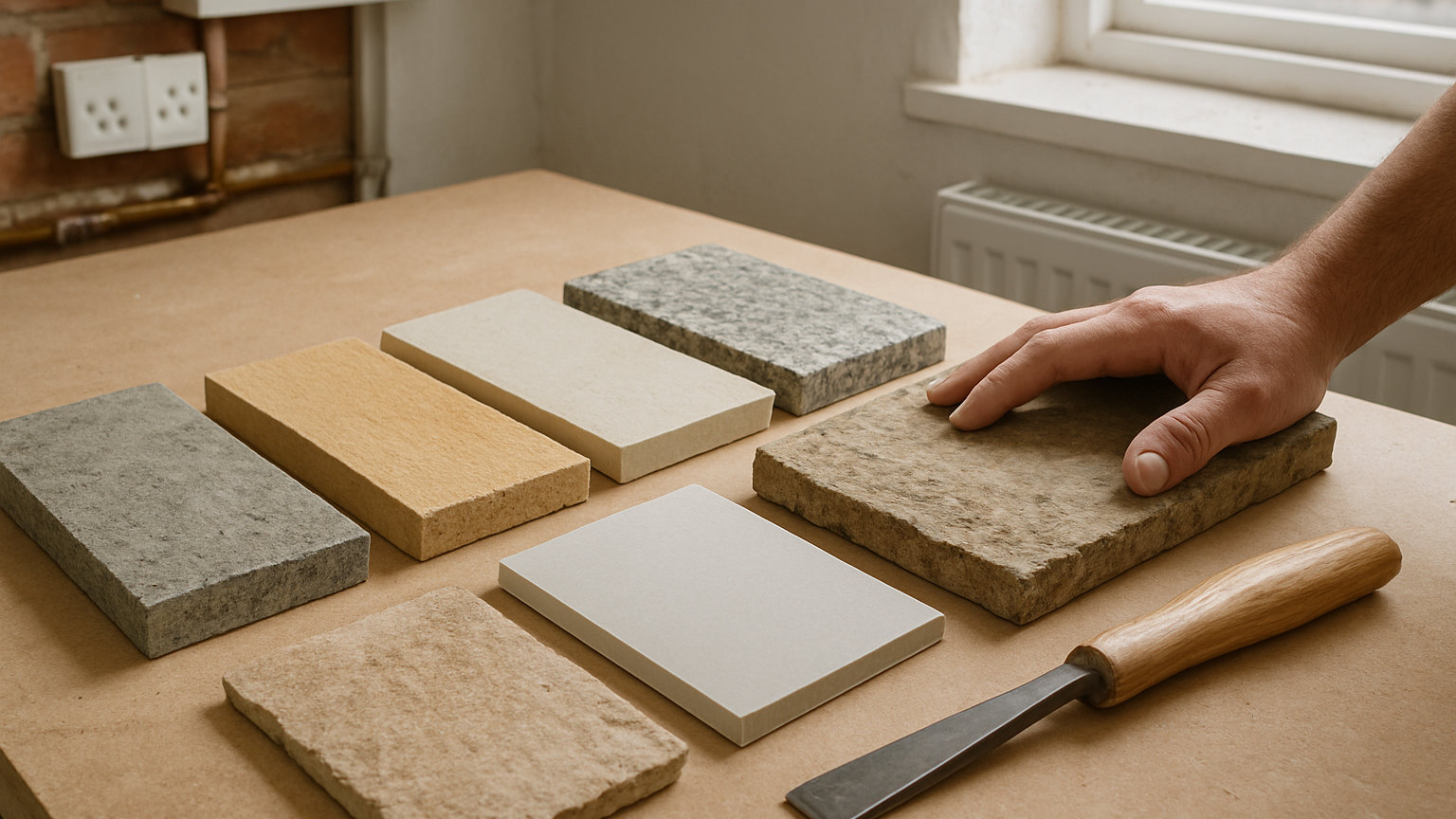
Paving looks broadly similar in a brochure and behaves very differently after two winters. The practical differences are about porosity, slip resistance and how each material responds to being cut and cleaned.
Concrete paving
The cheapest and most widely available option, ranging from plain utility slabs to detailed reproductions of natural stone.
Consistent in thickness and size, which makes laying quicker and cutting predictable.
Modern wet cast and textured concrete has improved enormously, though colour is applied rather than natural and surface colour can fade over several years, particularly on cheaper ranges.
Porous unless sealed, so it stains and grows algae like any other porous surface.
Good value where budget matters and the patio is not the main feature of the garden.
Sandstone
The most popular natural stone for domestic patios, usually imported, with a riven textured surface.
Naturally varied in colour, which is either its main appeal or its main drawback depending on taste.
Grips well when wet because of the texture.
Porous, so it stains readily from barbecue fat, wine, leaves and metal furniture, and it grows algae in shaded positions.
Thickness varies within a pack, sometimes considerably, which means laying each slab to the surface rather than to a fixed bed depth.
Limestone
Denser and less porous than most sandstone, with a smoother, more uniform appearance and a tighter colour range.
Looks contemporary and consistent, and cuts cleanly.
More prone to showing scratches, and darker limestones can fade or bleach in strong sun.
Acid based cleaners damage limestone, which rules out several common patio cleaning products.
Granite
Extremely hard, very dense and almost non-porous.
Highly resistant to staining, frost and wear, and it keeps its colour indefinitely.
Expensive, heavy, and hard on cutting equipment. Diamond blades wear noticeably.
Flamed granite grips well; polished or honed granite is slippery when wet and belongs indoors.
Porcelain
Manufactured, dense, and effectively non-porous, with a printed surface that can imitate stone, concrete or timber convincingly.
Almost impossible to stain, and it does not fade. Algae sits on the surface rather than in it, so it washes off.
Consistent in size and thickness, usually 20mm, which makes laying accurate.
It needs a different method: a full mortar bed with a slurry primer on the back of every slab, since mortar does not bond to porcelain on its own.
Cutting requires a wet cutter with a porcelain blade, and it chips easily if rushed.
Costs more than most concrete and comparable to good natural stone.
Slip resistance
Every material is slippery when covered in algae, so cleanliness matters more than the specification.
Textured and riven surfaces grip better than smooth ones when wet.
Look for a published slip rating where it is available, particularly for porcelain, where the range between products is wide.
Anything described as polished is not suitable outdoors in the UK climate.
Thickness and what it means
Natural stone for foot traffic is commonly 22mm, with calibrated packs cut to a consistent thickness and uncalibrated packs varying.
Calibrated stone is considerably easier to lay and worth the small extra cost.
Porcelain at 20mm is designed for a full mortar bed and is strong enough for domestic use.
Anything carrying a vehicle needs a thicker unit and a different construction entirely.
Practical points before buying
Buy the whole quantity at once, since batches vary in colour.
Add ten per cent for waste, more for complex shapes.
Ask about ethical sourcing for imported stone.
Get a sample and look at it wet, since almost all paving looks completely different in the rain.
Matching the material to the setting
Sandstone and riven concrete suit older houses and informal gardens, where colour variation reads as character rather than inconsistency.
Limestone, granite and porcelain suit contemporary settings and large open areas, where the uniformity is the point.
Shaded, north facing patios favour non-porous materials, because anything porous in permanent shade will hold algae no matter how often it is cleaned.
Areas under trees take a constant load of leaf tannin and sap, which stains porous stone badly and washes off porcelain.
Where the patio adjoins the house, holding the paving colour close to the brick or render usually looks better than contrasting with it.


