
Most patio damage attributed to weather was actually done by a pressure washer, and most of that was avoidable with a different nozzle and a bit more patience.
What actually makes a patio dirty
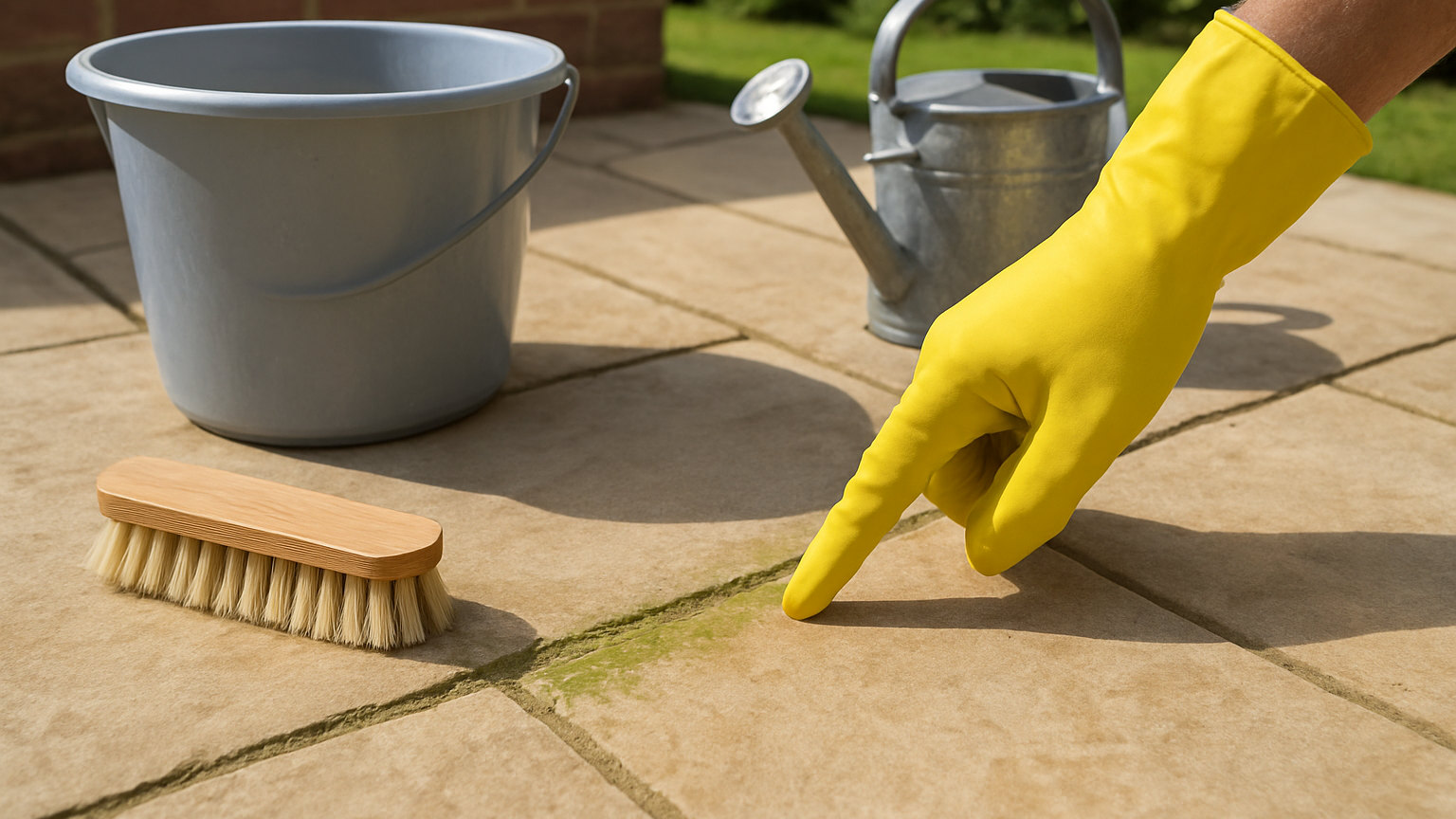
Algae and lichen, which form a green or black film in damp shaded areas and are what makes paving slippery.
Organic staining from leaves, particularly tannin from oak and sycamore.
General grime, pollen and soil splash.
Efflorescence, a white bloom of salts brought to the surface as the paving dries. It is not dirt and usually weathers away over a season.
Start with the gentlest method
Sweep thoroughly, clearing the joints, since debris sitting in joints keeps the surface damp.
Wash with warm water and a mild detergent, worked in with a stiff brush.
For algae, use a proprietary patio cleaner or a fungicidal wash and let it dwell for the stated time. The dwell time is doing the work, not the scrubbing.
Rinse thoroughly.
This handles the great majority of patios and does no damage at all.
Using a pressure washer properly
A pressure washer is effective and does real harm in the wrong hands.
Use a wide fan nozzle, keep the lance well back, and keep it moving.
Never use a turbo, pencil or zero degree nozzle on paving. It cuts into soft stone and leaves permanent scars in overlapping arcs that are impossible to remove.
Work at a consistent distance and angle so the cleaning is even, since a patchily cleaned patio looks worse than a uniformly dirty one.
A rotary patio attachment gives a much more even result than a lance and is far less likely to damage the surface.
Expect to lose jointing sand from block paving, and plan to brush fresh kiln dried sand in afterwards.
What damages which material
Sandstone and other soft stone scar easily under a close jet and the surface can be eroded.
Limestone is damaged by acidic cleaners, which etch the surface. That rules out several common brick and patio cleaners, so read the label.
Concrete paving has a thin coloured surface layer on some products, and aggressive cleaning takes it off, leaving the paler body exposed.
Porcelain is effectively immune to both, though the jointing between is not.
Pointing and resin joints are usually the weakest element, whatever the paving.
Test any chemical on a hidden slab first and wait a day before committing.
Things to avoid
Household bleach, which runs off into borders and kills plants, and can bleach paving unevenly.
Salt or de-icing products on natural stone, which draws salts into the surface.
Wire brushes on soft stone.
Acid based cleaners on limestone, on any polished surface, or anywhere near metalwork.
Strong chemicals near a pond, since runoff is lethal to fish and amphibians.
Dealing with the cause
Algae grows where surfaces stay damp and shaded, so cleaning alone is a treadmill.
Cut back overhanging planting so sun and air reach the paving.
Clear leaves promptly in autumn rather than letting them lie and stain.
Check the patio still drains and deal with any area that ponds.
Move planters occasionally, since the patch beneath stays permanently wet.
Keep the joints full, since open joints hold water and debris.
A realistic routine
Sweep regularly through autumn and winter.
Wash with a fungicidal cleaner once a year, usually in spring.
Top up jointing sand on block paving after cleaning.
Deal with stains when they happen rather than at the annual clean, since fresh stains come out far more easily.
Safety while cleaning
Pressure washers throw debris at speed, so wear eye protection and keep others well clear of the working area.
Wet paving covered in loosened algae is extremely slippery while you are working on it, which is when a surprising number of falls happen.
Wear gloves with chemical cleaners and rinse any splashes off skin immediately.
Cover or protect nearby planting before applying anything, and water borders thoroughly afterwards if runoff has reached them.
Never point a pressure washer at electrical fittings, outdoor sockets or lighting, and switch off outdoor power at the consumer unit before washing around it.


