
Sheds move in wind more often than people expect, and an empty plastic or light timber shed can be shifted or overturned by a gale that does no other damage in the garden.
Where the force acts
Wind does two things to a shed.
It pushes on the side, which slides the building sideways.
It lifts the roof. Air passing over a pitched roof creates suction on the leeward side, and the uplift is frequently greater than the sideways push.
That is why roofs come off sheds that are otherwise still standing, and why anchoring only the walls is not enough.
Wind also gets inside through an open door or a broken window and pressurises the building from within, which pushes the roof off from below.
Fixing to a concrete slab
The most secure option.
Use expansion bolts or resin anchors through the floor bearers into sound concrete, at each corner and at intervals along each side.
Drill through the bearer, not through the floor boards, and use a washer under the head.
Anchor into concrete at least 100mm thick and properly cured, keeping fixings at least 100mm in from the slab edge so they do not break it out.
Four fixings is a minimum for a small shed; more for anything larger.
Fixing to paving slabs
Individual slabs are not heavy enough to act as an anchor on their own, since the shed and slab can lift together.
Either bolt through into a slab that is bedded on a full mortar bed and restrained, or use ground anchors driven into the soil alongside and strapped over the bearers.
Where the base is a full pad of bedded slabs, fixings into the slabs work reasonably, provided the slabs themselves cannot move.
Ground anchors and straps
Screw in or driven ground anchors set into the soil, with a strap or cable over the shed.
These are the usual answer for a plastic shed, for a base of bearers on pads, and for anywhere bolting into concrete is not possible.
Set anchors at opposing corners and tension the straps evenly over the roof or around the frame.
Pad the strap where it crosses an edge so it does not cut in.
Check the tension each autumn, since straps relax and timber shrinks.
Securing the roof
This is where most storm damage happens and where least attention is usually paid.
Check the roof boards are properly fixed to the rafters or purlins, and add screws where only nails were used.
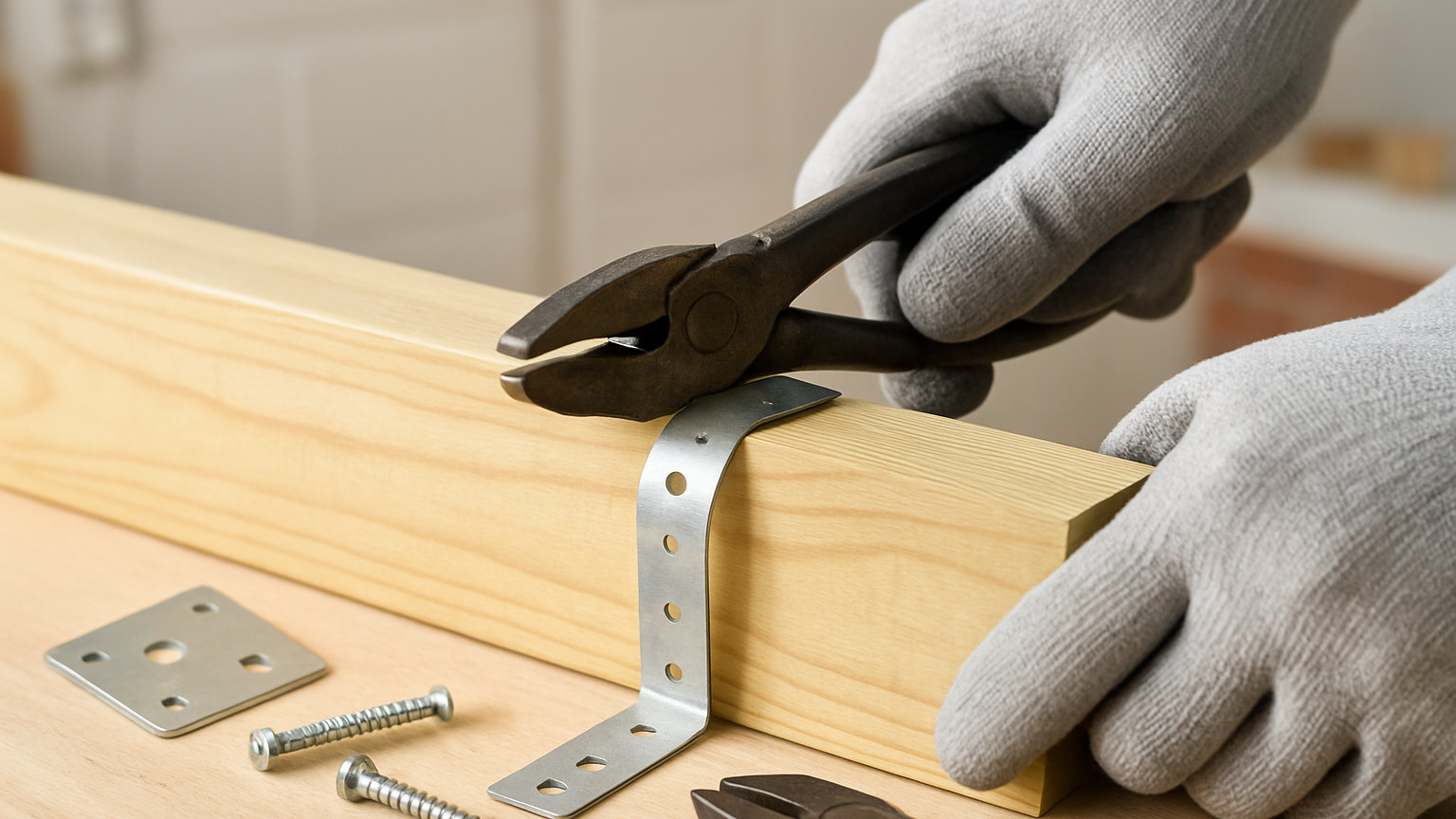
Fix the roof structure to the wall plates with brackets or framing connectors rather than relying on a few nails.
Fit battens over the felt at the eaves and gables, which holds the covering down and is standard practice on better sheds.
Keep the door shut and latched in windy weather. An open door turns the shed into a scoop and dramatically increases the uplift on the roof.
Siting to reduce the load
Position the shed with a gable end into the prevailing wind where you can, rather than a long wall.
Use existing shelter from a fence, a hedge or a building, but keep a gap so air can pass rather than creating a pressure trap.
Avoid siting a shed at the top of an exposed slope or in a funnel between two buildings.
Heavy contents help. An empty shed is far more vulnerable than a full one.
Plastic and metal sheds
Both are light and both need anchoring as a matter of course rather than as a precaution.
Most come with fixing points and instructions specifying anchoring, and the guarantee frequently depends on it being done.
Metal sheds in particular have large flat panels that act as sails.
Checking after a storm
Walk round and look for lifted felt, loose battens and any movement at the base.
Push the shed at a corner. Movement means the fixings have worked loose.
Look inside for daylight at the eaves, which means the roof has lifted and settled back.
Retighten fixings and straps rather than waiting for the next one.
Insurance
Many home policies limit or exclude cover for sheds and their contents, or cover them only where they are locked and secured.
Check the wording before assuming a storm claim would be met, and check whether contents in an outbuilding are covered at all.


