
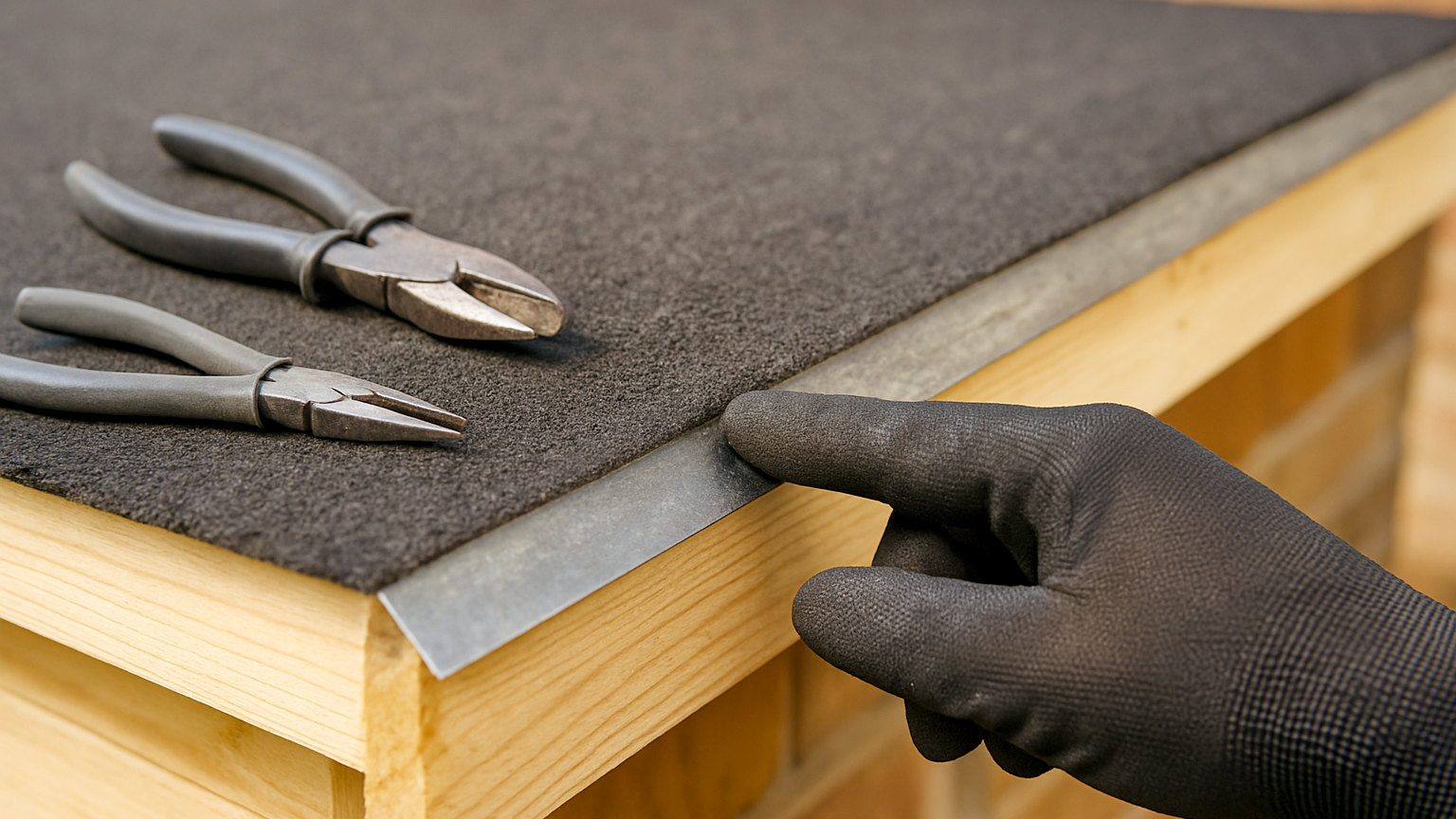
Shed felt is the component most likely to fail first, and the factory felt supplied with most sheds is a few years of protection rather than a roof covering.
When to replace it
Cracking, splitting or bare patches where the mineral surface has gone.
Felt lifting at the edges or flapping in wind.
Any sign of water inside, which usually shows as staining on the roof boards.
Replace it before it leaks rather than after, since once water reaches the boards the repair becomes a bigger job.
Most cheap factory felt lasts three to five years. A good torch-on or heavy shed felt lasts considerably longer.
Choosing the felt
Standard green or grey mineral shed felt is the usual choice and comes in rolls of around 8 or 10 metres.
Heavier grades cost slightly more and last noticeably longer.
Bitumen shingles are a step up again, look much better, and are fixed in overlapping strips.
Torch-on felt gives the best result and needs a gas torch and real care, which puts it outside most DIY jobs.
Measure the roof and add generous overlaps before ordering.
Stripping the old covering
Pull the old felt off and remove every clout nail, which is the tedious part and cannot be skipped.
A nail left proud will punch through the new felt within a season.
Check the boards underneath while they are exposed. Replace anything soft, and treat the boards with preservative if they are bare.
Sweep the deck completely clean.
Cutting and preparing
Measure each roof slope and cut lengths with an overhang of around 50mm at the eaves and at each gable end.
Lay the felt out flat in the sun for half an hour before fitting. Warm felt is far more flexible, lies flatter and is much less likely to crack when folded.
Cut with a sharp knife against a straight edge.
Pick a dry, still, mild day. Felt in wind is difficult and in cold it cracks.
Laying it
Always work from the bottom up, so each sheet overlaps the one below it and water runs over the joint rather than into it.
Start at the eaves on one slope. Position the sheet with the overhang and check it is parallel to the eaves before fixing anything.
Fix along the top edge first with clout nails at around 100mm centres, working from the centre outwards to avoid trapping creases.
Then fix the lower edge and the ends.
Lap the next sheet over the first by at least 75mm to 100mm, and nail through both layers along the lap.
Some people bed the laps in felt adhesive, which is worth doing on a shallow pitch.
Eaves and gable details
Fold the overhang down over the edge of the roof board and nail it underneath, so water drips clear rather than running back along the underside.
At the gable ends, fold the felt over and fix it to the barge board or the edge of the boards.
Fitting a timber batten over the felt at the edges holds it down and protects it, and is standard on better sheds.
The ridge
On an apex roof, felt each slope first, then cut a capping strip for the ridge.
The capping should overlap both slopes by at least 100mm each side.
Fix it along both edges, and consider adhesive under the laps since the ridge takes the most wind.
On a pent roof, the high edge is folded over and nailed in the same way as the eaves.
Nails
Use galvanised clout nails with large heads, long enough to hold in the boards but not to come through into the shed.
Check the board thickness first, since a nail point through the roof is both a hazard and a leak path.
Space nails at around 100mm on laps and edges, further apart in the field.
Working safely
Do not stand on a shed roof. Most are thin OSB on widely spaced supports and will not carry a person.
Work from a stepladder or a small platform alongside, moving it rather than reaching.
Two people make the job far easier and safer, particularly on a windy day.
Afterwards
Check the roof after the first heavy rain, looking from inside for daylight or damp.
Clear leaves off the roof each autumn, since debris holds water against the felt and shortens its life considerably.


