
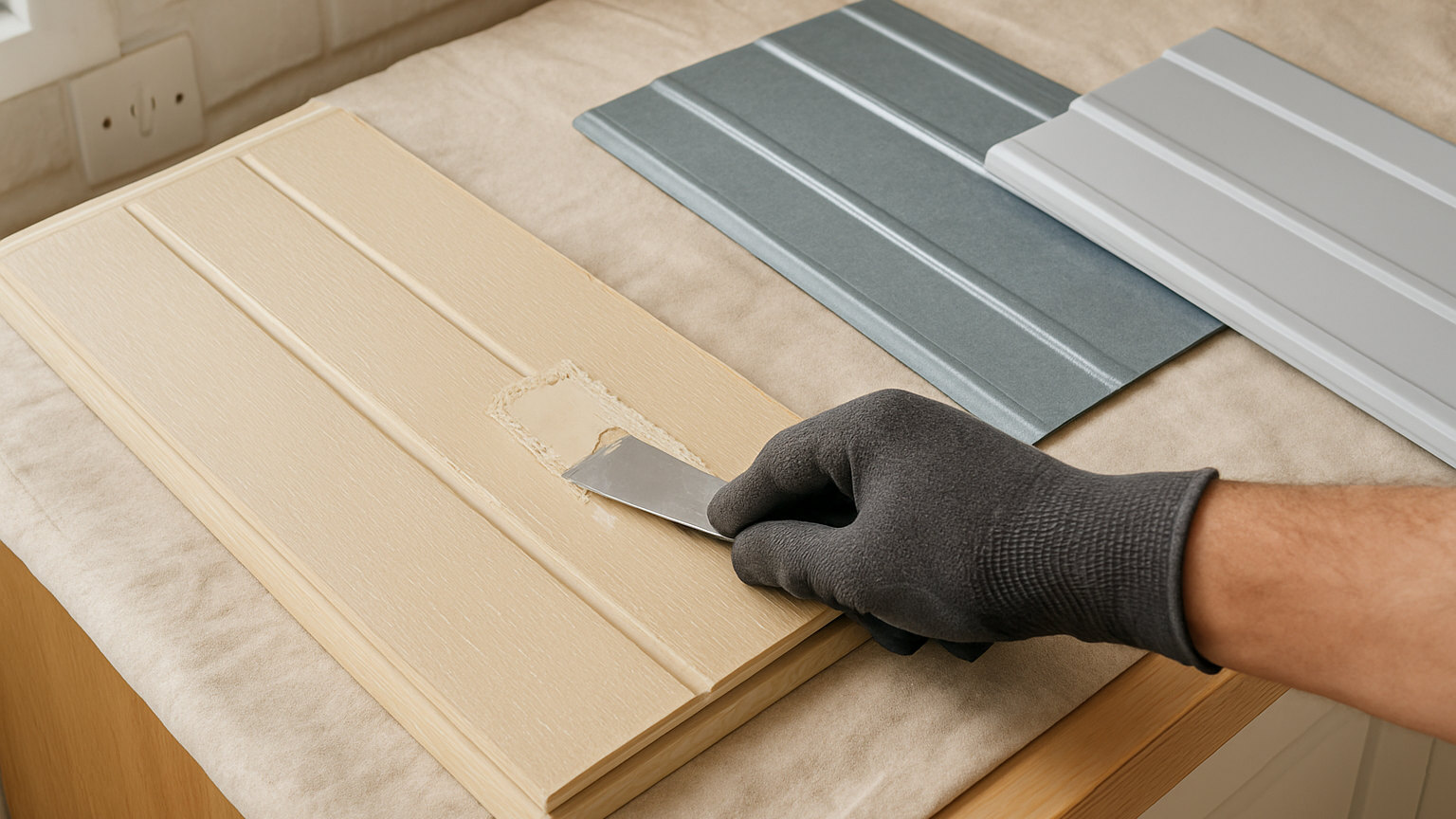
The three materials behave so differently that the decision is usually settled by two questions: will you fix things to the walls, and will you maintain it?
Timber sheds
The traditional choice and still the most common.
They look right in a garden, can be painted any colour, and you can screw into the walls anywhere, which matters more than people expect. Shelves, hooks, brackets and racking all fix straight to the frame.
Timber is warm, works with insulation, and breathes, so condensation is far less of a problem.
It can be repaired. A rotten board or a damaged floor panel is replaceable with materials from any merchant.
The cost is maintenance. A timber shed needs treating every two to three years, and one that is neglected will rot, particularly at the base and around the roof edge.
Quality varies enormously. The cheap end of the market uses thin overlap cladding on a light frame, and it is a different product from a shiplap shed on a proper frame.
Metal sheds
Galvanised or coated steel panels bolted to a frame.
They do not rot, do not burn, and are not eaten by insects.
Better security in principle, since the panels cannot be cut through with a knife, though cheap metal sheds have weak door fittings which undermines that.
Nothing to paint and nothing to treat.
The serious drawback is condensation. Metal is cold, so warm damp air condenses on the inside surface and drips on whatever is stored below. Anything metal inside will rust unless the shed is well ventilated and ideally lined.
Fixing shelves means bolting through the panels or building a freestanding internal frame, since the walls themselves take no fixings.
Panels can dent, and scratched coating will corrode.
Plastic and resin sheds
Moulded polypropylene or PVC panels, usually with a steel reinforced frame in the better ranges.
Genuinely maintenance free. No rot, no rust, no painting, and they wash down with a hose.
Lightweight, which makes assembly easy and anchoring essential.
Condensation is less of a problem than with metal, since plastic is a poorer conductor, but ventilation still matters.
Colour fades over time in strong sun, and cheaper panels can become brittle after several years.
You cannot fix anything to the walls, which is the practical limitation. Storage has to be freestanding.
Security is generally the weakest of the three, since panels can be forced and fittings are usually plastic.
Cost
At the budget end, all three are similar and all three are disappointing.
In the middle, timber gives the most usable building for the money.
At the top end, a good plastic shed costs more than a good timber one and needs nothing spent on it afterwards, which closes the gap over fifteen years.
Factor in treatment costs for timber, which are modest but recurring.
Security
The material matters less than the door, the hinges and the lock, which are the weak point on every shed regardless of what the walls are made of.
Most sheds arrive with fittings that can be defeated in seconds, so budget for a decent hasp and staple with coach bolts through the door.
A metal shed with a good door beats a timber shed with a poor one, and the reverse is equally true.
Condensation, in short
Timber breathes and is warm, so it rarely suffers.
Metal is the worst and needs vents, a gap under the roof, and ideally a lining.
Plastic sits in between.
Every shed benefits from through ventilation at high and low level, whatever it is made of.
Choosing
Choose timber if you want a workshop, a usable space, or anywhere you will fix things to the walls, and you are willing to treat it.
Choose metal for secure storage of things that do not mind a damp environment, with ventilation added.
Choose plastic for garden tools, bikes and bins where you want to do nothing to it for twenty years.


