A bath full of water and a person weighs a great deal, and it has to be supported so nothing moves. Movement is what breaks the seal.
Assemble the frame first
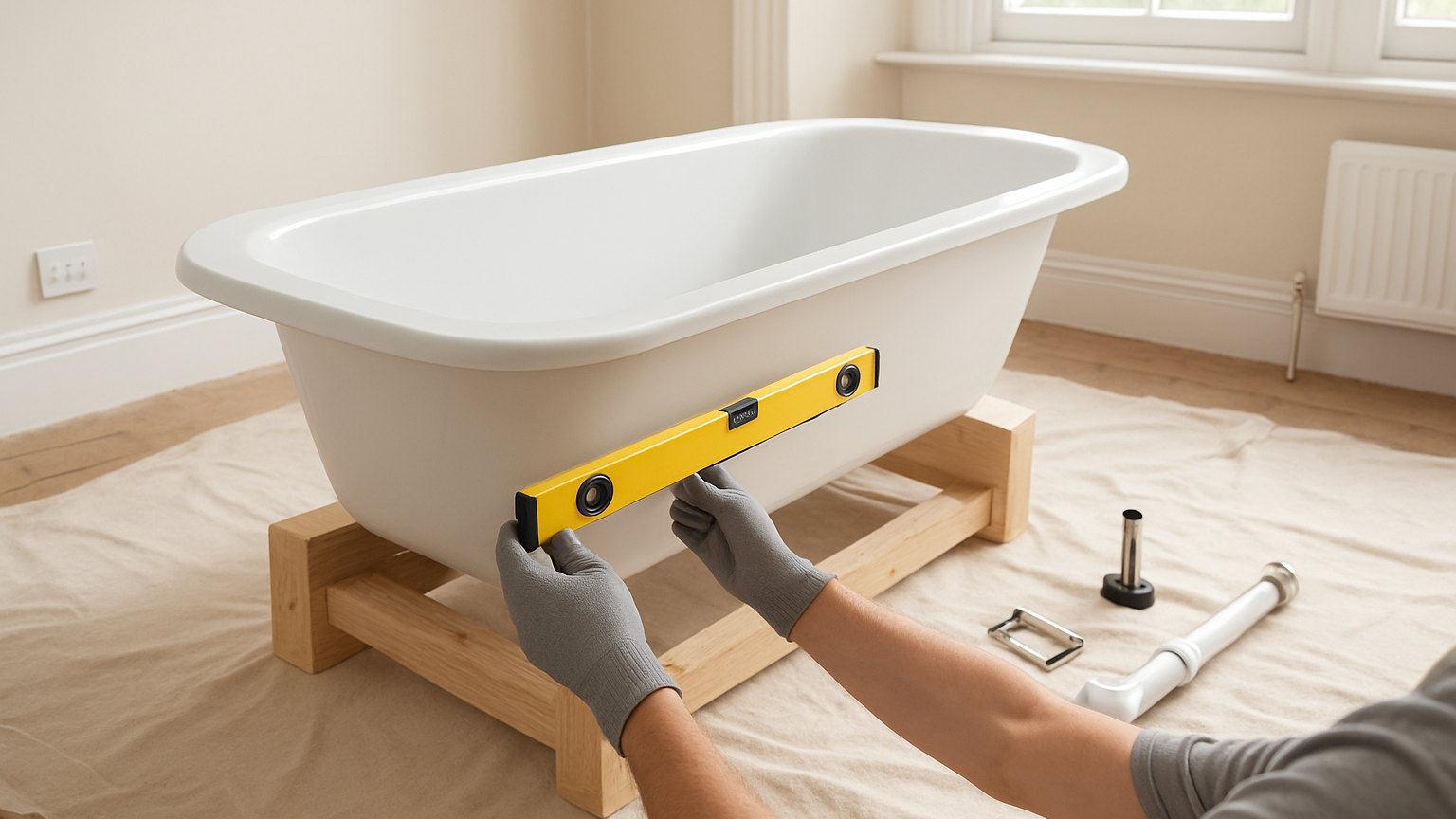
Most acrylic and steel baths come with a cradle and adjustable feet.
Fit every part supplied. The cradle and the central support are what stop an acrylic bath flexing underfoot, and leaving parts out is a common shortcut with predictable results.
Fit the feet and set them roughly to height before the bath goes into position.
Fit taps and waste before positioning
Once the bath is against the wall, the tap end is almost inaccessible.
Fit the taps with their washers, tighten the backnuts, and attach flexible tap connectors while you can reach.
Fit the waste and overflow assembly, bedding the waste flange on silicone or its supplied washer, and connect the overflow hose.
Fit the trap.
Check hot and cold are correct before the bath goes in.
Positioning and levelling
Move the bath into place and adjust the feet until it is level along its length and across its width.
Some manufacturers specify a very slight fall towards the waste. Follow their instructions, and otherwise level it.
Make sure every foot bears weight. A foot not touching the floor allows movement.
Fix the bath to the wall using the brackets supplied, or fit a timber batten screwed to the wall for the bath rim to rest on, which gives excellent support.
The batten must be level and fixed securely into masonry or studs.
Steel and cast iron baths
Considerably heavier, and worth checking the floor can take the load, particularly upstairs and particularly with cast iron.
They need at least two people to position and often more.
They are more rigid, so less prone to flexing, but the fixing and levelling matters just as much.
Connecting up
Connect the supplies to the flexible tap connectors, hand tight plus a modest turn. These have rubber seals and split if over-tightened.
Connect the trap to the waste pipe, with a continuous fall and adequate support.
A bath trap needs an adequate seal depth, and a shallow trap may be needed where headroom under the bath is limited.
Test before sealing
Fill the bath completely and check every connection.
Check the overflow works by filling above the overflow level.
Let it out in one go and watch the trap and the waste run under full flow.
Check the ceiling below afterwards.
Seal with the bath full
Fill the bath with water before applying the final sealant.
A full bath sinks slightly on its supports and the acrylic flexes. Sealing empty means the joint opens when the bath is used, and the seal tears.
Fill it, apply the sanitary silicone to the bath and wall junction, tool it smooth, and leave the water in until the silicone has cured.
Use a sanitary grade silicone containing a fungicide, and make sure the surfaces are completely clean and dry before applying.
Tiling and the bath
Tile down to the bath rim, leaving a small gap, and silicone the junction rather than grouting it.
Where there is a shower over the bath, tank the walls first to at least shower head height.
The bath panel
Fit last.
Measure the height from the floor to the underside of the bath rim, and cut the panel to fit, scribing to an uneven floor.
Make the panel removable. Use clips, magnetic catches or a small number of screws with cups, so the trap and pipework can be reached.
A panel siliconed permanently in place has to be destroyed the first time there is a leak.
Fit a plinth or seal at the bottom edge, and seal the top edge to the bath with a small bead of silicone.
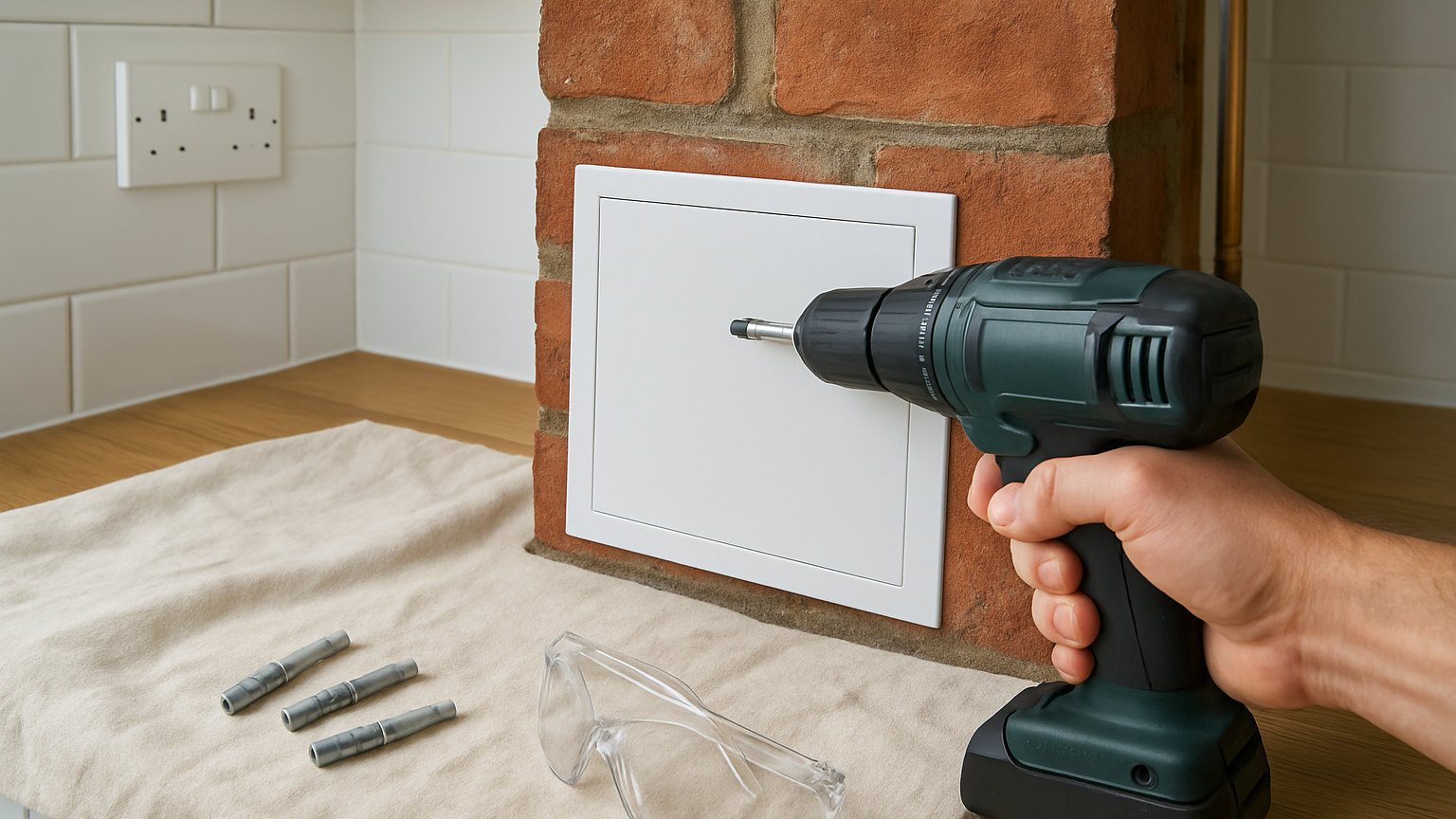
Where the bath is boxed in with a tiled panel, always build in an access hatch at the trap end.
Common mistakes
Leaving out the central support on an acrylic bath, so it flexes underfoot and the seal fails.
Sealing with the bath empty.
Overtightening tap connectors and splitting the seals.
Boxing in the trap with no way to reach it.
Fitting the taps after the bath is against the wall, which turns a five-minute job into an hour lying in the bath.