
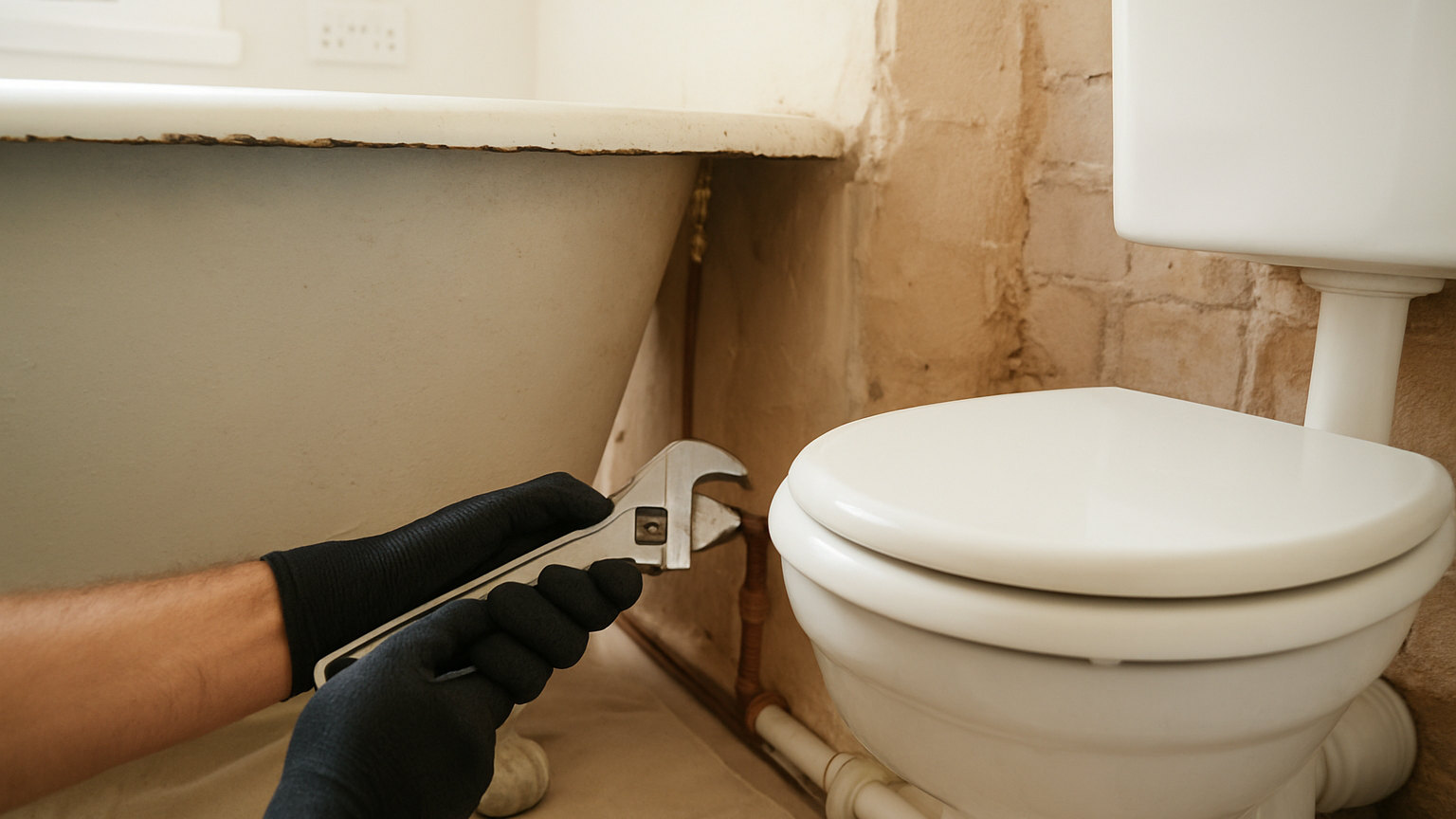
Stripping a bathroom is straightforward providing the water is properly off, and messy if it is not. The old suite is also heavier and more awkward than it looks.
Isolate and drain
Find and test the stopcock first. Usually under the kitchen sink or near the front of the house. Turn it off and check the taps run dry.
On a gravity system, also turn off the gate valve on the cold feed from the loft tank and, for hot, the valve on the cylinder feed.
Open the taps at the lowest point in the house to drain the pipework down.
Turn off the immersion heater or the boiler before draining hot water, so nothing heats an empty cylinder.
Have towels, a bowl and a wet vacuum ready regardless, since pipes hold water after draining.
Isolate the electrics
Identify the circuits for the lighting, the fan, the shower and any heated towel rail.
Turn off and lock off at the consumer unit, and test dead with an approved tester before touching anything.
An electric shower is on its own high-current circuit and must be isolated at the consumer unit, not just at the pull cord.
Asbestos
In a bathroom fitted or altered before 2000, assume asbestos may be present.
Textured coating on the ceiling is the most common, and old cisterns, insulation board panels and vinyl floor tiles are others.
Do not sand, scrape, drill or break anything suspect. Have it tested first.
The order of removal
1. Remove the shower enclosure and screen, cutting the silicone with a knife first. Glass panels are heavy and awkward, so get help and lay them flat somewhere safe.
2. Remove the toilet. Turn off the supply, flush, and bail and sponge out the remaining water from the cistern and the pan. Disconnect the supply, unbolt the cistern, then unscrew the pan from the floor and pull it free of the pan connector.
Block the open soil pipe immediately with a rag or a proper bung, or the room fills with drain smell.
3. Remove the basin. Disconnect supplies and trap, then unscrew from the wall or pedestal.
4. Remove the bath. Take off the panel, disconnect the trap and supplies, cut the sealant, and lift or cut it out.
5. Remove tiling, wearing eye protection and gloves.
6. Lift the flooring.
Heavy baths
A steel bath is manageable with two people. A cast iron bath is extremely heavy and cannot safely be carried downstairs by two people.
The usual approach is to break it up in place with a sledgehammer, having covered it with a heavy dust sheet or blanket to contain fragments.
Wear full eye protection, gloves, ear defenders and stout boots, and clear everyone else from the room. The shards are sharp and cast iron fragments fly.
Take the pieces out in a barrow load at a time.
What to check once it is out
This is the only opportunity you will get.
The floor, particularly around the bath, shower and toilet, where leaks rot boards and joists over years. Probe suspect timber with a screwdriver.
The pipework, and replace anything in poor condition while access exists. Old lead or steel pipe should be replaced.
Notched or drilled joists, which previous plumbing may have weakened.
The walls for damp and blown plaster, particularly behind the shower.
Ventilation and whether the existing fan actually ducts outside.
Photograph every wall and the floor before anything is covered.
Capping off
Cap redundant water pipes with proper fittings and turn the water back on to test before closing up.
Cap or remove redundant waste pipes so they cannot admit smells.
Have redundant electrical circuits made safe by an electrician.
Living without it
Where this is the only bathroom, plan the downtime before starting, and keep the toilet connected as long as possible.
Know where you will wash, and have the new suite on site and checked before the old one comes out.
Waste
Sanitaryware is bulky and heavy, and a full suite plus tiles fills a small skip quickly.
Break ceramic into a covered container rather than carrying whole pieces down stairs.
Sound suites are frequently taken free through local reuse groups.
Keep the old toilet seat and any spare fixings until the new suite is in and working.


