
Electrical work in dwellings is covered by the building regulations, and the scope of what must be notified was reduced in 2013, which is why older advice is frequently wrong.
What is notifiable in England
The main categories are these.
Installing a new circuit. Any new circuit from the consumer unit, such as a cooker circuit, a shower circuit, a new ring or radial, or a supply to an outbuilding.
Replacing or altering a consumer unit.
Work in a special location, which for dwellings means within the zones around a bath or shower.
Wales has its own arrangements which are broader in some respects, and Scotland and Northern Ireland operate different systems entirely. Check the position where you are.
What is not notifiable
Adding a socket or a light to an existing circuit, outside a special location.
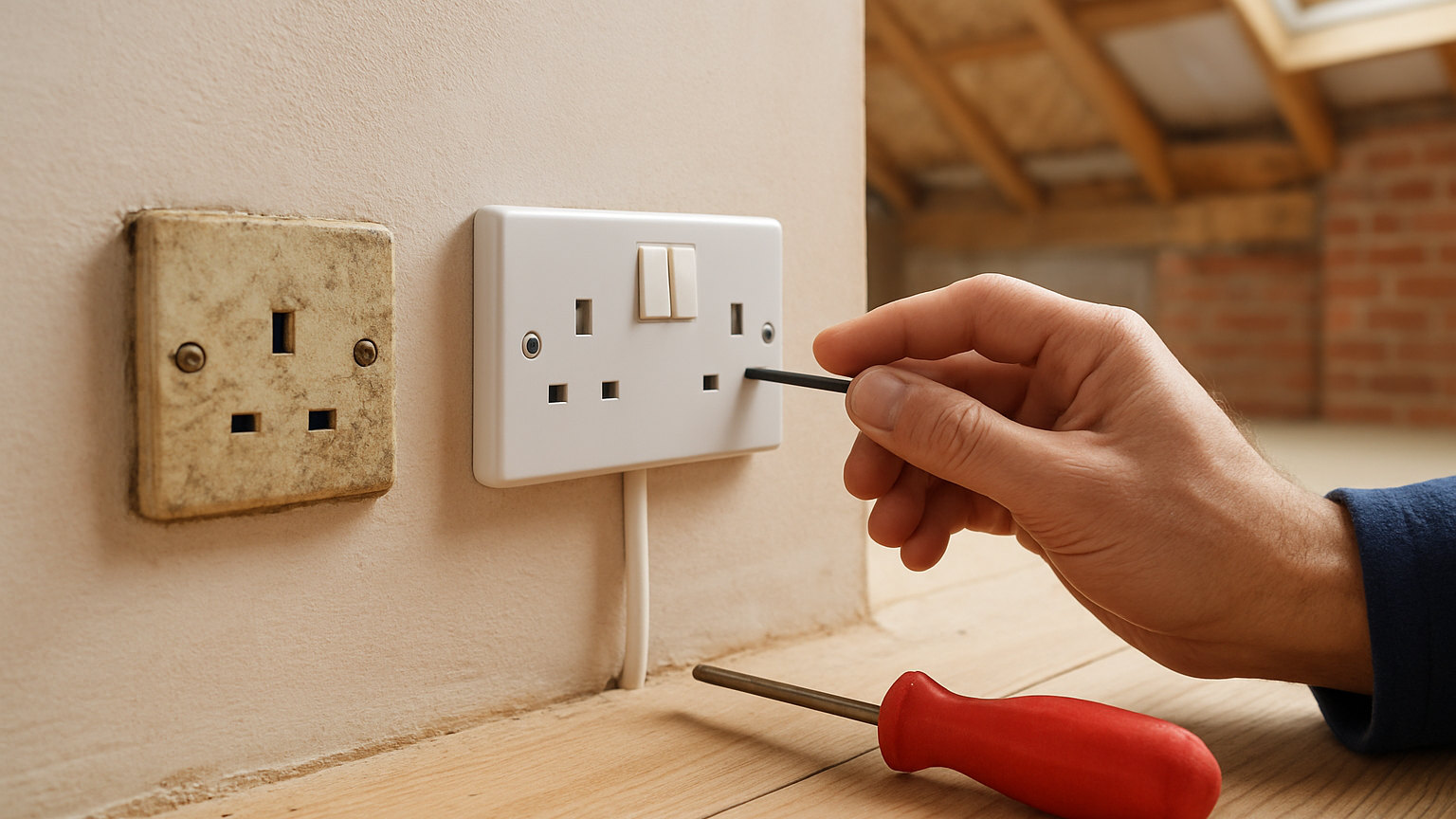
Replacing accessories like for like: sockets, switches, light fittings.
Replacing a damaged cable on a like-for-like basis.
Repairs and maintenance.
Since 2013, work in kitchens and outdoors is no longer automatically notifiable simply because of its location. A new circuit anywhere still is.
Not notifiable does not mean unregulated
This is the point most often missed.
All electrical work in a dwelling must comply with the building regulations and be carried out safely, whether or not it must be notified.
It should be designed, installed, inspected and tested in accordance with the wiring regulations, and a minor works certificate should be issued even for non-notifiable work.
Testing requires instruments and knowledge. Fitting a socket is easy; verifying that the circuit is safe afterwards is not.
The two routes to compliance
Use a registered electrician who is a member of a competent person scheme. They self-certify the work, notify it, and issue a certificate. This is the normal route.
Or notify building control before starting. The authority arranges inspection and testing, usually by a third party, and issues a completion certificate. There is a fee, frequently a substantial one.
There is no route that involves doing notifiable work and saying nothing.
Checking a scheme member
The schemes maintain searchable registers.
Check the individual or the business on the scheme's own website rather than relying on a logo on a van.
Check the scope of their registration covers the work.
Certificates
Electrical Installation Certificate for a new installation or a new circuit.
Minor Electrical Installation Works Certificate for alterations and additions to an existing circuit.
Electrical Installation Condition Report for a periodic inspection of an existing installation.
Keep all of them. They are asked for at sale, and by insurers after an incident.
Why this is enforced more seriously than it looks
Electrical faults are a leading cause of accidental domestic fires.
A circuit that appears to work can have no earth, the wrong protective device, or a fault that only manifests under load.
The regime exists because the failure mode is not visible.
What a competent DIYer can reasonably do
Isolate and lock off circuits, and test dead with an approved tester.
Replace like-for-like accessories on an existing circuit.
Run cables through walls and voids for an electrician to connect, terminate, test and certify.
Chase, make good and decorate.
Leave connection, testing and certification to a registered electrician, and get the certificate before the final payment.
Rented property
Landlords in England must have the installation inspected and tested at least every five years and provide a report to tenants.
Requirements differ across the nations, so check locally.
Buying a house
Ask for electrical certificates for any work carried out, and consider a condition report on an older installation.
An installation with a modern consumer unit and RCD protection is a good sign; an old fuse box with rewireable fuses suggests an installation that has not been assessed for a long time.
Consumer units
Replacing one is notifiable, and it is also the point at which the whole installation is tested.
Expect an electrician to find and report faults elsewhere when replacing a consumer unit, since they must certify what they are connecting to.
Budget for remedial work being identified, rather than treating the quoted price as final.
Solar panels and EV chargers
Both involve new circuits and are notifiable, and both are normally installed under a competent person scheme by a registered installer.


