
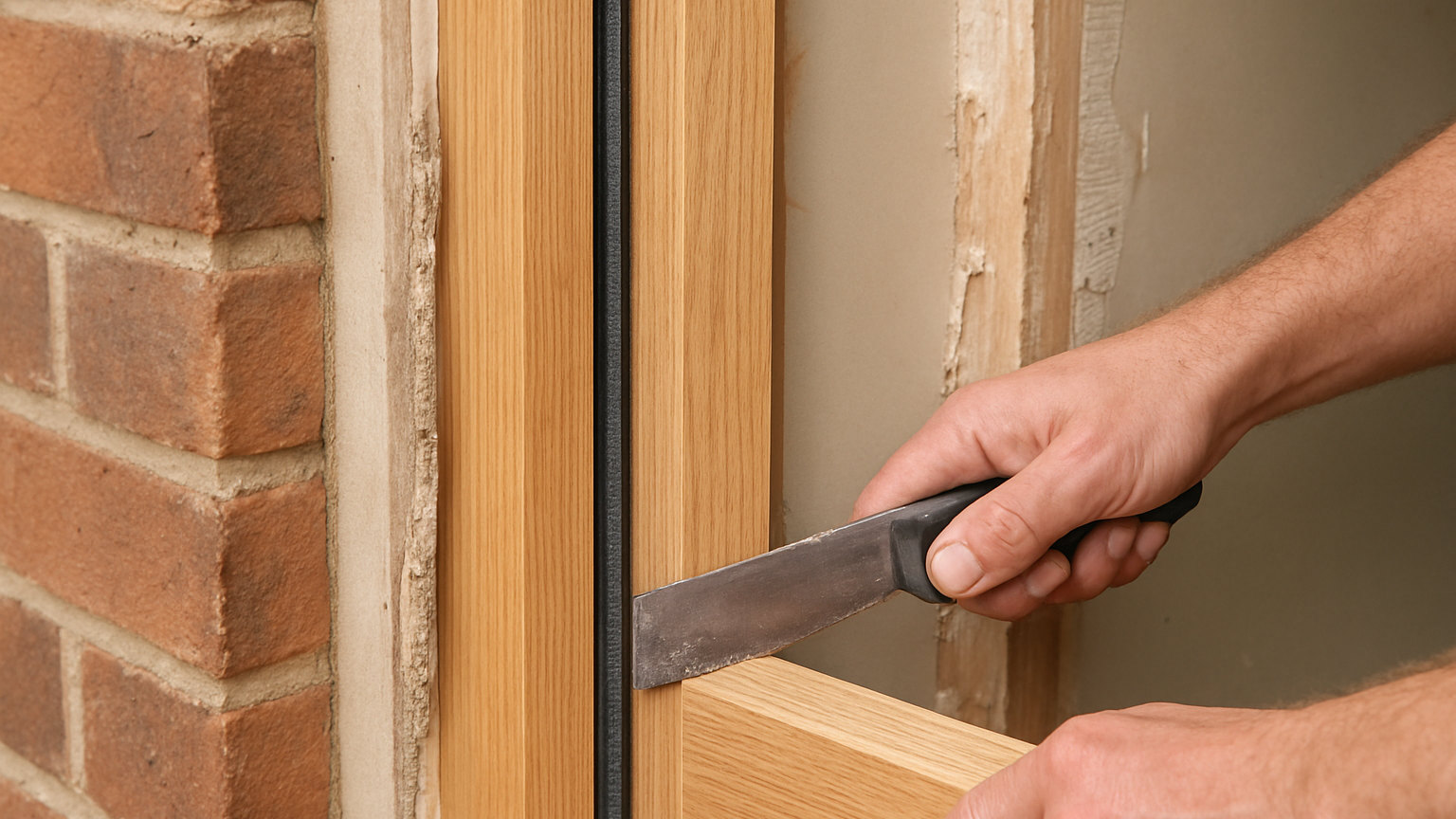
A fire door is not just a heavier door. It is a tested assembly of door, frame, hinges, seals, latch and closer, and it performs only if all of it is correct.
Where they are required
The building regulations set this out, and the common domestic situations are these.
Houses of three storeys or more, where doors between the stairway and habitable rooms generally need to be fire doors.
This is why a loft conversion almost always triggers fire door requirements throughout the stairway, not just at the new room.
Between a house and an integral garage.
In flats, at the entrance door and internally, with specific requirements.
Where an open-plan layout or a new opening affects the protected escape route.
FD30 is the usual domestic specification, meaning 30 minutes of fire resistance. FD60 is used in some situations.
Requirements vary and are revised, so check the current position with building control rather than assuming.
The door is only part of it
This is the point most often missed.
The certification applies to the whole assembly: the door leaf, the frame, the hinges, the intumescent seals, the latch or lock, the closer and the glazing.
Substituting any component can invalidate the performance.
Keep the documentation and the label, which is usually on the top or hinge edge of the leaf.
Gaps
Tighter than an ordinary door and specified.
Typically 2 to 4mm at the head and sides, consistent all round.
Too large and fire and smoke pass; too tight and the door binds and gets propped open.
The threshold gap is limited, and where smoke control is required it is much tighter, which usually means a threshold seal or a drop-down seal.
Intumescent seals
Strips fitted into a groove in the door edge or the frame.
They expand in heat to seal the gap.
Where smoke control is required, combined intumescent and cold smoke seals with a brush or fin are used.
Do not paint over the intumescent strip or fill the groove, and replace any that are damaged or missing.
Hinges and ironmongery
Three hinges as a minimum, of a type certified for fire door use, usually steel with a high melting point.
Hinges are frequently required to be fitted with intumescent pads behind them.
Latches, locks and handles must be suitable for fire door use.
Where a self-closer is required, it must close the door fully onto the latch from any angle. A door that does not latch shut is not a fire door.
What not to do
Do not cut a cat flap, a letterplate or a vent into a fire door unless it is a certified fire-rated component installed correctly. An ordinary cat flap destroys the door's performance completely.
Do not trim beyond the manufacturer's stated maximum, which is usually very small.
Do not remove or paint over the seals.
Do not replace the hinges or the latch with ordinary ones.
Do not prop it open. A fire door held open by a wedge is doing nothing at all.
Do not fit ordinary glazing; any glazed panel must be fire-rated glass in a certified system with the correct beading.
Checking an existing fire door
Look for the certification label on the top or hinge edge.
Check the gaps are consistent and within tolerance.
Check the seals are present, undamaged and unpainted.
Check three hinges are fitted and the screws are tight.
Check the door closes fully and latches from any open position.
Check for any holes, cut-outs or damage.
Getting it right
Buy the door, frame, hinges, seals and ironmongery as a specified set from one supplier, and fit them as the instructions require.
Where the work is part of a notifiable project, the building control inspector will check this.
Landlords and flats
Requirements are more stringent in flats and in rented property, and flat entrance doors have specific standards.
Where you are responsible for a let property or a leasehold flat, take advice rather than relying on general guidance.
Why it matters
A fire door buys the time needed to get out of a building, by holding the stairway clear of smoke and fire.
Every shortcut, from an oversized gap to a painted seal to a wedge under the door, reduces that time.
It is the one part of a house where the specification exists for a reason that is easy to state.


