An external door does three jobs an internal one does not: it keeps weather out, it keeps people out, and it is subject to the building regulations.
Building regulations
Replacing an external door is controlled work in England and Wales, because it affects thermal performance and, in some cases, safety glazing and means of escape.
It must be either installed by an installer registered with a competent person scheme who self-certifies, or notified to building control.
Replacement doors must meet a minimum thermal performance, and there are requirements around safety glazing and ventilation.
You will be asked for the certificate when you sell, so this matters practically as well as legally.
Repairing an existing door, or replacing it like for like within an existing frame, is treated differently from replacing the whole door and frame. Check the position before starting.
Frame or lining
External doors hang in a frame with the stop machined in, or in a modern composite or uPVC frame supplied as a unit.
A timber frame must be treated, and the sill in particular takes the worst weather.
Fit a proper weathered sill with a drip groove underneath, which stops water tracking back into the wall.
Fitting the frame
The frame must be plumb, square and solidly fixed.
Use frame fixings into the masonry, at least three per jamb and preferably more, packed behind each fixing.
Check plumb in both planes and check the diagonals before final tightening.
Fix into the brickwork or blockwork, not into the plaster or the frame of an old unit.
Seal the gap between frame and masonry with expanding foam, then point or seal the outside with a suitable exterior sealant.
The threshold
Where most external door problems start.
The threshold must shed water outwards, with the external ground level below the internal floor level.
Keep the external level at least 150mm below the damp proof course, which is the standard rule and is frequently broken by later paving.
Fit a weather bar or a threshold seal, and a drip bar on the face of the door where appropriate.
Where level access is required, use a proper low threshold designed for the purpose with drainage, rather than simply lowering the sill.
Hinges and security
Use three hinges as a minimum, in brass or stainless steel, and heavy enough for the door weight.
Use long screws that reach through the frame into the masonry or the timber behind, since short screws in a frame are the weak point in a kick-in.
Fit hinge bolts, which are steel dowels in the hinge edge engaging the frame, so the door cannot be levered off even if the hinges are attacked.
Use a multipoint lock or a good quality mortice lock and check what your insurer requires.
Fit a viewer and a chain or a door limiter.
Weather sealing
Fit compression seals in the frame rebate.
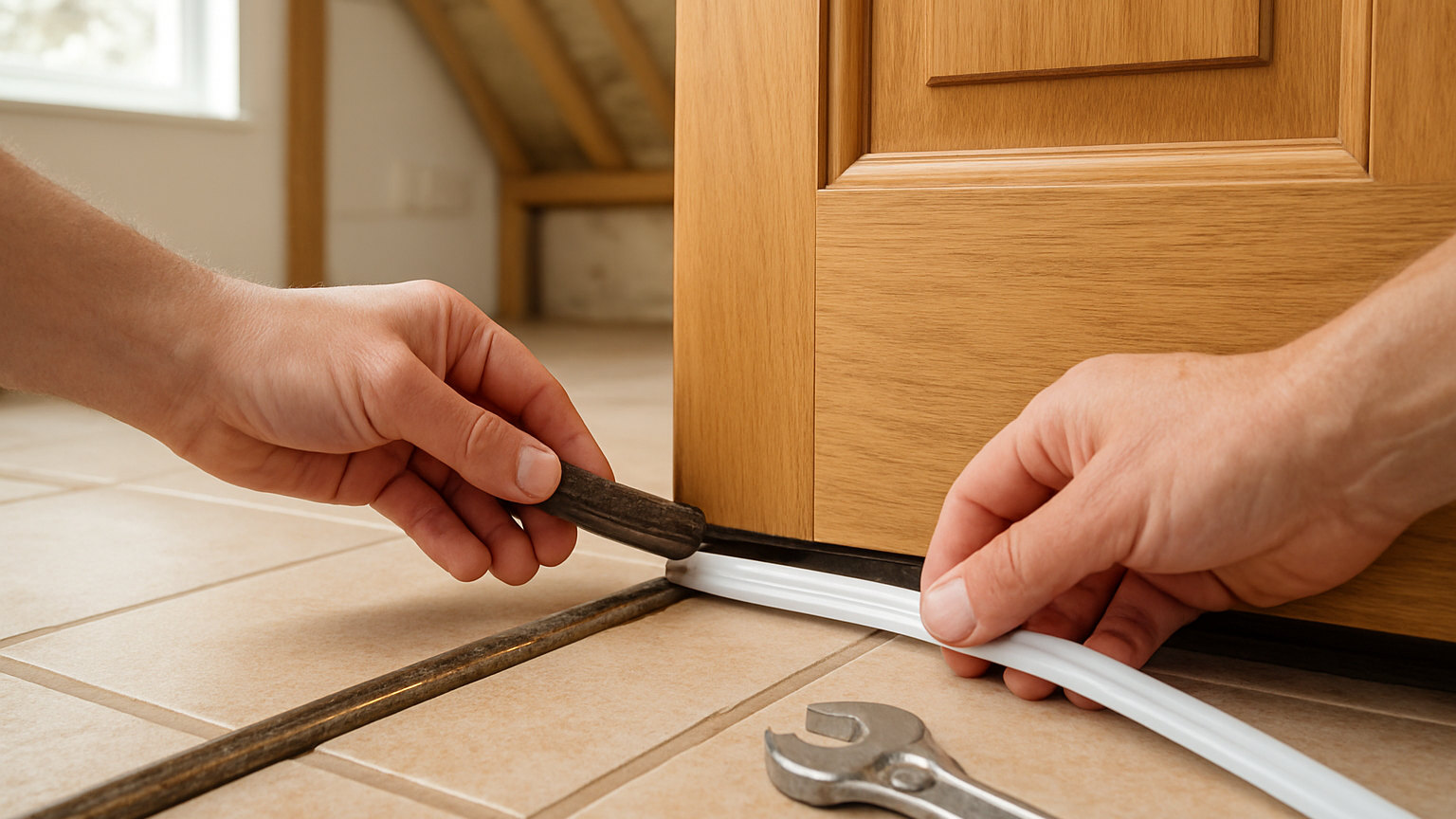
Fit a brush or blade seal at the bottom of the door.
Seal every cut edge of a timber door, particularly the bottom, and paint or finish all six faces including the top edge, which is the one everyone forgets and where water sits.
Glazing
Any glazing in a door, or in a side panel within 300mm of the door edge and up to 1500mm from the floor, is a critical location and must be safety glass.
It must be permanently marked as such.
Practical points
External doors are heavy. Get help, and support the door while fixing the hinges.
Do not remove an external door late in the day. Have the new one on site, checked and ready before the old one comes out.
Fit and finish the door before the weather turns, since unfinished timber absorbs water quickly.
Composite and uPVC doors
Supplied as a complete unit with the frame, and made to measure.
Measure the structural opening carefully and check whether the supplier measures or expects you to.
These are almost always fitted by the supplier under a competent person scheme, which deals with the certification at the same time.
Before removing the old door
Check the new one is the right size and handing, and that you have the fixings, the lock and the ironmongery.
Have a way of securing the opening if the job overruns.