The flat middle of a floor is easy. The edges, the doorways and the obstacles are where a floor looks either professional or homemade.
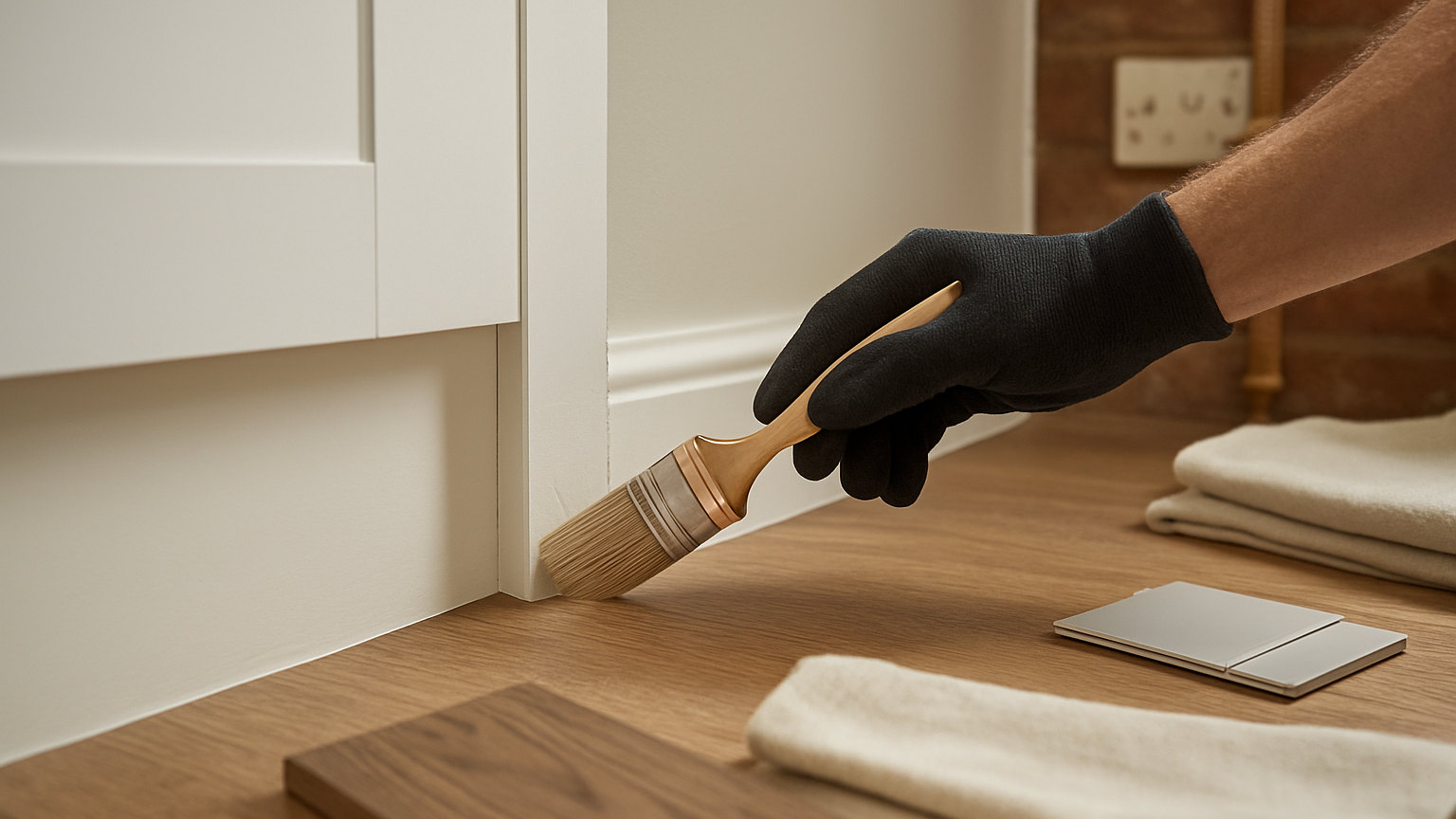
Undercut door frames
Slide the flooring underneath rather than cutting round. This is the single biggest difference between a neat floor and an untidy one.
Use a flush cut saw, an oscillating multi-tool with a flush blade, or a purpose-made jamb saw.
Lay an offcut of the flooring, plus the underlay, on the floor as a height guide and rest the saw blade on it.
Cut the frame and the architrave horizontally at that height.
Remove the waste and vacuum out the recess.
Do this before laying, since it is very difficult afterwards.
Leave the expansion gap behind the frame as well; the frame hides it.
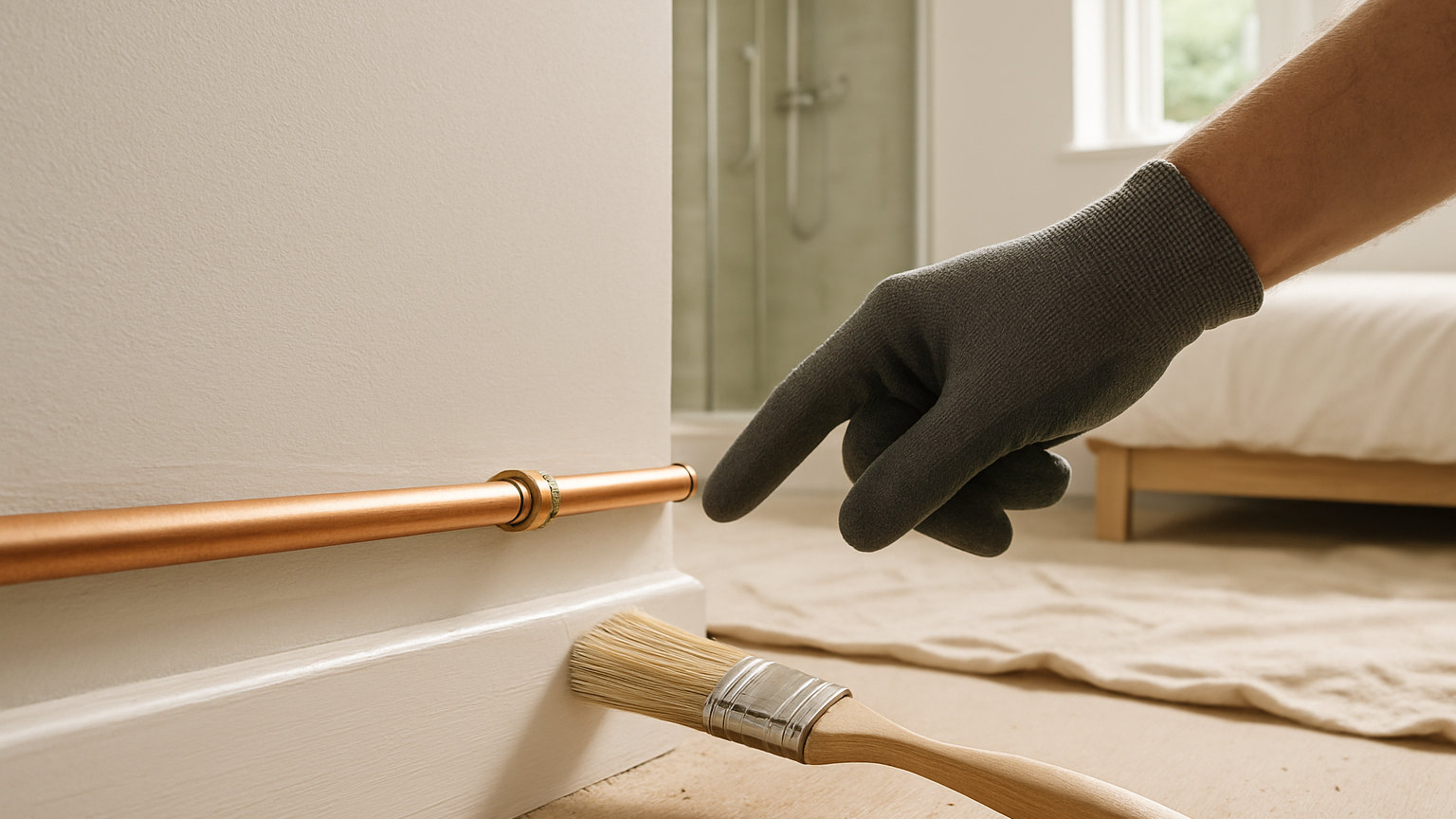
Pipes coming through the floor
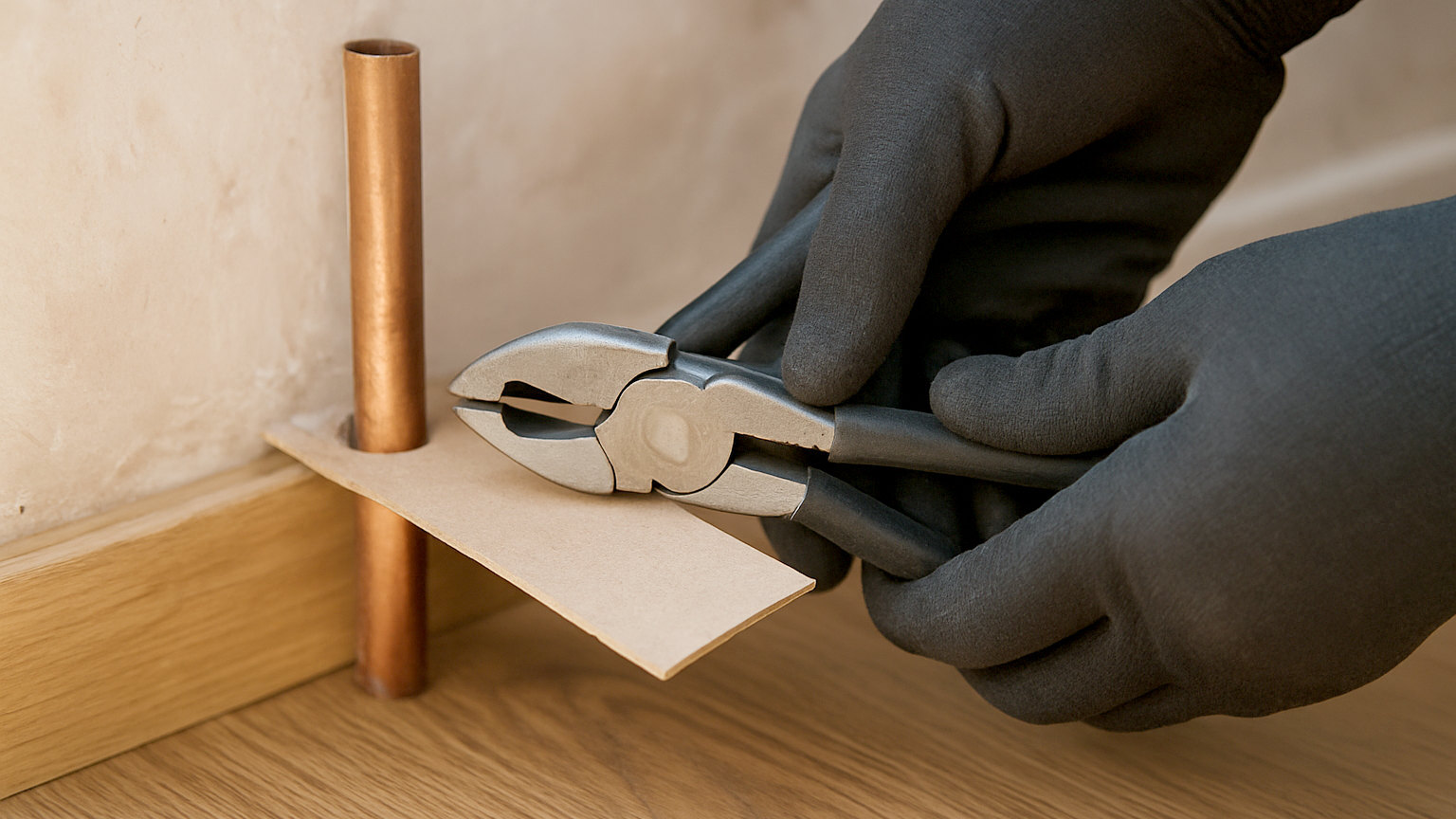
The tidy method for a single pipe.
Measure the pipe position from two directions and mark it on the board.
Drill a hole the pipe diameter plus the expansion gap on each side, so typically pipe diameter plus 20mm.
Cut a wedge from the hole to the back edge of the board at an angle.
Fit the board around the pipe, then glue the wedge back in behind the pipe.
Fit a pipe collar to cover the gap, which comes in two halves or slides over.
Do not glue the collar to both the pipe and the floor, which pins the floor.
Radiators and pipe boxing
Where pipes drop behind a radiator, either use the pipe method above or box them.
The neatest result comes from draining and removing the radiator, laying the floor underneath and refitting it, which is worth doing if the radiator is coming off anyway.
Leave an expansion gap at any boxing.
Toilets and pedestals
The most awkward cut in a bathroom.
Where possible, lay the floor before fitting the toilet and pedestal. This gives a continuous floor, looks far better and makes future replacement straightforward.
Where the fitting is staying, make a template.
Use card or paper, cut it roughly to shape, then make a series of relief cuts and press them against the base to transfer the curve.
Tape the pieces together, transfer to the flooring and cut.
Seal the joint with silicone afterwards.
Making a template
Worth doing for any complicated shape and essential for sheet vinyl.
Tape sheets of card together across the whole area.
Cut the card slightly oversize and use a scribing block or a compass to transfer the exact wall profile onto it.
Cut the card to the line, check it fits, then use it as the pattern.
Mark which way up it goes.
Awkward corners and irregular walls
Scribe rather than measure.
Hold the board in position, parallel to the wall and offset by a consistent amount, and run a compass or scribing block along the wall to transfer the profile.
Cut to the line with a jigsaw, cutting slightly back at an angle so the visible edge meets tightly.
Remember the expansion gap on top of the scribed line.
Thresholds and doorways
Fit a threshold strip at every doorway, which covers the expansion gap on both sides and allows the floors to move independently.
Choose the profile for the situation: flat for two floors of equal height, ramped for a change in level, and a T-bar between two hard floors.
Fix the strip to the subfloor, not through the flooring.
Tools that make the difference
An oscillating multi-tool for undercutting and awkward cuts.
A jigsaw with a downcut blade for curves.
A pull bar and tapping block for the last row and against obstacles.
A contour gauge, which copies a profile directly and saves a great deal of card.
Test cuts
Practise any awkward cut on an offcut before committing to a full board.
This is why the waste allowance matters: it gives you material to experiment with rather than having to get every cut right first time.
Order of work
Undercut frames before laying anything.
Deal with the awkward cuts while you still have full boards to work with, rather than leaving them all to the last row.
Keep the longest offcuts, since they are what you will need for the difficult pieces.