Kitchen extraction deals with moisture as much as smell, and moisture is what causes condensation and mould elsewhere in the house. It is worth doing properly.
Ducted or recirculating
Ducted hoods carry air outside through a duct. They remove moisture, grease and smells from the building entirely and are substantially more effective.
Recirculating hoods pass air through a charcoal filter and return it to the room. They remove some smell and grease and remove no moisture at all, which is their fundamental limitation.
Charcoal filters need replacing regularly, typically every few months, and performance falls off sharply when they are not.
Choose ducted wherever a route to an outside wall or through the roof exists. Plan for it at the design stage, since retrofitting a duct through fitted units is difficult.
Building regulations
Ventilation requirements apply to kitchens under the building regulations.
For a new or replacement kitchen extract system, the required rate is broadly 30 litres per second where the extract is over the hob, or 60 litres per second elsewhere in the kitchen, as an intermittent rate.
Check the current requirements, since they are revised periodically, and check the hood's stated extraction rate against them rather than the marketing figure.
An openable window does not remove the need for mechanical extraction in a kitchen.
Duct sizing and routing
This is where most installations lose their performance.
Use the largest duct the hood will take, commonly 150mm round or the rectangular equivalent. Reducing to 100mm dramatically restricts airflow.
Keep the run as short and straight as possible. Every bend costs airflow, and a ninety degree bend costs a surprising amount.
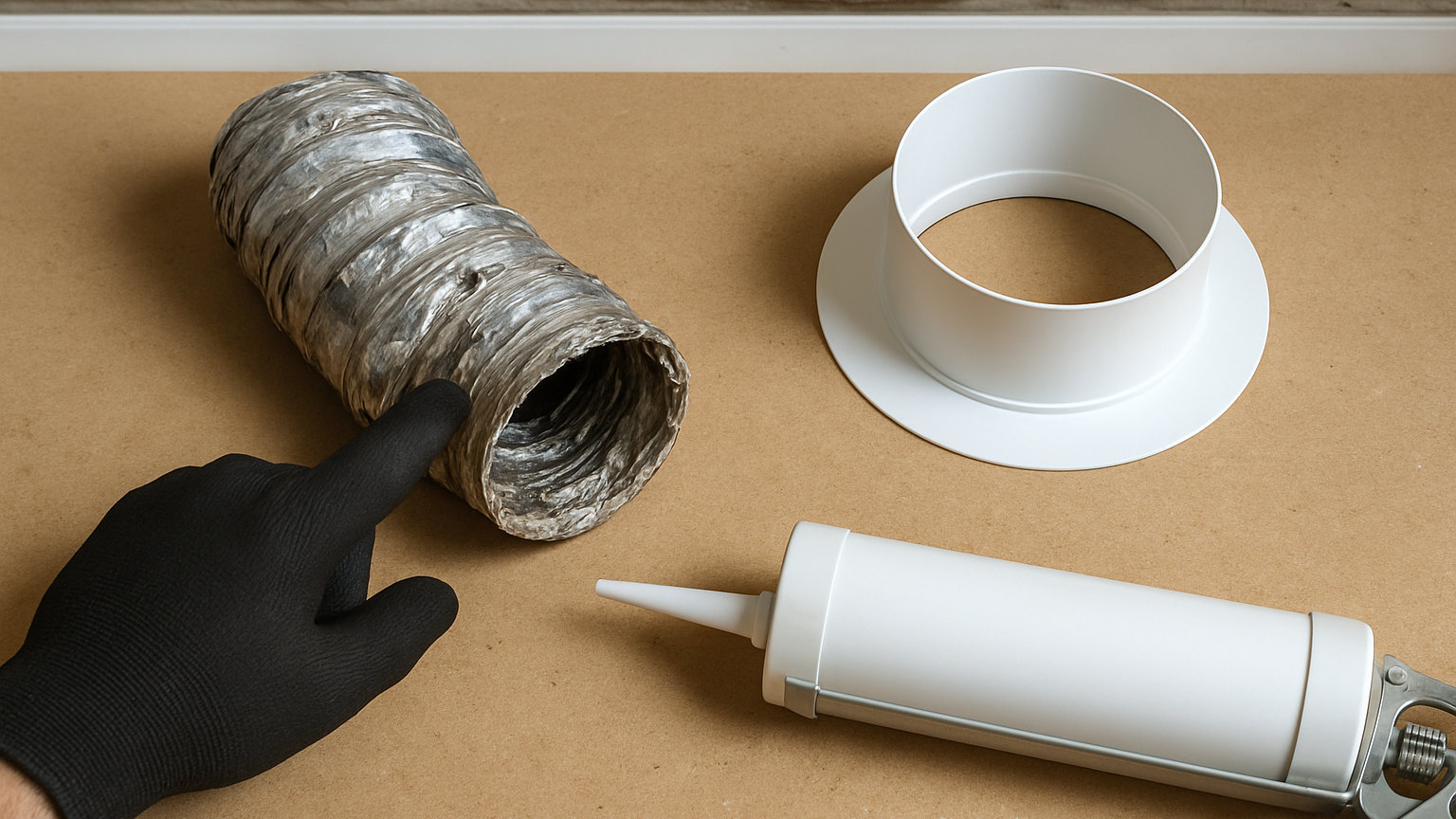
Use rigid duct rather than flexible where you can. Flexible duct has a ribbed internal surface that creates turbulence and resistance, and it sags.
Where flexible must be used, pull it taut and keep it as short as possible.
Seal every joint with duct tape or proper connectors, since leaks discharge moist greasy air into a ceiling void.
Insulate duct running through cold spaces such as a loft, so warm moist air does not condense inside it and run back.
Give any horizontal run a slight fall towards the outside so condensate drains outwards.
The outside terminal
Fit a proper external grille or cowl with a backdraught flap, and not a mesh insect grille that clogs with grease.
Position it clear of windows, doors and openings where the discharge would be a nuisance.
Never duct into a loft, a cavity wall or a void. This causes serious condensation problems and is a common and damaging shortcut.
Height above the hob
Follow the manufacturer's instructions, which state a minimum and are a safety requirement.
Typical figures are around 650mm above a gas hob and 600mm above an electric or induction hob, with variation between models.
Too low is a fire risk over gas. Too high reduces capture and means bumping your head is replaced by the hood not working.
Fitting
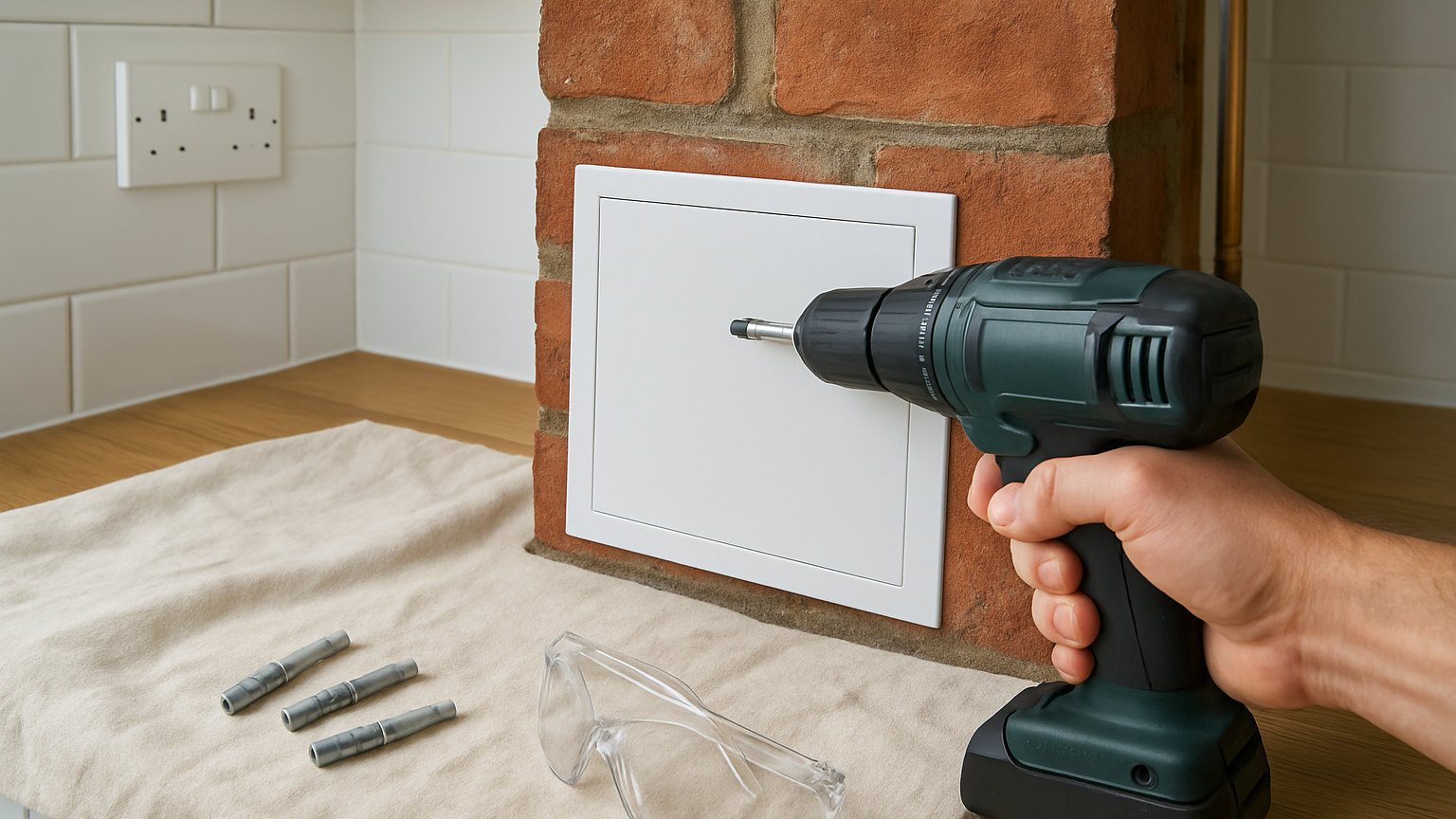
Wall-mounted hoods need substantial fixings into masonry or a stud, chosen for the wall type as with any heavy item.
Chimney hoods have a bracket for the body and a separate one for the flue section.
Cut the duct hole before offering the hood up, and check the route clears joists and cables.
Get a second person, since hoods are awkward.
The electrical connection is usually to a fused connection unit above worktop level. Where this involves a new circuit it is notifiable work.
Maintenance
Wash or replace grease filters regularly, monthly under heavy use. A blocked filter is a fire risk as well as ineffective.
Replace charcoal filters on schedule in a recirculating hood.
Check the external flap opens and closes freely.
Run the hood for several minutes after cooking rather than switching it off immediately, which clears the residual moisture.
Types of hood
Chimney hoods mount on the wall with a flue section concealing the duct.
Integrated and canopy hoods sit inside a wall unit and are less obtrusive, with the duct running up through the unit.
Island hoods hang from the ceiling and need a duct route through the ceiling void.
Downdraft extractors rise from the worktop beside the hob and need space in the base unit below.