Waste is a cost and a legal responsibility, and the responsibility does not end when someone takes it away.
Skip permits
A skip standing on your own driveway or land needs no permit.
A skip on a public road or verge needs a permit from the local council, which the skip company normally arranges. There is a fee, and conditions about lighting, cones, reflective markings and duration.
Placing a skip on the highway without a permit can result in a fine.
Allow time, since permits take several working days in many areas.
Check parking restrictions and whether a suspension of bays is needed.
Skip sizes
Sizes are quoted in cubic yards and the names vary between companies.
Mini, around two to three cubic yards: a small clearance or a bathroom strip-out.
Midi, around four to five: a kitchen strip-out or a modest garden clearance.
Builders, around six to eight: the common domestic size for renovation work.
Larger sizes are usually for light bulky waste rather than rubble, since weight limits apply.
Heavy waste fills a skip by weight before volume. Soil, rubble, concrete and tiles are far heavier than they look, and overloading is refused or surcharged.
Do not fill above the sides. An overfilled skip cannot legally be transported and will not be collected.
What cannot go in a skip
Rules vary slightly by operator and all exclude hazardous waste.
Asbestos in any form, which requires specialist disposal.
Paint, solvents, oils, fuel and chemicals.
Batteries, including lithium batteries, which cause fires in waste facilities.
Gas bottles and aerosols.
Fridges, freezers and air conditioning units, because of refrigerant gases.
Televisions, monitors and most electrical items, which fall under separate regulations.
Tyres, plasterboard in mixed loads, medical waste and food waste.
Plasterboard must generally be separated, since it releases hydrogen sulphide in landfill. Many operators supply a separate bag or container for it.
Your duty of care
This is the part most people do not know.
As a householder you have a legal duty to make sure your waste is passed only to an authorised person.
If you give waste to a man with a van who then fly-tips it, and you did not check, you can be fined.
Check the waste carrier registration, which can be verified online through the environmental regulator's public register.
Ask for a receipt or waste transfer note showing who took it, when and where it went.
Be cautious of unsolicited offers to clear waste cheaply.
Alternatives to a skip
Household waste recycling centre. Free for household waste, and rules on DIY waste have changed in recent years so that many councils no longer charge for small loads of construction waste from householders. Check your council, since booking, vehicle restrictions and van bans are common.
Grab lorry for heavy waste such as soil and rubble, which is loaded from a pile and is frequently cheaper than a skip for that material.
Hippo bags and similar, filled at your own pace and collected. Good for small quantities, and weight limits are strict.
Wait-and-load, where a skip lorry waits while you fill it, avoiding the need for a permit.
Reduce what you throw away
Sell or give away usable items: doors, radiators, sanitaryware, bricks, slabs, timber. Local reuse networks and social media groups clear them quickly.
Reuse hardcore on site as sub-base rather than paying to remove it and paying again for aggregate.
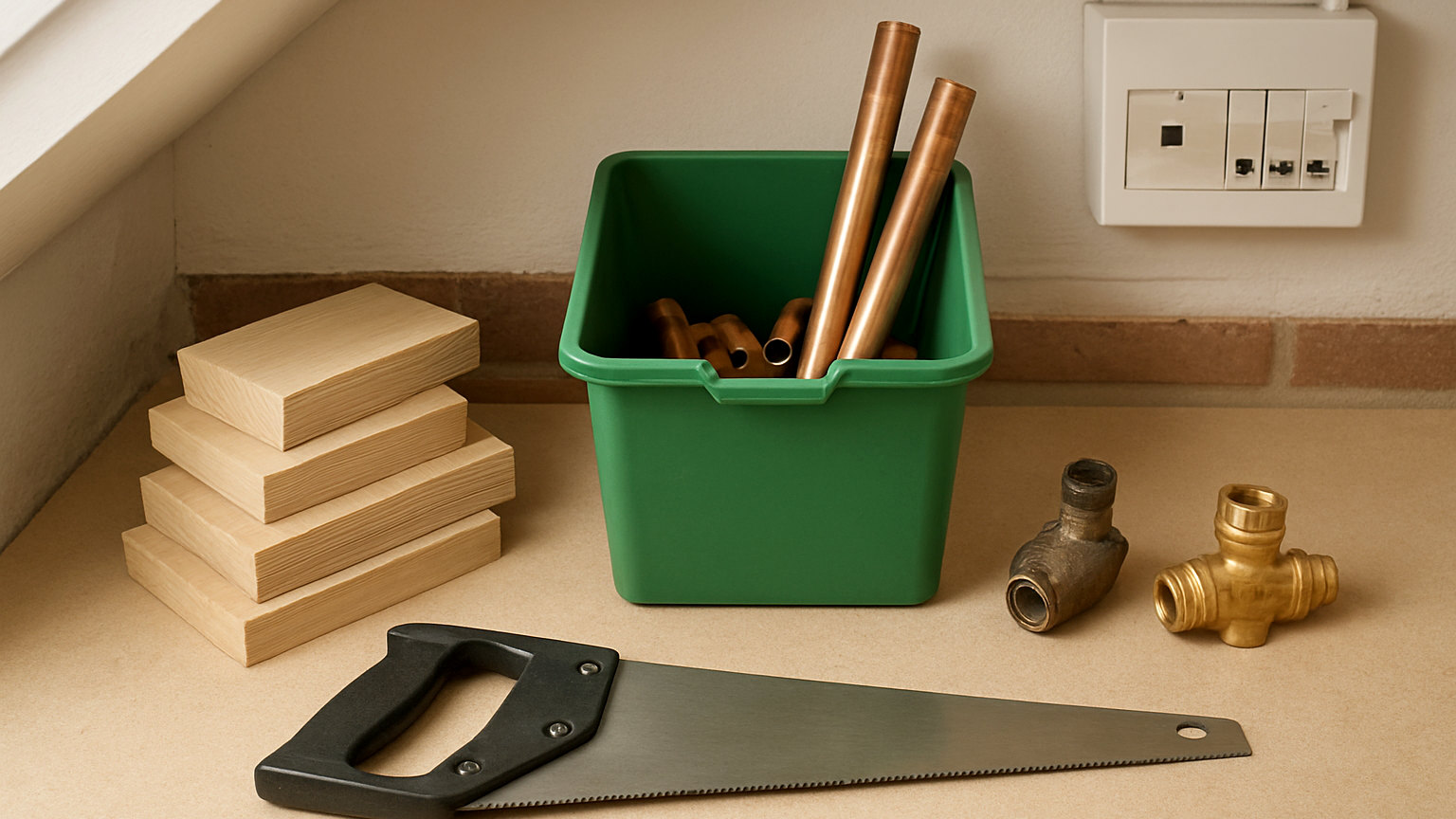
Separate metal, which scrap merchants take and sometimes pay for.
Return unopened materials to the merchant.
Practical points
Load flat items down the sides and fill the middle, keeping heavy material low.
Book collection in advance, since skips left too long attract other people's waste.
Cover a skip overnight if you can, for the same reason.
Hazardous items
Paint, solvents, adhesives, fuel, batteries and gas bottles all need a household hazardous waste facility rather than a skip or a bin.
Check what your local recycling centre accepts and whether booking is needed.
Never pour anything down a drain, and never burn treated timber or plastics, which release harmful fumes.
Asbestos waste
Cannot go in a skip, a bin or an ordinary recycling centre without specific arrangements.
Contact the local authority or a licensed contractor, since disposal is regulated and double-bagged specialist arrangements apply.