Ten minutes of covering up prevents damage that takes a day to put right, and paint on a carpet is permanent.
Move what you can
The best protection is absence.
Take everything out of the room that will come out.
Move the rest to the centre, well clear of the walls, so you can work all the way round without leaning over.
Take down curtains, blinds, pictures and light fittings rather than working around them.
Remove socket and switch faceplates where you are papering or painting closely, having isolated the circuit first, or mask them carefully if you are not confident.
Floors
Cotton twill dust sheets are the standard for decorating. They absorb drips rather than letting them spread, they do not slip as badly as plastic, and they can be washed and reused. Buy the heaviest weight you can.
Plastic sheeting is waterproof and dangerously slippery on hard floors and stairs, and paint sits on top of it and gets walked around. Use it under cotton, not instead of it.
Combination sheets with an absorbent surface bonded to a waterproof backing are the best of both and cost more.
Hardboard or correx for building work and heavy traffic, taped at the joints so nothing works underneath.
Self-adhesive carpet protection film for carpets and stairs, which is quick and effective. Follow the maximum time stated on the roll, since leaving it too long makes it difficult to remove and can mark the carpet.
Tape sheets down at the edges so they do not move, using a tape suitable for the floor.
Stairs
The most awkward and the most damaged.
Use carpet film or fitted stair protectors rather than loose sheets, which are a genuine fall risk.
Never leave a loose sheet on stairs.
Furniture
Cover with plastic sheeting or old sheets and tape the joins, since fine dust penetrates any gap.
Wrap soft furnishings completely rather than draping, because dust settles in the folds.
Where furniture stays in the room for weeks, use plastic and check periodically for condensation underneath, which can mark polished surfaces.
Stand furniture on the sheeting rather than beside it.
Doorways and dust barriers
The most important protection for the rest of the house.
Seal doorways with plastic sheeting taped at the edges, or a zipped dust barrier, which allows access without breaking the seal.
Seal the gap under any door with a draught excluder or a damp towel.
Cover vents and extractor openings that connect to other rooms.
Masking
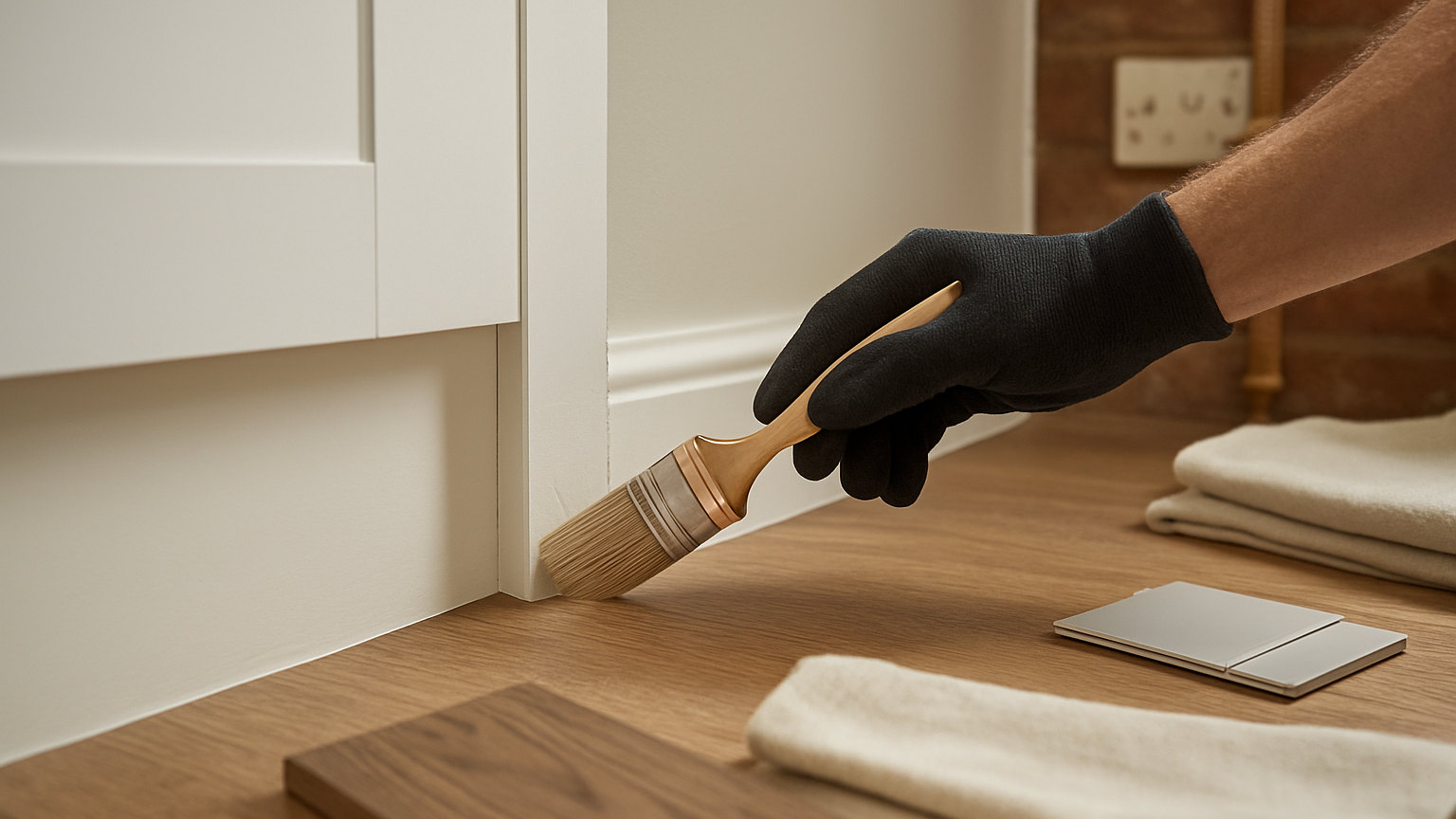
Use low-tack masking tape on delicate surfaces and remove it within the time stated, since ordinary tape left for days pulls off paint and leaves adhesive.
Press the edge down firmly with a filling knife so paint cannot creep underneath.
Remove tape while the paint is still slightly soft rather than fully cured, which gives a cleaner line.
Masking film with tape attached covers windows and large areas quickly.
Radiators, sockets and fittings
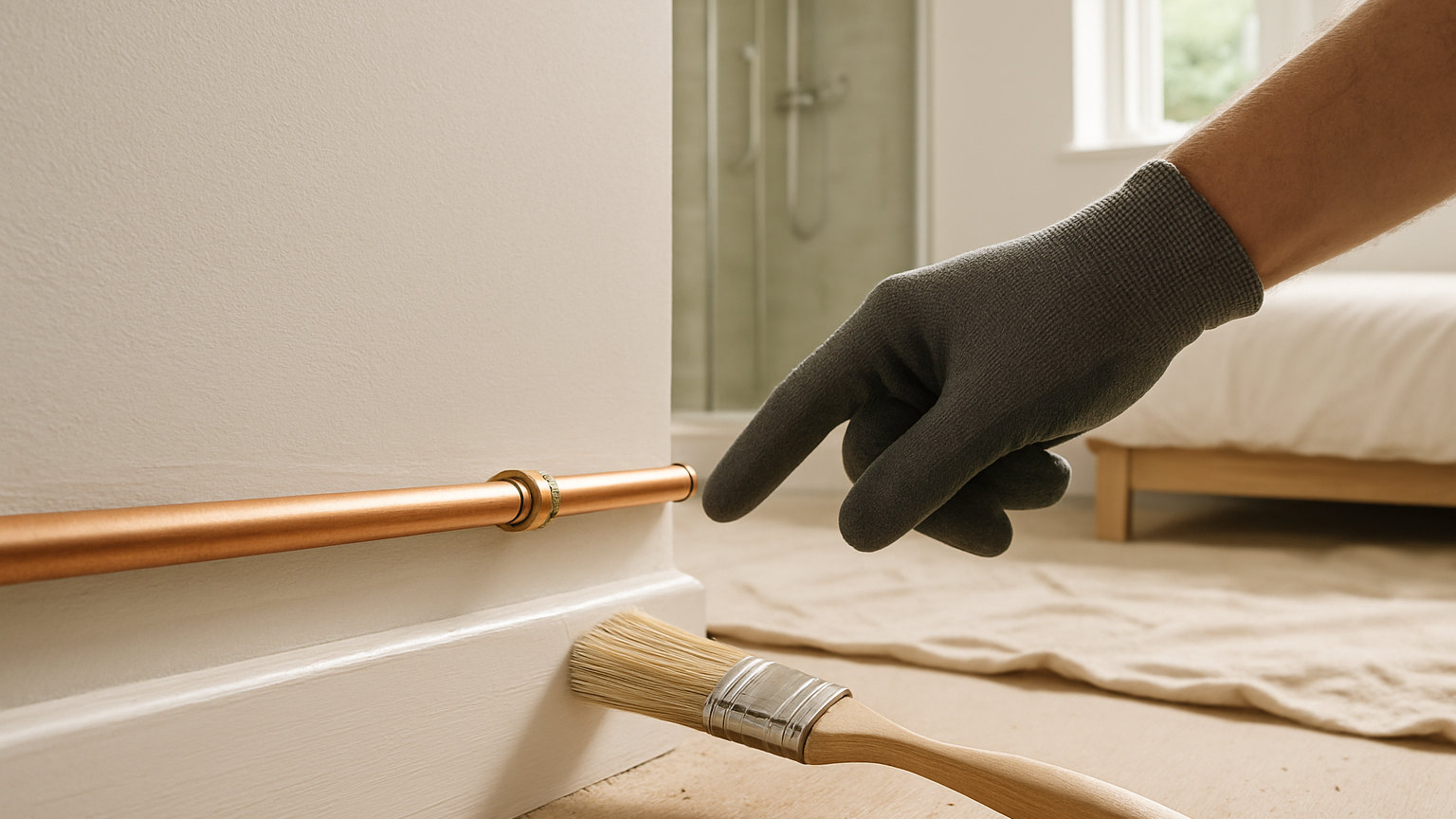
Mask the pipework and valves, since paint on a valve is difficult to remove.
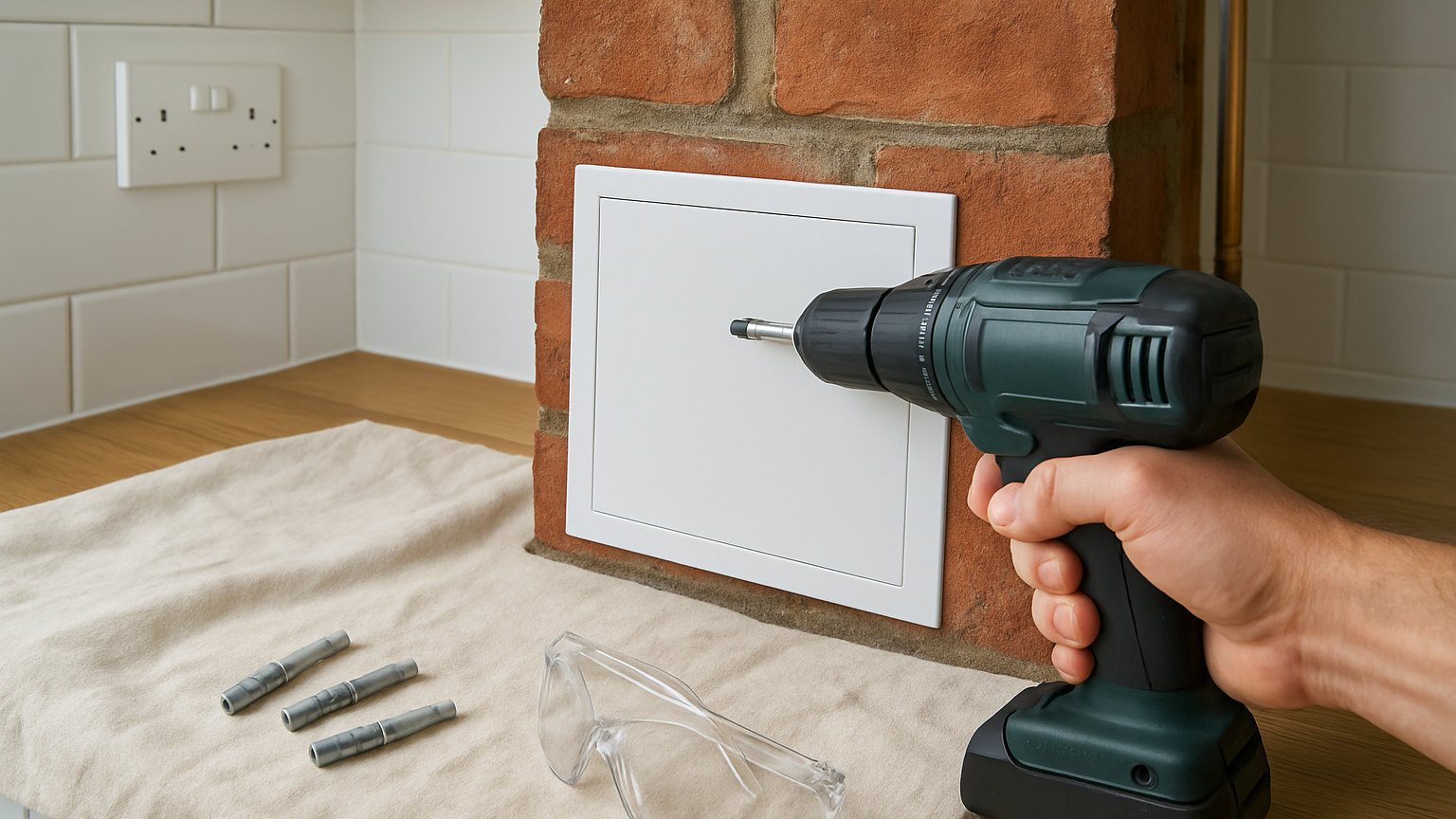
Mask around sockets and switches, or remove faceplates with the circuit isolated.
Cover smoke alarms during dusty work and uncover them immediately afterwards. Do not leave them covered overnight.
Outside
Cover paths, drives and plants before painting a fence or a wall, since masonry paint does not come off paving.
Weight sheets down against wind.
Protect gravel with sheeting, since spilt paint and mortar cannot be picked out of it.
Cleaning up
Fold sheets inwards to trap the dust rather than shaking them out indoors.
Vacuum before removing floor protection, not after.
Use an M-class vacuum for construction dust rather than a domestic cleaner, which passes fine dust straight through the filter and back into the room.
What people regret skipping
Protecting the hall and stairs, which every load is carried through.
Sealing the doorway, so dust reaches the whole house.
Covering the bath and basin before working above them, since a dropped tool chips enamel permanently.
Taking curtains down, which hold dust for months afterwards.
Protecting the garden and paths before outdoor painting, since masonry paint does not come off slabs.
Cost against damage
A set of decent dust sheets, a roll of carpet film and some hardboard costs very little against replacing a carpet or refinishing a floor.