
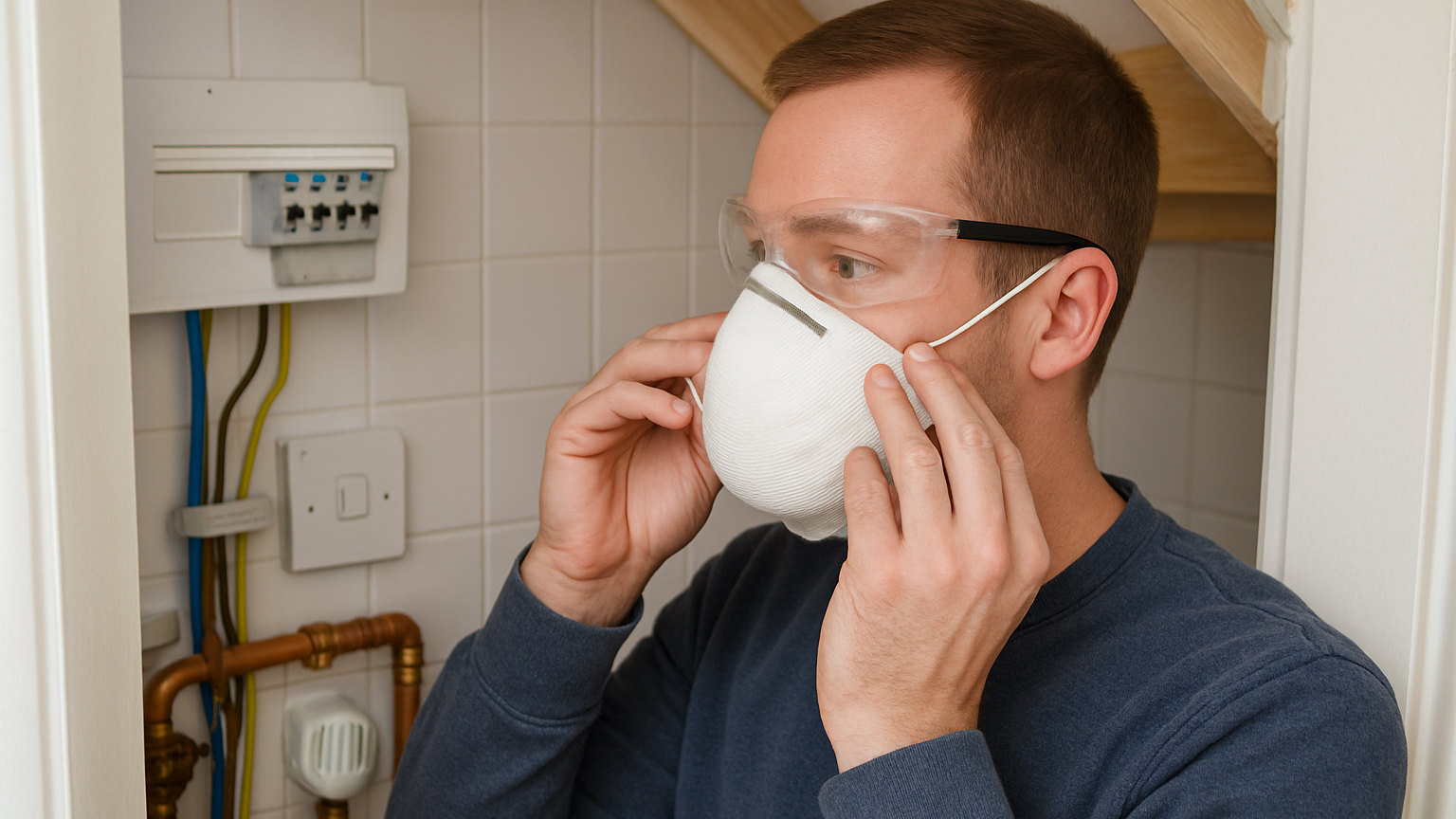
Dust masks are bought casually and used carelessly, and the gap between a mask that works and one that does not is almost entirely about fit.
Why it matters
The dust you can see is not the dangerous part. The harmful fraction is fine enough to stay airborne for hours and to reach deep into the lungs.
Respirable crystalline silica is produced by cutting, drilling or grinding concrete, brick, stone, mortar, tile and sand based materials. It causes silicosis and lung cancer, and the damage is cumulative and irreversible.
Wood dust is a respiratory sensitiser, and hardwood dust is a recognised cause of nasal cancer.
MDF dust contains both fine wood particles and resin binders.
Old buildings add lead paint dust and, before 2000, the possibility of asbestos.
The ratings
Disposable masks are classified by how much they filter.
FFP1 filters the least and is suited to nuisance dust such as sweeping.
FFP2 offers considerably more.
FFP3 is the highest of the three and is what to use for construction dust, silica, wood dust, lead paint and anything you are unsure about.
The difference in price is small. Buy FFP3 and use it for everything.
Check for a recognised standard marking on the mask itself. Unmarked masks from unknown sources are not respiratory protection.
What is not a dust mask
A surgical or medical face mask, which is designed to stop droplets leaving the wearer rather than to filter incoming dust.
A cloth or fabric covering.
A bandana or a cloth over the face, which achieves nothing.
A nuisance dust mask with no rating.
Fit is everything
A filter that removes 99 per cent of particles is useless if air is coming in around the edges.
A beard, stubble or long sideburns prevent a seal. No disposable mask will seal against facial hair, and this is the commonest reason masks fail in practice.
Where a beard cannot be removed, a powered air purifying hood is the alternative.
Glasses, hats and hair caught under the edge all break the seal.
Fitting it properly
Cup the mask over the nose and mouth with the straps hanging free.
Pull the lower strap over the head to sit at the back of the neck, below the ears.
Pull the upper strap to sit high on the back of the head. Both straps, never one, and never worn under the chin.
Mould the nose clip firmly over the bridge of the nose with both hands, shaping rather than pinching, which is where most leakage occurs.
Checking the seal
This takes five seconds and should be done every time.
Cover the mask with both hands and breathe in sharply. The mask should pull in slightly against the face.
Breathe out firmly. The mask should push out slightly with no air escaping around the edges.
Feel for air on your cheeks and at the nose bridge, and around the edges of glasses.
Adjust and repeat until it seals.
Valves
A valved mask lets exhaled air out directly, which makes it far cooler and less humid to wear.
For extended work this genuinely matters, since a hot uncomfortable mask gets taken off.
The valve does not affect the protection to the wearer.
Reusable respirators
A half mask with replaceable filter cartridges is more comfortable for long jobs, seals better and works out cheaper over time.
Filters are specified by type. Particle filters are marked P3 for dust; combined filters handle solvent vapours from paints, strippers and adhesives.
Store it in a sealed bag so the filters do not absorb contaminants between uses, and replace filters on schedule rather than when they look dirty.
The mask is the last line
Control the dust first and the mask becomes a backup rather than the only defence.
Cut wet wherever possible, which suppresses silica dust at source.
Use on-tool extraction with an appropriate vacuum, not a domestic one.
Work outdoors, ventilate, and keep other people out of the area.
Never dry sweep construction dust, which puts it straight back into the air. Vacuum or damp down instead.


