
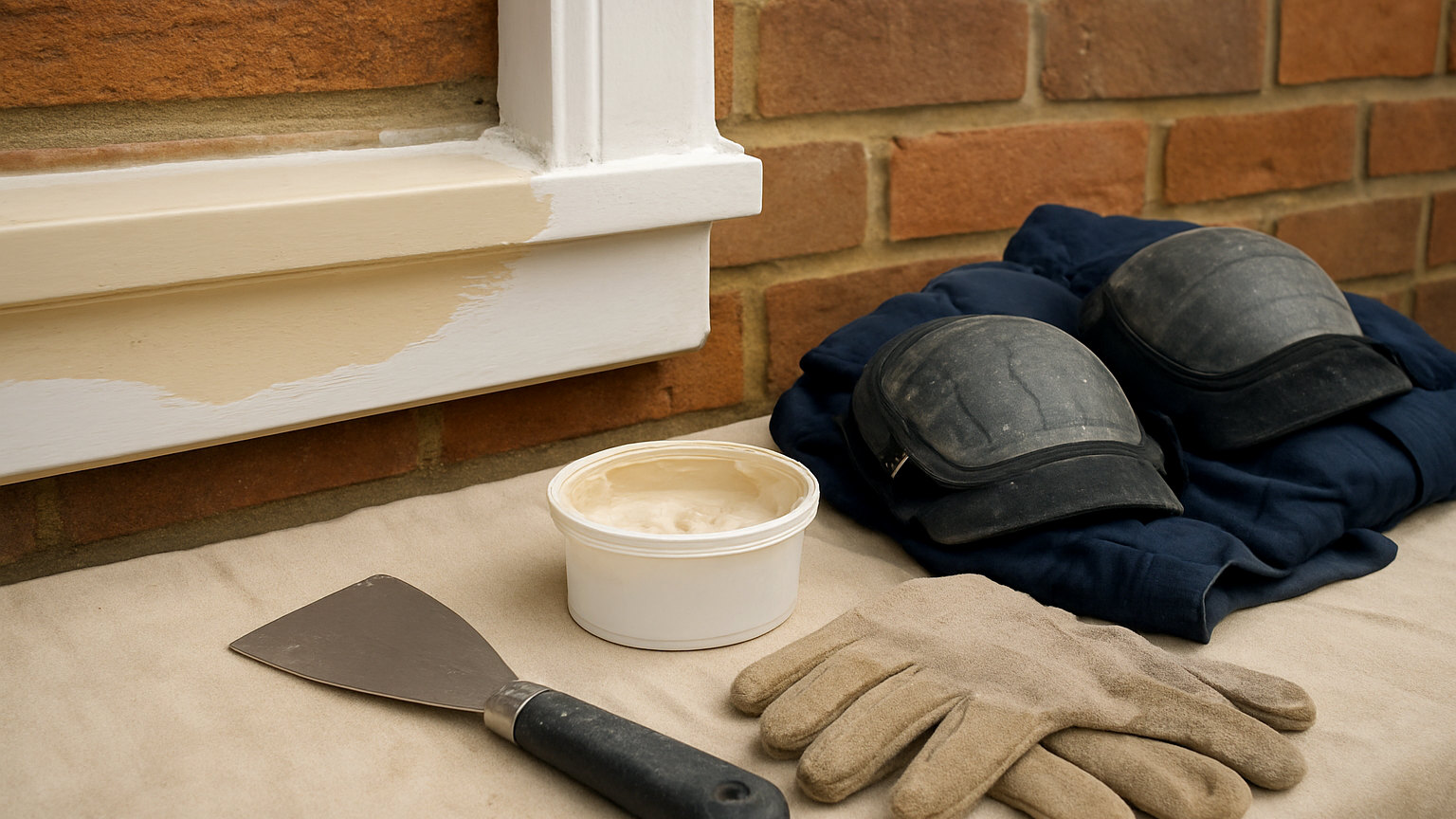
Hands and knees take the wear in most DIY, and both are easy to protect. Gloves also come with one important exception that people are rarely told about.
Matching the glove to the job
There is no single glove that does everything well.
General handling gloves, usually a knitted liner with a coated palm, for timber, stone, tools and rough materials. Dextrous enough to pick up a screw, which is why they get worn.
Leather rigger gloves for heavy handling, fencing, paving and anything with splinters or sharp edges. Clumsy for fine work.
Cut resistant gloves for handling sheet metal, glass and anything with a cut edge. Rated by level, and worth having if you handle glass or metal.
Chemical resistant gloves, usually nitrile, for solvents, paint strippers, resins and adhesives. Check the glove is rated for the chemical, since not all resist everything.
Waterproof gloves for concrete, mortar and anything wet.
Disposable nitrile gloves for painting, gluing and general mess, bought in a box.
Cement and lime burns
This is the injury people do not see coming.
Wet cement, mortar, concrete and lime are strongly alkaline. Prolonged skin contact causes chemical burns that develop over hours, and they can be severe enough to need skin grafts.
The classic injury is to the knees, from kneeling in wet concrete through trousers, which stay wet against the skin for hours.
Wear waterproof gloves, keep sleeves down, and use a board or waterproof knee pads rather than kneeling in it.
Wash any splash off immediately with plenty of water.
Do not ignore a burning or itching sensation that develops later.
When not to wear gloves
This is the exception that matters.
Never wear gloves near rotating machinery. A glove caught in a drill bit, a router cutter, a lathe or a bench saw blade pulls the hand into the machine, and the injury is far worse than the one the glove was preventing.
The same applies to loose sleeves, ties, cords, lanyards and jewellery.
Long hair should be tied back.
For hand tools and general handling, gloves are fine. For anything spinning, bare hands and good technique are safer.
Knee protection
Knee damage from kneeling is cumulative and does not repair.
Flooring, tiling, skirting, plumbing under sinks and anything at low level all involve hours on hard surfaces with grit underneath.
Knee pads that strap on are best for continuous work. Look for ones that do not slip down, since that is why most get abandoned.
Gel pads are comfortable; hard cap pads protect against what is on the floor and let you pivot.
Trousers with knee pad pockets are more comfortable than straps for a full day.
A simple kneeling mat is cheaper and works well where you are staying in one place.
Footwear
Dropped chisels, slabs, hammers and timber land on feet regularly.
A toe cap protects against that, and a puncture resistant midsole protects against nails in timber, which is the commonest site injury.
Good grip matters as much, particularly on ladders and wet surfaces.
Trainers are not suitable for anything involving heavy materials or working at height.
Clothing
Cover arms and legs for anything with splinters, dust or chemicals.
Avoid loose, flapping or synthetic clothing near hot work and rotating machinery.
Overalls or old clothes you do not mind losing, since paint, resin and cement do not come out.
A hat in the sun, and layers in a cold garage where hands stop working properly.
High visibility clothing where working near a road or a drive.
Keeping hands working
Barrier cream before and after helps with cement and solvents.
Wash properly rather than using solvent on skin, which strips it and causes dermatitis.
Deal with splinters and small cuts promptly, and keep plasters where the work is.
Check your tetanus cover is current, since cuts from rusty metal and garden soil are the classic route.


