
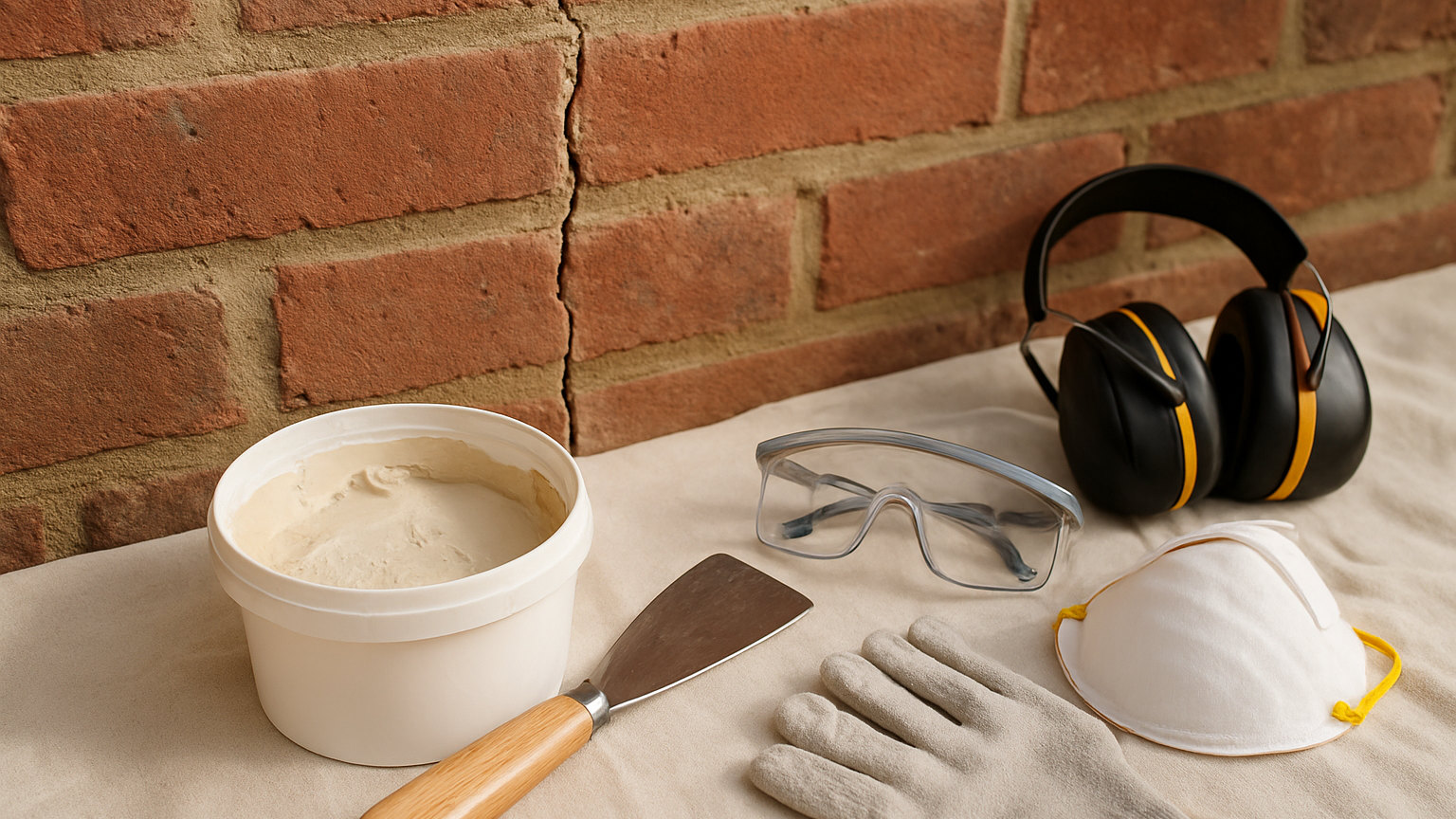
Safety equipment is the one category to buy before you need it. Nobody stops a job halfway through to go shopping, so what is in the cupboard is what gets used.
The starting five
These cover the great majority of domestic work.
Safety glasses, which are the single most important item because eye injuries are permanent and instant.
Disposable FFP3 dust masks, for anything producing fine dust.
Ear defenders or plugs, for any power tool used for more than a few minutes.
Work gloves, a general purpose pair.
Sturdy footwear, ideally with a toe cap.
That is not an expensive list, and it covers drilling, cutting, sanding, demolition and garden work.
Eye protection
Wear it for anything that can throw a fragment: drilling, cutting, grinding, chiselling, hammering masonry, and working overhead.
Overhead work is the case people forget. Dust and debris fall directly into upturned eyes.
Buy a pair that is comfortable, because uncomfortable glasses end up on the forehead.
Look for a recognised standard marking, and anti-fog and anti-scratch coatings, which are what make them tolerable to wear.
Over-glasses versions exist for people who wear spectacles, and ordinary spectacles are not eye protection.
Dust masks
The ratings matter and the differences are large.
FFP1 offers minimal protection and is suited to nuisance dust.
FFP2 is better.
FFP3 is what you want for construction dust, and particularly for anything containing silica, which includes concrete, brick, stone, mortar and tile.
A mask only works if it seals to the face. Facial hair prevents a seal, and a mask perched loosely does nothing at all.
A cloth or surgical mask is not respiratory protection.
For extended work, a reusable half mask with replaceable filters is more comfortable and cheaper over time.
Hearing protection
Hearing loss is gradual, painless and permanent, which is why it gets ignored.
Anything you have to raise your voice over is loud enough to cause damage.
Circular saws, angle grinders, breakers, routers and planers all comfortably exceed safe levels.
Defenders are easy to put on and take off, which means they actually get used. Plugs give better protection in a smaller package.
Keep a pair hanging where the tools are, not in a drawer.
Gloves
Match the glove to the job.
General handling gloves for timber, stone and rough materials.
Cut resistant gloves for handling sheet metal and glass.
Chemical resistant gloves for cement, solvents and paint strippers.
Cement and lime cause serious burns that develop slowly over hours, and wet concrete through trousers at the knee is a common injury.
Do not wear gloves near rotating machinery, where a glove caught in a bit or a blade pulls the hand in.
Feet and knees
A dropped chisel, slab or hammer lands on feet regularly.
Boots with a toe cap and a puncture resistant sole, which also protects against nails in timber.
Knee pads or a kneeling mat for flooring, tiling and anything at low level, since knee damage from kneeling is cumulative.
What to add as jobs demand
A half mask respirator with the right filter cartridges for solvents and strippers.
A face shield for grinding and chainsaw work, worn over glasses rather than instead of them.
A hard hat for work under scaffolding or where things can fall.
Overalls or old clothes you do not mind ruining.
A first aid kit, kept where the work is rather than in a bathroom cabinet.
Making it get used
Store it with the tools, so picking up the drill means seeing the glasses.
Buy comfortable items even if they cost more, since comfort is what determines whether protection is worn.
Replace scratched glasses and used masks rather than making do.
Keep a spare set, so a second person helping is not working unprotected.
Asbestos, briefly
In any property built before 2000, assume asbestos may be present in textured coatings, insulation board, floor tiles, cement sheets and around old boilers.
Do not sand, drill, cut or break anything you suspect. Ordinary dust masks are not adequate protection for asbestos fibres.
Have it tested before disturbing it, and use a licensed contractor where the material requires one.


