
Tool advice is mostly written by people who sell tools, which is why the typical starter list runs to forty items and a storage system. The honest list is much shorter.
The genuinely essential list
These cover the overwhelming majority of jobs in an ordinary home.
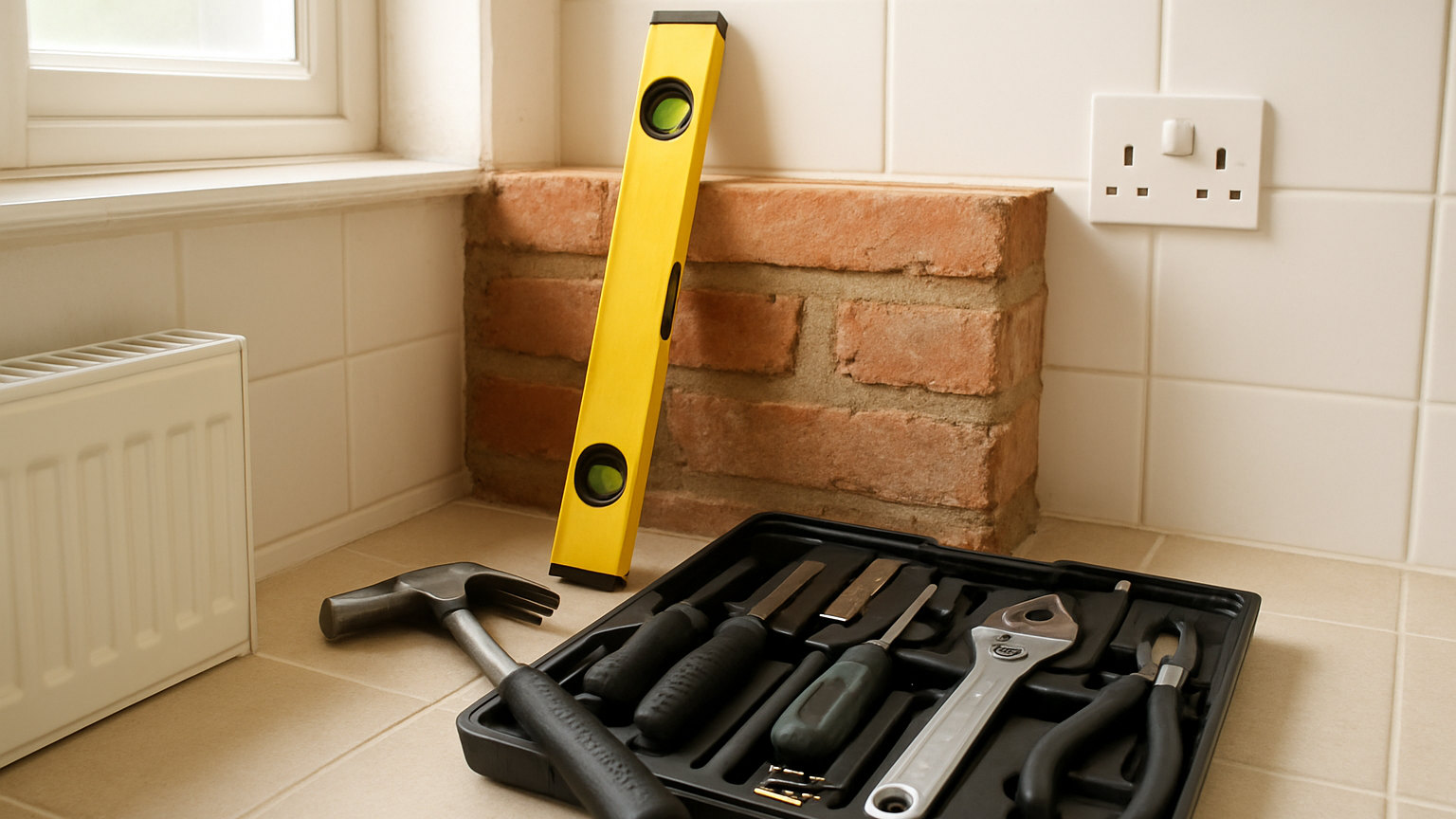
A claw hammer, around 16oz, which is heavy enough to drive a nail and light enough to control.
Screwdrivers, or better, a driver handle with a set of bits. Pozidriv and flat in two or three sizes each covers nearly everything in a British house.
A tape measure, 5 metres, with a decent lock.
A spirit level, around 600mm, which fits most jobs and a toolbox.
A utility knife with snap off or replaceable blades.
Pliers, one combination pair.
An adjustable spanner, medium sized.
A cordless drill driver with a basic bit set.
Safety glasses and a dust mask.
That is nine items, and it will get you through hanging pictures, assembling furniture, fitting shelves, changing a tap washer and most of what a landlord would call minor repairs.
The next tier
Add these when a job demands them rather than in advance.
A handsaw, for cutting timber occasionally.
A set of chisels, once you are doing anything with doors or joinery.
Wall plugs and a small assortment of screws, which is arguably more useful than another tool.
A stud and pipe detector, which pays for itself the first time it stops you drilling a cable.
A small hacksaw.
A filling knife and a decent paintbrush, once decorating starts.
A pair of grips or water pump pliers for plumbing fittings.
What the lists include that you do not need
A full socket set, unless you work on cars or machinery.
Multiple hammers.
A hand plane, until you are hanging doors.
A mitre box, since a cheap one gives a poor cut and a mitre saw is a hire item.
A vast screwdriver set, where most of the handles will never be picked up.
A hundred piece combination set, which is almost always a way of selling volume rather than quality, and where the useful items are the ones you would have bought anyway.
Buy as the jobs arrive
This is the most useful principle in tool buying.
Buying a tool the day you need it means you buy the right one, in the right size, at the right quality, and you use it immediately.
Buying in advance means guessing, and guessing produces drawers full of things nobody has touched.
The exception is safety gear, which must be in the house before it is needed, because nobody stops mid job to go and buy goggles.
Where to spend and where not to
Spend on anything where accuracy matters: measuring tools, levels, squares.
Spend on anything with a cutting edge, since a blunt cheap chisel is worse than useless and dangerous.
Spend on the cordless drill, which is the tool you will use most.
Save on anything you will use once, which should be hired.
Save on things where cheap works perfectly well: a claw hammer, a filling knife, a bucket, a paint roller frame.
Storage
A basic toolbox or a bag is enough at this stage.
Anything is better than a carrier bag in a cupboard, where tools get damaged and nothing is findable.
Keep it somewhere dry, since damp destroys steel tools faster than use does.
Think about the jobs, not the tools
Write down the five things you actually want to do in the next year.
Work out what each needs, and buy that.
Most people find the list is shorter than expected, and that two or three purchases cover all five jobs.
A toolkit is something that accumulates around the work you do, which is why no two useful toolkits look the same.
Consumables matter more than tools
The thing that stops a job on a Sunday afternoon is almost never a missing tool. It is a missing screw, plug, blade or tube of sealant.
Keep a small assortment of screws in two or three lengths, wall plugs to match, spare blades and a tube of decorator's caulk.
These cost very little and save the trip to the merchant that otherwise eats an hour out of every project.


