
Most people build a toolkit gradually rather than all at once. Buying in a sensible order means each purchase is useful immediately rather than sitting in a drawer waiting for a job.
One: a tape measure
Everything starts with knowing a dimension.
Five metres is the right length for domestic work. Look for a wide blade, which stays rigid when extended, and a lock that holds.
It is used before every other tool on this list, which is why it comes first.
Two: a driver handle and bit set
More useful than a set of individual screwdrivers and takes far less room.
Get Pozidriv in two sizes, flat in two sizes, and a few Torx and hex bits.
Most British screws are Pozidriv rather than Phillips, and using a Phillips driver in a Pozidriv screw is the usual reason screw heads chew out.
Three: a cordless drill driver
The tool that changes what you can attempt.
An 18 volt combi with two batteries covers drilling wood, metal and masonry, and driving screws.
It is worth spending real money here, since this is the tool you will use most and cheap ones have weak chucks and poor batteries.
Buy the bits with it: a wood and masonry bit set, and driver bits.
Four: a claw hammer
Around 16oz with a comfortable handle.
Used for nails, for persuading things, and for pulling out what has gone in crooked.
Cheap is fine, provided the head is tight on the handle.
Five: a spirit level
600mm is the practical compromise, long enough for shelves and short enough to carry.
Check it before buying, by standing it on a flat surface, noting the bubble, then turning it end for end. The reading should be identical.
This is a tool worth buying well, since an inaccurate level makes every job it touches wrong.
Six: a utility knife
Snap off or replaceable blade, with a retracting mechanism.
Used constantly for opening, trimming, scoring and cutting.
Keep spare blades. A blunt knife slips, which is how people get cut.
Seven: a stud, cable and pipe detector
This feels like an optional extra until the day it is not.
Drilling into a cable or a pipe is the most expensive and dangerous mistake in domestic DIY, and a detector costs less than an hour of an electrician's time.
Learn its limitations: they are less reliable near foil backed plasterboard and on solid walls, and they are not a guarantee.
Eight: pliers and grips
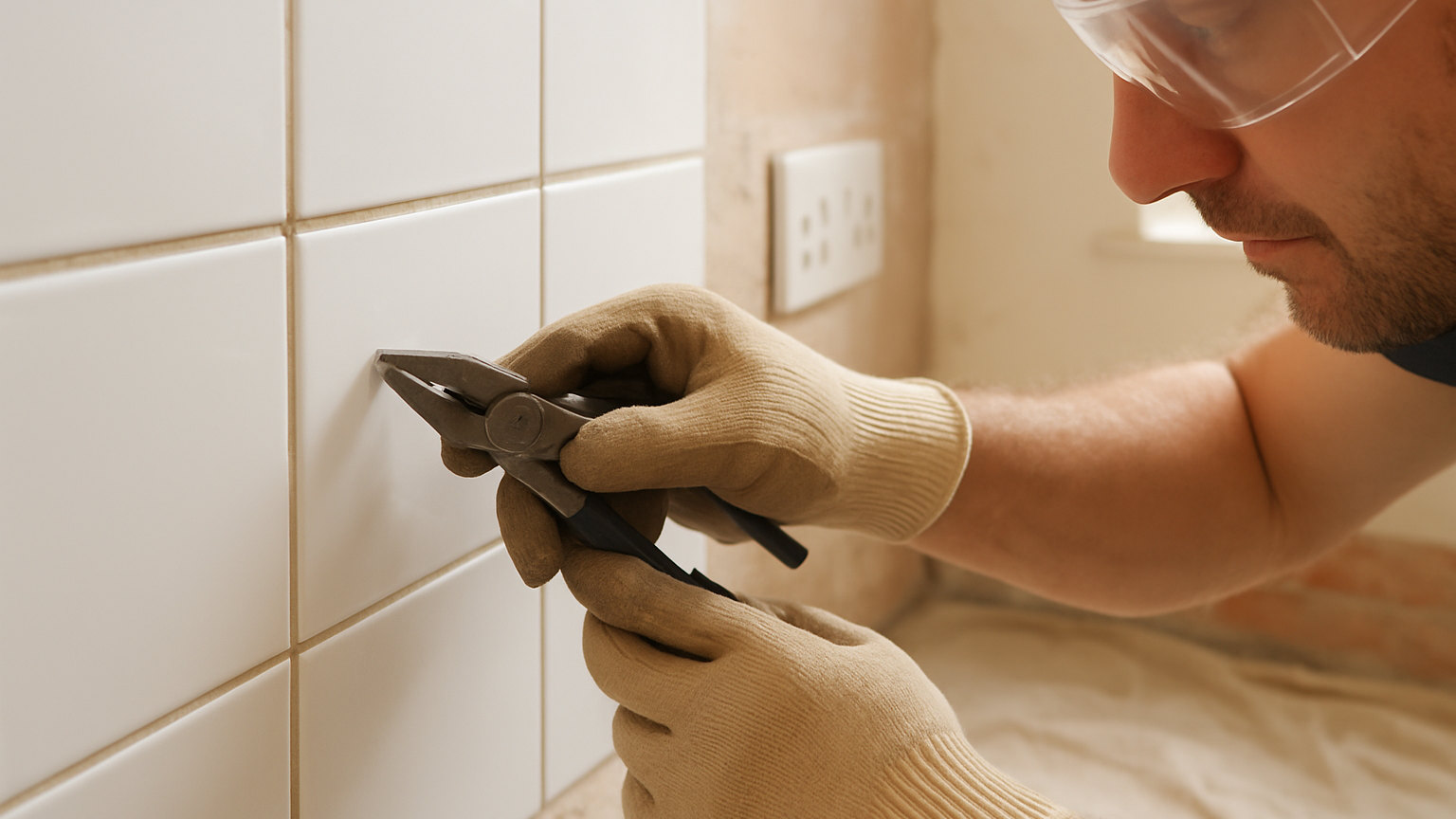
One combination plier, and a pair of water pump pliers or adjustable grips.
Between them they grip, turn, cut and pull almost anything.
The water pump pliers double as a plumbing tool for tap and waste fittings.
Nine: a handsaw
A hardpoint panel saw is cheap, cuts well and is not sharpenable, so it is a consumable.
It handles timber, board and the occasional plastic pipe.
Store it so the teeth are protected, since a saw blunted by knocking about is useless.
Ten: safety glasses and a dust mask
These sit at ten only because the first nine make jobs possible, and they should be bought at the same time as the drill.
Safety glasses that fit and are comfortable, since uncomfortable ones get left off.
An FFP3 disposable mask for dust, properly fitted rather than perched on the face.
Buy these before you need them, because nobody stops mid job to go shopping.
What comes next
After these ten, let the jobs decide.
Chisels and a plane if you start on doors.
Filling knives, brushes and rollers if you start decorating.
A spade, a shovel and a rake if you start outside.
An adjustable spanner and a basin wrench for plumbing.
Buy each when the job arrives, which is how you end up with tools you use rather than tools you own.
Roughly what to budget
These ten can be bought for a modest sum if the drill is mid range and the rest are sensible choices.
The drill will account for around half the total, and that is the right split.
Spread the purchase over a few months if needed, buying in this order, and each item will have earned its place before the next one arrives.


