Bolts join things that may need to come apart again, and carry loads that screws into timber cannot. The sizing system is straightforward once the conventions are clear.
Metric sizing
A bolt described as M8 x 50 means:
- M8: a metric thread, 8mm nominal outside diameter
- 50: 50mm long, measured under the head for a hex bolt, or overall for a countersunk one
Common sizes are M5, M6, M8, M10 and M12.
Spanner size is not the same as bolt size. It is the distance across the flats of the head.
- M6 commonly takes a 10mm spanner
- M8 commonly takes a 13mm spanner
- M10 commonly takes a 17mm spanner
- M12 commonly takes a 19mm spanner
These vary with the standard, so measure rather than assume.
Thread pitch
The distance between adjacent thread crests.
- Coarse thread is the standard for general use, and it is what you will find unless stated otherwise
- Fine thread has more threads per length. Slightly stronger in tension and less prone to loosening under vibration, and more easily cross-threaded
- Coarse and fine of the same diameter will not fit each other
- Measure with a thread pitch gauge, or count crests over 10mm
Bolt grades
Marked on the head of a steel bolt.
- 4.6: mild steel, general low-strength use
- 8.8: high tensile, the common structural and automotive grade
- 10.9 and 12.9: higher strength still, for specific applications
- A2 and A4: stainless grades. A2 general outdoor, A4 marine and coastal. Stainless is corrosion resistant, and generally weaker than a high tensile steel bolt
Do not substitute a lower grade where a higher one is specified. The marking is there for a reason.
Bolt types
- Hex bolt or set screw: a hexagonal head. A set screw is threaded full length; a bolt has a plain shank portion
- Coach bolt, or carriage bolt: a domed head with a square collar underneath that bites into timber, so it cannot turn while the nut is tightened. Excellent for timber, and the smooth head is tamper resistant. Used for gates, fencing and shed hasps
- Socket cap screw: a cylindrical head with a hex socket. Neat and strong
- Countersunk bolt: sits flush
- Eye bolt and hook bolt: for attaching cables and chains. Use a rated lifting eye for any lifting application, not a general purpose one
- U bolt: clamping round a pipe or a bar
- Threaded rod, or studding: cut to length, with nuts each end
Nuts
- Standard hex nut: the default
- Nyloc nut: a nylon insert that grips the thread and resists vibration. Very effective, and generally single use: the nylon deforms and loses grip after removal
- Locking or stiff nut, all metal: a deformed thread section. Reusable
- Wing nut: hand tightened, for frequent adjustment
- Dome or cap nut: covers the thread end, both neater and safer where someone could catch on it
- Penny or repair washer: covered below
- Captive and T nuts: pressed into timber or board, giving a threaded fixing point
Washers: what each actually does
Flat washer. Spreads the load over a greater area and provides a smooth bearing surface for the nut to turn against.
- Always use one against timber, or the nut pulls into the surface
- Also protects a finished surface
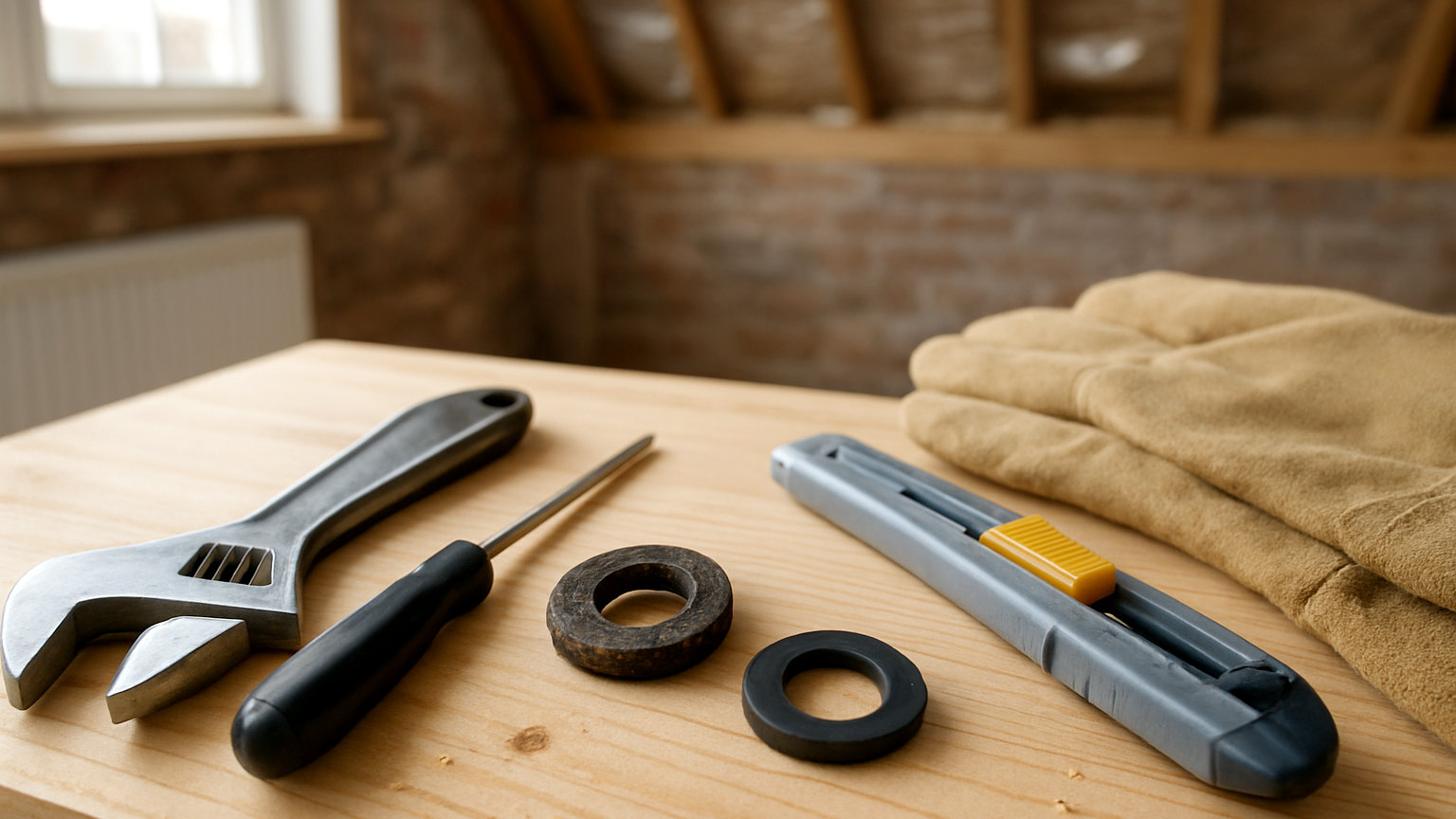
Penny or repair washer. A large diameter flat washer with a small hole. Spreads the load over a much larger area. Essential in soft or thin material: timber, sheet metal, plastic.
Spring washer. A split ring that compresses. Intended to maintain tension and resist loosening. In practice, its effectiveness is limited on a properly tightened high-strength joint, and a nyloc nut or thread locker is more reliable where vibration is a concern.
Serrated or toothed washer. Teeth that bite into the surfaces, resisting rotation. Effective, and it marks the surface.
Step 1: tighten correctly
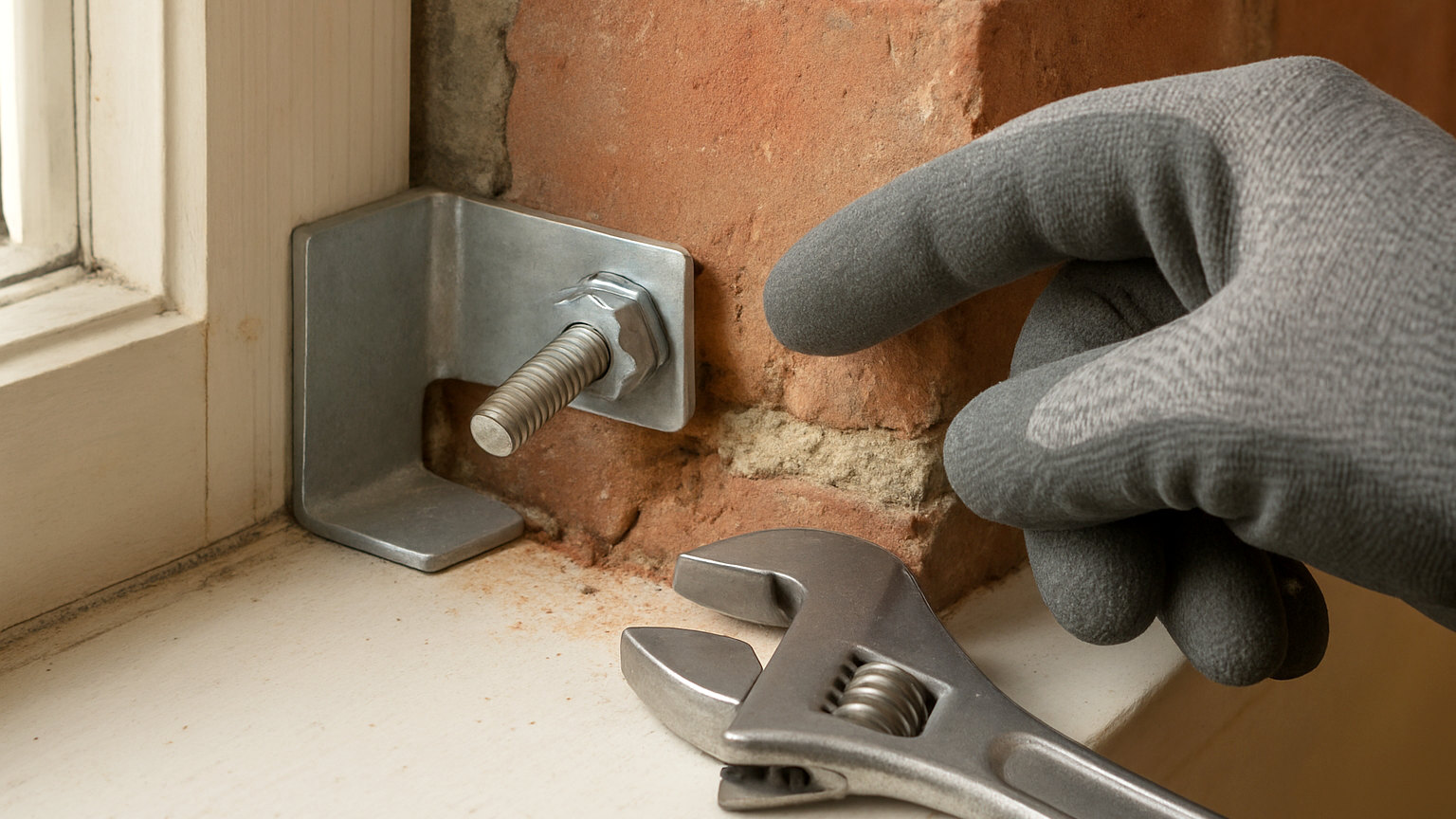
- Use a spanner or socket of exactly the right size. A ring or a six-point socket wherever it fits
- Fit washers: one under the head, one under the nut
- Start the nut by hand for several turns, so you feel any cross-threading
- Tighten steadily, not with a jerk
- Where several bolts hold one item, tighten progressively in a diagonal or alternating pattern, in stages, rather than fully tightening each in turn
- Where a torque is specified, use a torque wrench and stop at the click
- Where none is specified, tighten firmly and stop
Overtightening stretches the bolt, strips the thread or snaps it. A stretched bolt has lost its clamping ability even though it feels tight.
Step 2: cross-threading
Starting a nut at an angle so the threads cut across each other. It ruins both parts.
- Start every nut by hand
- A useful trick: turn it backwards until you feel the threads drop into engagement, then turn forwards
- If it does not turn freely by hand for several turns, stop and start again
- Never force a nut with a spanner from the start
Step 3: preventing loosening
- Nyloc nut: the most reliable simple method
- Thread locking compound: anaerobic adhesive. Available in removable and permanent grades. Effective
- Two nuts locked together, the traditional method
- Split pin through a castellated nut, for critical applications
- Correct tightening, which is itself the main defence: a properly tensioned joint does not loosen
Step 4: outdoors and dissimilar metals
- Stainless A2 for general outdoor use, A4 for coastal and marine
- Hot dip galvanised for structural steel
- Avoid contact between dissimilar metals in wet conditions, which causes galvanic corrosion. Aluminium in contact with stainless steel corrodes readily
- Use an isolating washer or a barrier where dissimilar metals must meet
- Modern treated timber corrodes zinc coatings. Use stainless or a fixing rated for treated timber
- Oak, chestnut and cedar stain black and corrode steel. Use stainless
- Apply anti-seize compound to stainless threads, which are prone to galling
Step 5: seized fasteners
- Wire brush the exposed thread
- Apply penetrating oil and wait, ideally overnight
- Tap the fastener sharply, which breaks the corrosion bond
- Try tightening very slightly first, then undoing
- Use a six-point socket and a breaker bar
- An impact driver applies shock and torque together
- Last resort: a nut splitter, or cut it off
If it goes wrong
Nut will not start: cross-threaded, or the wrong thread pitch.
Bolt turning with the nut: hold the head with a second spanner, or use a coach bolt.
Nut pulling into the timber: use a penny washer.
Bolt snapped: overtightened, or the wrong grade. It will need drilling out.
Joint keeps loosening: use a nyloc nut or thread locker, and check the tightening.