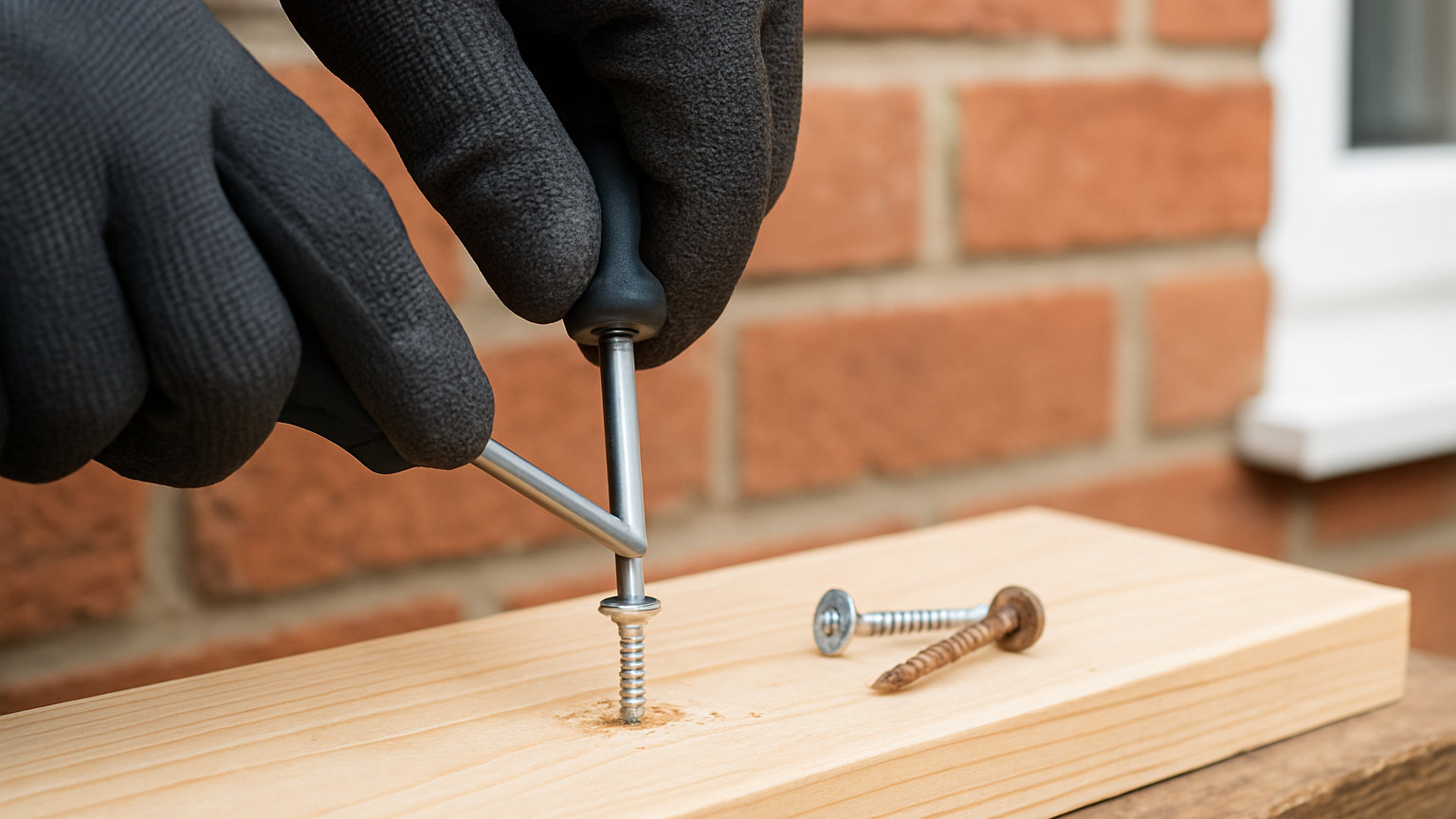
Ordinary zinc plated screws rust within a season outdoors. Choosing the right coating or material costs a little more and determines whether the job lasts.
The coatings and materials
Bright zinc plated, BZP. A thin electroplated zinc layer. Internal use only. Rusts quickly in any damp, and rapidly outdoors.
Yellow passivated. Slightly better than BZP. Still internal.
Organic or polymer coated. A tough coating over plating, common on decking and construction screws. Reasonable exterior durability, and it depends on the coating remaining intact.
Sherardised. Zinc diffused into the surface, giving a durable matt grey finish that survives being driven. Specified for joist hangers and timber connectors.
Hot dip galvanised. A thick zinc coating. Good outdoor durability, and long lasting on structural steel, fixings and connectors. The coating is thick, so threads are coarser.
Stainless A2, grade 304. General outdoor use. Good corrosion resistance in most conditions.
Stainless A4, grade 316. Contains molybdenum, giving much better resistance to chlorides. For coastal locations, swimming pools, and contact with treated timber. Sometimes called marine grade.
Silicon bronze and copper. Traditional for boat building and some roofing. Excellent durability, and expensive.
Choosing by situation
- Inside, dry: BZP is fine
- Inside, damp, such as a bathroom or a utility: stainless A2
- Outside, sheltered: galvanised or organic coated as a minimum
- Outside, exposed: stainless A2
- Coastal, within a few miles of the sea: stainless A4
- In contact with treated timber: stainless A4, or a fixing specifically rated for it
- With oak, cedar or chestnut: stainless, indoors as well as out
- In or near a swimming pool or a hot tub: A4
- Structural connections: as specified by the manufacturer, without substitution
Treated timber corrodes zinc
A change many people have not caught up with.
Modern pressure-treated timber uses copper-based preservatives. Copper in contact with zinc in damp conditions accelerates corrosion of the zinc coating.
- Ordinary galvanised fixings in treated decking or fencing corrode faster than expected
- The treatment is wettest when new, which is when the fixings go in
- Use stainless A4, or fixings the manufacturer rates for use with treated timber
- Check the fixing packaging: reputable decking screws state their suitability
Oak, cedar and chestnut stain
These timbers contain tannins that react with iron and steel.
- The reaction produces black or blue-black staining spreading around the fixing
- It also corrodes the fixing itself
- Moisture accelerates it, and it happens indoors too
- Use stainless steel with oak, chestnut and western red cedar, in every situation
- Even a steel clamp left on damp oak overnight leaves a black mark
- Existing black staining can sometimes be reduced with oxalic acid, following the product safety directions
Galvanic corrosion
When two different metals are in contact with moisture present, one corrodes preferentially.
- The less noble metal corrodes to protect the more noble one
- Aluminium in contact with stainless steel corrodes readily, which matters on windows, cladding and guttering
- Zinc in contact with copper corrodes, which is why copper pipe against a galvanised fitting is a problem
- The effect is worse in salt air and worse where the smaller component is the one corroding
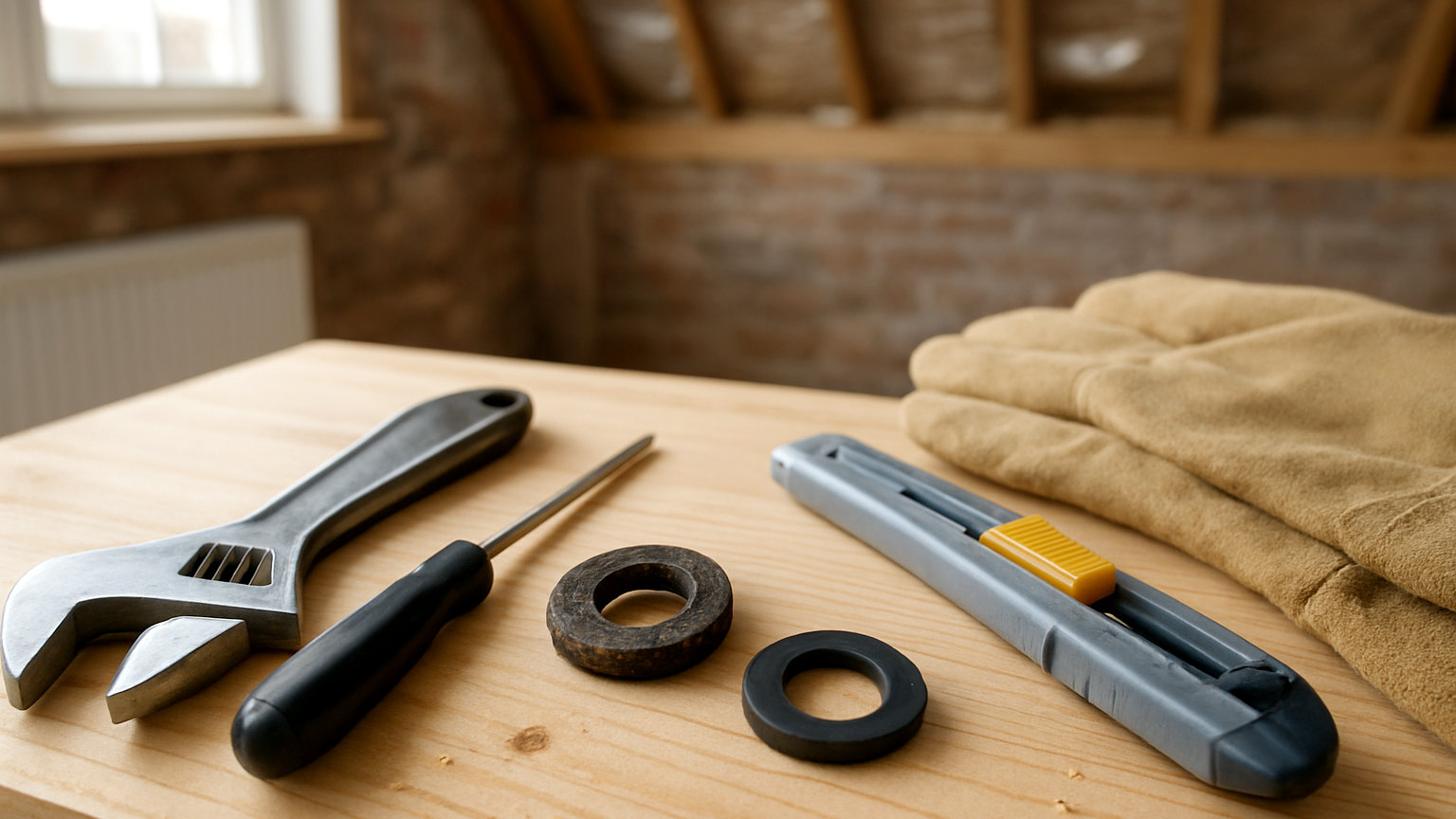
Prevention: use compatible metals, isolate them with a nylon washer or a barrier tape, keep the joint dry, or use a sacrificial component you can replace.
Step 1: practical points for outdoor fixing
- Pilot every hole in exterior timber. Wet timber splits readily, and splits let water in
- Countersink so the head sits flush or slightly below
- Do not overdrive a screw into decking, which creates a water trap
- Seal any cut end of treated timber with an end-grain preservative, since the treatment does not penetrate the full section
- Avoid fixing into end grain outdoors where you can
- Keep fixings away from where water will sit
Step 2: stainless steel practicalities
- Stainless is softer than hardened steel. The heads chew more easily, so use the right driver and press firmly
- Always pilot, since stainless screws snap more readily than steel ones
- Use a Torx drive where available, which grips far better
- Galling: stainless threads can seize solid when tightened. Apply an anti-seize compound to stainless nuts and bolts
- Stainless is not entirely rustproof. Surface tea staining can appear, particularly on A2 in coastal air
- Contamination from steel tools or steel wool causes rust spots on stainless. Use a stainless or nylon brush
Step 3: fixings in the ground
- Anything in or near soil is in the most aggressive condition
- Use the highest specification you reasonably can
- Consider whether the fixing can be kept above ground level entirely
- Post supports that hold the timber above the soil greatly extend the life of both post and fixings
- Concrete is alkaline and affects some metals
Step 4: maintenance
- Inspect outdoor fixings annually
- Rust staining running from a fixing indicates the coating has failed
- Replace corroded fixings before they fail, since a failed fence or decking fixing is a safety matter
- Retreat and reseal timber as needed
- Clear debris from around fixings where water collects
Cost in perspective
- Stainless costs several times more than zinc plated per screw
- On a typical job the difference is small compared with the timber
- Replacing a deck because the fixings failed costs far more
- The fixings are the cheapest part of an outdoor structure and the most likely to determine its life
If it goes wrong
Rust stains running down timber: the coating has failed. Replace with stainless.
Black staining around screws in oak: tannin reaction. Replace with stainless and treat the staining.
Decking screws corroding within a year: zinc coated fixings in treated timber. Replace with A4.
Stainless nut seized on the bolt: galling. Use anti-seize next time; this one may need cutting off.
Aluminium corroding at a fixing point: galvanic corrosion. Isolate the metals.