
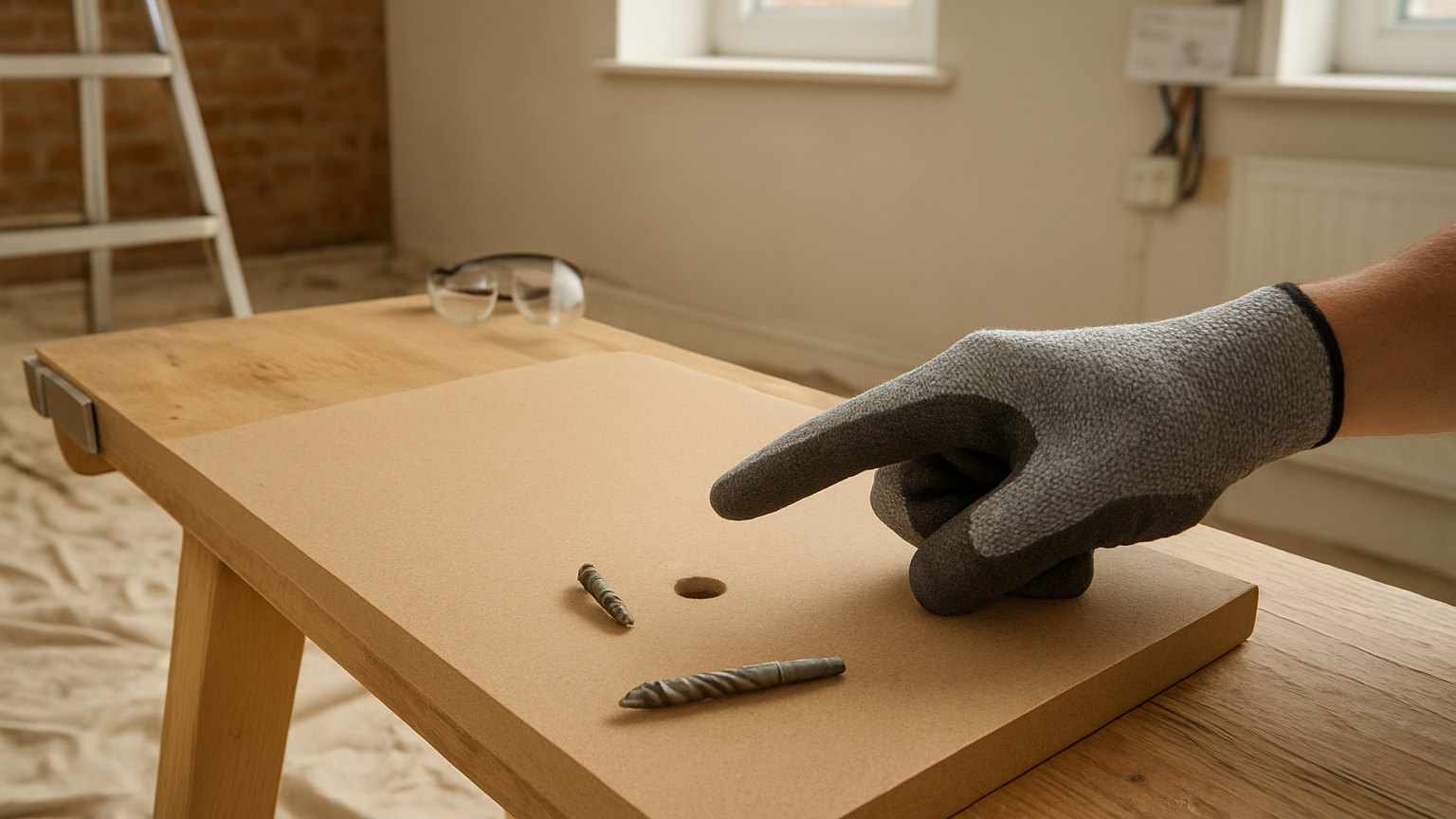
A fixing that will not come out is a common and frustrating problem. Working through the methods in order of escalation usually resolves it without damage.
Rule one: stop making it worse
The instinct is to try harder with the same driver. That rounds the head further and removes your options.
Stop as soon as the driver slips once, and change approach.
A chewed screw head, in order
- Clean the recess out. Paint, filler and debris prevent engagement. Pick it out with a scriber or a small screwdriver
- Check the driver. Is it a Pozidriv screw with a Phillips driver in it? Is the size right? Is the bit worn?
- Press much harder while turning slowly. Axial pressure is what keeps the bit engaged
- Tap the driver into the head with a hammer to seat it deeper. Frequently works
- Add grip: a wide rubber band, a piece of abrasive cloth, or valve grinding paste in the recess
- Use a manual impact driver, struck with a hammer, applying shock and turning force together. Very effective
- Cut a slot across the head with a hacksaw or a rotary tool, and use a flat driver
- Grip the head with locking pliers if it stands proud
- Screw extractor
- Drill the head off, remove the workpiece, then grip and wind out the shank
Using a screw extractor
A reverse-threaded hardened bit that bites harder as it is turned anticlockwise.
- Centre punch the middle of the screw head
- Drill a pilot hole into the head, using the size stated for that extractor
- Drill straight and central. An off-centre hole damages the surrounding material
- Insert the extractor and tap it lightly to seat it
- Turn anticlockwise steadily with a tap wrench or an adjustable spanner
- Do not use excessive force: extractors are hardened and brittle, and a snapped extractor inside a screw is a much worse problem, since it cannot be drilled
Left-hand drill bits are a better first attempt in many cases: drilling anticlockwise, the bit frequently grips and backs the screw out before you even need the extractor.
A snapped screw or bolt
If the shank protrudes:
- Grip it with locking pliers and wind it out
- Cut a slot in the end and use a flat driver
- Weld a nut on, if you can weld, which is very effective on steel
If it is flush or below the surface:
- Apply penetrating oil and wait
- Centre punch the exact centre
- Drill a pilot, progressively increasing size
- Use a screw extractor
- Or drill it out entirely and retap the thread, or fit a thread insert
In timber: a broken shank can frequently be removed with a plug cutter or a hollow extractor, cutting a core of timber around it. The screw comes out with the plug, and the hole is filled with a glued dowel.
A seized nut or bolt
- Wire brush the exposed thread to remove rust and dirt, giving the oil a route in
- Apply penetrating oil and wait. An hour minimum, overnight is better. The step people skip and the one that works most often
- Reapply and wait again
- Tap the fastener sharply with a hammer several times, which breaks the corrosion bond and helps the oil penetrate
- Try tightening slightly first, then undoing. Frequently breaks the seal
- Use a six-point socket and a breaker bar. Never an open-ended spanner on a seized nut
- An impact wrench or impact driver applies shock and torque together, which is very effective
- Heat expands the surrounding metal. Take great care regarding fire, nearby materials, paint fumes, and anything flammable. Never near fuel or a sealed vessel
- Nut splitter: a hardened chisel driven by a screw, cracking the nut. Effective and it destroys the nut
- Cut it off with a hacksaw, a grinder or a reciprocating saw
Penetrating oils
- A proper penetrating oil, not a general purpose water dispersant, which is a poor penetrant
- Time matters more than the product. Overnight beats any brand applied for five minutes
- Apply repeatedly rather than once heavily
- Apply to the thread where it enters, so capillary action draws it in
- Tapping helps it penetrate
Nails
- Claw hammer with a block underneath, moving to a thicker block as it emerges
- Pincers, rolled against the surface, for small nails
- Cat's paw, driven under the head with a hammer, where no head shows. It marks the timber
- Pull from the back where the face matters
- A headless nail can be gripped with locking pliers and rolled out
- Or punch it right through, if the far side does not matter
Old wall plugs
- Grip the plug with long-nose pliers and pull while twisting
- Drive a screw partway in and pull on that with a claw hammer or pincers
- Push it right into the cavity if there is one behind
- Or drill it out with a slightly larger bit and start again
- Fill the hole and move 50mm rather than trying to reuse a damaged one
Preventing the problem
- Use the correct driver pattern and size, and press firmly
- Replace worn driver bits promptly
- Use impact-rated bits in an impact driver
- Pilot before driving, in anything but softwood
- Do not overtighten
- Use corrosion-appropriate fixings, since rust is what seizes things
- Apply anti-seize compound to stainless threads and to anything that will need to come apart
- Where something will be dismantled again, use a bolt rather than a screw
Safety
- Eye protection. Extractors and hardened fasteners shatter and throw fragments
- Clamp the work
- Take great care with heat: fire risk, fumes from paint and coatings, and nearby combustibles
- Never heat anything that has contained fuel or is sealed
- Ventilate when using penetrating oils and solvents
- Gloves for grip and to keep oil off skin
If it goes wrong
Extractor snapped in the screw: a serious problem, since it cannot be drilled. It may need specialist removal.
Head drilled off but the shank remains: remove the workpiece, then grip the exposed shank with locking pliers.
Thread stripped in the material: retap to a larger size, or fit a thread insert.
Timber damaged around the screw: use a plug cutter next time, and fill with a glued dowel.
Nothing working: stop before making it worse, and consider whether the component can be cut instead.


