Masonry units look interchangeable and are not. The type, the strength and the frost resistance all determine where a unit can be used.
Standard brick sizes
- A standard UK brick is 215 x 102.5 x 65mm
- With a 10mm mortar joint the coordinating size is 225 x 112.5 x 75mm
- That means four courses rise 300mm, which is the figure bricklayers work to
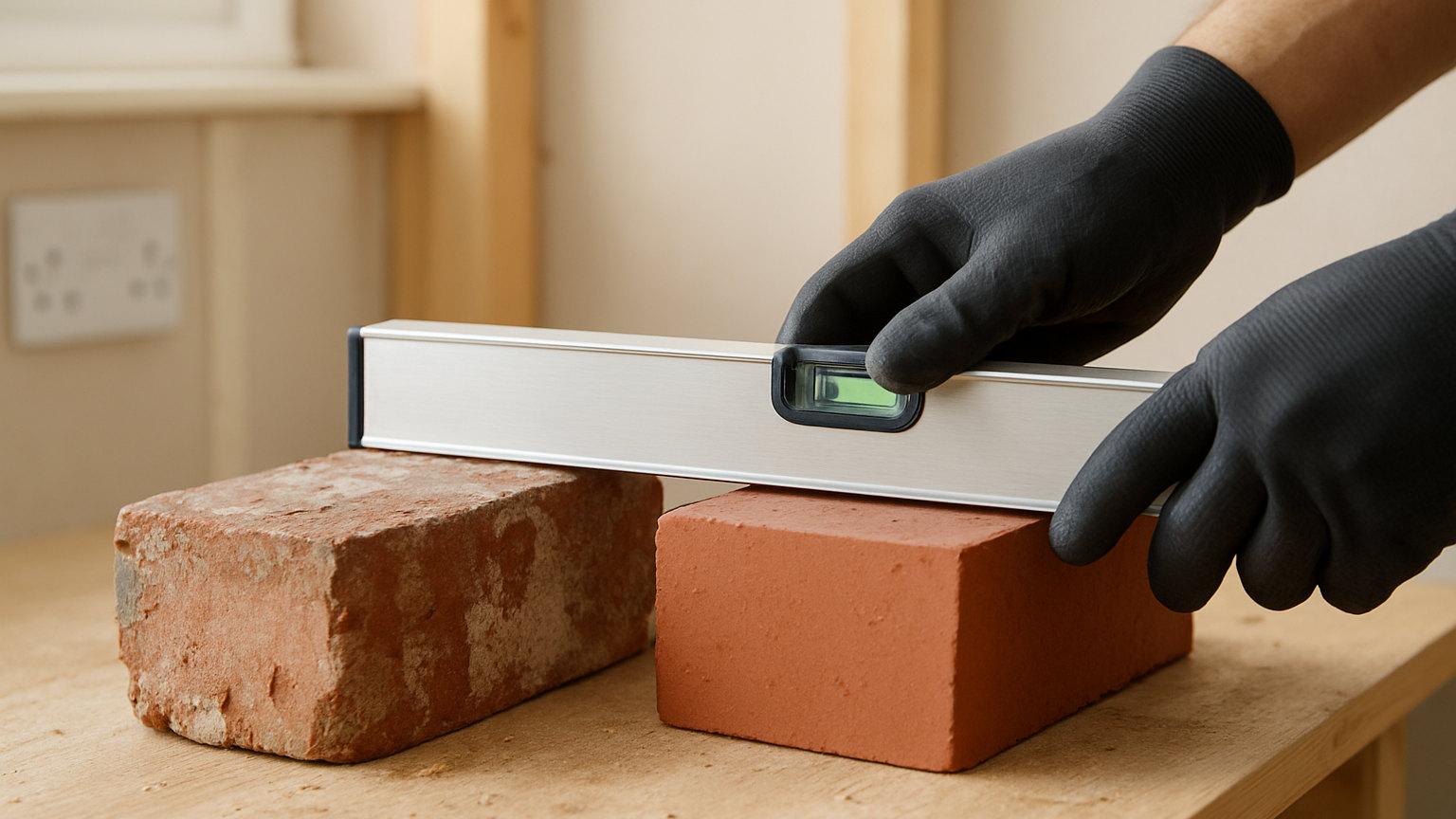
- Older and handmade bricks vary considerably, which matters when matching
- Metric and imperial bricks differ in height, which is why old and new work sometimes will not course together
Brick types
Facing brick. Made to be seen. Available in a very wide range of colours and textures. The visible outer leaf of a cavity wall.
Common brick. Not intended to be seen. Used where the work will be rendered or hidden. Cheaper.
Engineering brick. Dense, strong and with low water absorption.
- Class A: the strongest, with the lowest absorption
- Class B: the more commonly used
- Used below ground, for damp proof courses in some situations, manholes, and where strength or water resistance is needed
Stock brick. Traditionally made, softer, characterful. Common in older London and southern buildings.
Reclaimed brick. Salvaged from demolition. Essential for matching older work, and check they are sound and frost resistant, and that old mortar has been cleaned off.
Frost resistance and salt content
The specification that decides where a brick can safely be used.
Frost resistance:
- F2, or FL and FN: frost resistant. Suitable for exposed positions, below DPC, parapets, garden walls, copings
- F1, or ML and MN: moderately frost resistant. General walling with normal protection
- F0: not frost resistant. Internal use only
Soluble salt content:
- S2, or L: low salt content
- S1, or N: normal
- High salt content contributes to efflorescence and to mortar attack
Bricks in exposed positions must be frost resistant. A garden wall, a parapet or brickwork below ground built with non-frost-resistant bricks will spall and crumble within a few winters.
Blocks
A standard block is 440 x 215mm, in thicknesses from 75 to 215mm. The face equals six bricks, so blockwork courses with brickwork.
Dense aggregate block. Strong, heavy, good sound insulation, poor thermal performance. For loadbearing work, below ground and where strength is needed.
Lightweight aggregate block. A compromise: reasonable strength, easier to handle, better thermal performance than dense.
Aerated block, sometimes called AAC. Very light, easy to cut with a handsaw, good thermal performance.
- The usual inner leaf of a modern cavity wall
- Fixings grip poorly. Use plugs designed for aerated block, frame fixings, or resin anchors
- Available in different strengths; check the grade for loadbearing use
- Soft, so drill with light or no hammer action
Hollow and cellular blocks. Voids reduce weight and material. Standard plugs expand into the void and grip nothing; use a cavity fixing or a resin anchor with a mesh sleeve.
Stone
- Natural stone: varies enormously by type and region. Sandstone, limestone, granite, slate
- Reconstituted stone: cast from crushed stone and cement. Consistent and cheaper
- Some limestones and sandstones are soft and porous, and must be pointed in lime, not cement
- Stone has a natural bed; laying it face bedded rather than on its natural bed causes it to delaminate
- Matching existing stonework is specialist work, particularly on a listed building
Step 1: matching existing brickwork
Harder than people expect, and worth the effort.
- Take a whole brick to the merchant if you possibly can
- Or photograph it in daylight next to a colour reference, and measure it accurately
- Consider colour, texture, size and the way it has weathered
- The mortar colour and joint profile matter as much as the brick. A poorly matched mortar shows more than a poorly matched brick
- Try a reclamation yard for older bricks
- Lay out a sample panel and look at it in daylight before committing
- New bricks will look new; they weather in over years
Step 2: handling and storage
- Keep bricks and blocks off the ground and covered. Saturated units are heavy, and laying wet bricks causes problems
- Do not soak bricks, but very dry bricks in hot weather suck water out of the mortar and can be lightly damped
- Protect new work from rain, which washes mortar out of the joints
- Protect from frost. Do not lay below about 5 degrees or if frost is expected
- Cover new work overnight
- Bricks are heavy. A pack is a mechanical lift, and lifting from a pallet repeatedly is a common cause of back injury
Step 3: cutting
- Bolster and club hammer: score all round, then strike. No dust and less accurate
- Disc cutter or angle grinder with a diamond blade: accurate and fast, and produces enormous quantities of silica dust
- Cut wet, or use on-tool extraction, and wear an FFP3 respirator. Dry cutting masonry is a serious health hazard
- Eye protection and gloves in all cases
- Aerated block cuts easily with an ordinary handsaw
Step 4: efflorescence
White powdery deposits appearing on new brickwork.
- Soluble salts brought to the surface as the wall dries
- Very common on new work and usually temporary
- Brush off dry with a stiff brush; do not wash it, which redissolves the salts and takes them back in
- Repeat as it reappears over the first year
- Persistent efflorescence indicates continuing water ingress, which needs investigating
Step 5: what needs approval
- Structural masonry work is notifiable under Building Regulations
- Forming or altering openings, removing loadbearing walls, and foundations all require it
- Garden walls above a certain height may need planning permission
- A wall on or near a boundary may engage the Party Wall Act
- Work on a listed building or in a conservation area needs consent, including repointing
If it goes wrong
Brick faces spalling: non-frost-resistant bricks in an exposed position, or cement mortar in soft brickwork.
White deposits on new brickwork: efflorescence. Brush off dry, and repeat.
New bricks obviously different: they weather in. Check the sample panel in daylight before laying.
Fixings will not hold in the inner leaf: aerated block. Use an appropriate plug or resin.
Mortar washed out of new joints: rain before it set. Cover new work.