Most household metalwork uses a small number of materials in standard sections. Knowing which is which prevents both frustrating cutting and slow corrosion.
Mild steel
The general purpose structural metal.
- Strong, cheap, easy to weld, easy to cut and drill
- Rusts readily, so it needs painting, galvanising or another coating
- Available as bar, flat, angle, box section, channel and sheet
- Bright drawn is accurate and smooth; hot rolled has a rough black scale and less accurate dimensions
Galvanised steel is mild steel with a zinc coating. Good outdoor durability. Cutting or drilling exposes bare steel, so treat the cut edge with a zinc-rich paint.
Stainless steel
- A2, grade 304: general outdoor and indoor use
- A4, grade 316: better chloride resistance. Coastal, marine, swimming pools, and contact with treated timber
- Corrosion resistant, and not rustproof: surface tea staining appears in aggressive conditions
- Work hardens as you cut it, so drill slowly with firm pressure and cutting fluid. Rubbing without cutting hardens the surface and the bit will not then penetrate
- Use cobalt bits rather than standard HSS
- Contamination from steel tools or steel wool causes rust spots. Use a stainless or nylon brush, kept for stainless only
- Threads gall and seize. Use an anti-seize compound
Aluminium
- Light, roughly a third the weight of steel, and corrosion resistant through a self-forming oxide layer
- Soft and easy to cut and drill, and it clogs blades and files. Use a coarse blade, cutting fluid or paraffin, and clear the swarf often
- Cannot be welded with ordinary equipment
- Available as angle, box, channel and sheet, and widely used for trims and framing
- Corrodes badly in contact with stainless steel or copper when damp
- Anodised aluminium has a hard durable finish; cutting exposes bare metal
Copper
- Plumbing pipe and fittings, roofing and flashing
- Sized by outside diameter: 15, 22 and 28mm are the domestic sizes
- Soft, easy to cut and bend, and easy to deform accidentally
- Develops a green patina outdoors, which is protective
- Copper run-off stains and corrodes aluminium and zinc below it, which matters where a copper roof discharges onto a galvanised gutter
Brass and bronze
- Brass: copper and zinc. Machines beautifully, used for fittings, ironmongery and plumbing. Soft, and screws snap easily so pilot generously
- Bronze: copper and tin. Harder and more corrosion resistant, used for marine fittings
- Both are decorative and hold a polish, and lacquered finishes wear through
Lead
- Traditional for flashings and roofing. Very durable and easily worked
- Sold by code, which indicates thickness: code 4 and 5 are common domestically
- Limit continuous runs to about 1.5m, with expansion joints, or thermal movement causes splitting
- Lead is toxic. Wear gloves, do not eat or smoke while working, wash hands thoroughly, and never sand or burn it
- Patination oil prevents unsightly white carbonate staining
Galvanic corrosion
Two different metals in contact with moisture present will corrode, one preferentially.
- The less noble metal corrodes, protecting the more noble one
- Aluminium with stainless steel or copper is the common domestic problem
- Zinc or galvanised with copper is another
- Worse in salt air, and worse when the corroding component is the smaller one
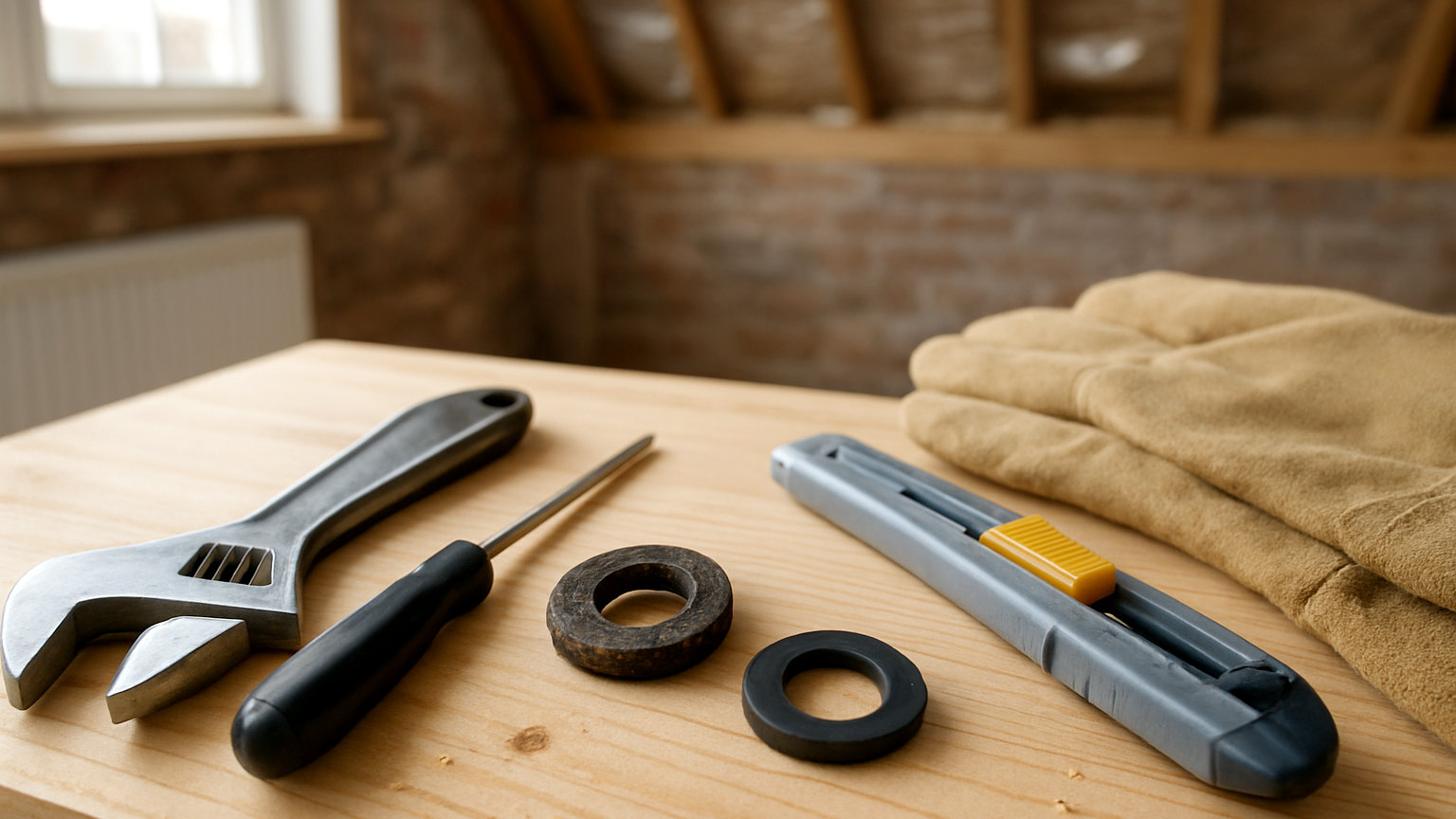
Prevention: use compatible metals, isolate them with a nylon washer or barrier tape, keep the joint dry, or accept a sacrificial component you can replace.
Step 1: cutting metal
- Hacksaw: 24 to 32 TPI for thin material, 18 TPI for thick. At least three teeth in contact at all times, or the blade catches and snaps. Cuts on the push stroke
- Angle grinder with a cutting disc: fast, and it throws sparks a long way. Face shield, and clear combustibles
- Jigsaw with a metal blade: good for sheet, with cutting fluid
- Tin snips: sheet metal, with left, right and straight cut versions. The cut edge is razor sharp
- Pipe cutter: the neatest cut on copper pipe, and it leaves an internal burr to ream out
- Nibbler: sheet metal without distortion
Clamp the work securely. A spinning or vibrating workpiece is dangerous and cuts badly.
Step 2: drilling metal
- Centre punch first, or the bit wanders
- Clamp the work
- HSS for mild steel, cobalt for stainless
- Slow speed, firm steady pressure, and cutting fluid
- Aim for a continuous curl of swarf, not dust. Dust means you are rubbing, which hardens the surface
- Pilot then step up for larger holes
- Ease off at breakthrough, where the bit grabs and snatches
- Deburr both sides afterwards
Step 3: joining
- Bolts: the simplest, and it can be dismantled
- Self-tapping screws: into sheet, with the correct pilot
- Rivets: permanent, quick, good for sheet. A rivet gun is inexpensive
- Welding: the strongest, and it needs equipment and skill
- Brazing and soldering: lower temperature, for copper and brass
- Structural adhesives and MS polymer: surprisingly effective on clean prepared surfaces, and it will creep under sustained load
Step 4: finishing and protecting
- Deburr every cut edge. Sheet metal edges cut skin readily
- Remove mill scale, rust and grease before painting
- Use a metal primer, and a zinc-rich primer where corrosion protection matters
- Treat cut edges on galvanised material with zinc-rich paint
- Wax or oil bare steel that will not be painted
- Keep steel stock off a concrete floor, which draws moisture
Safety
- Eye protection every time. Metal swarf in an eye needs professional removal and can rust in place
- Gloves for handling sheet and cut edges, and never gloves near a rotating drill or grinder
- Hot swarf and offcuts burn; let them cool
- Grinding sparks travel metres and start fires. Clear combustibles and keep watch afterwards
- Hearing protection when cutting and grinding
- Ventilation when welding, brazing or cutting coated metal, since galvanised coatings give off harmful fumes when heated
If it goes wrong
Drill will not penetrate stainless: the surface has work hardened. Use a new sharp bit, slow speed and firm pressure.
Hacksaw blade snapped: too few teeth in contact, or the blade twisted.
Aluminium clogging the blade: use a coarser blade and a lubricant.
Rust spots on stainless: contamination from steel tools. Clean with a stainless brush.
Aluminium corroding at a fixing: galvanic corrosion. Isolate the metals.