
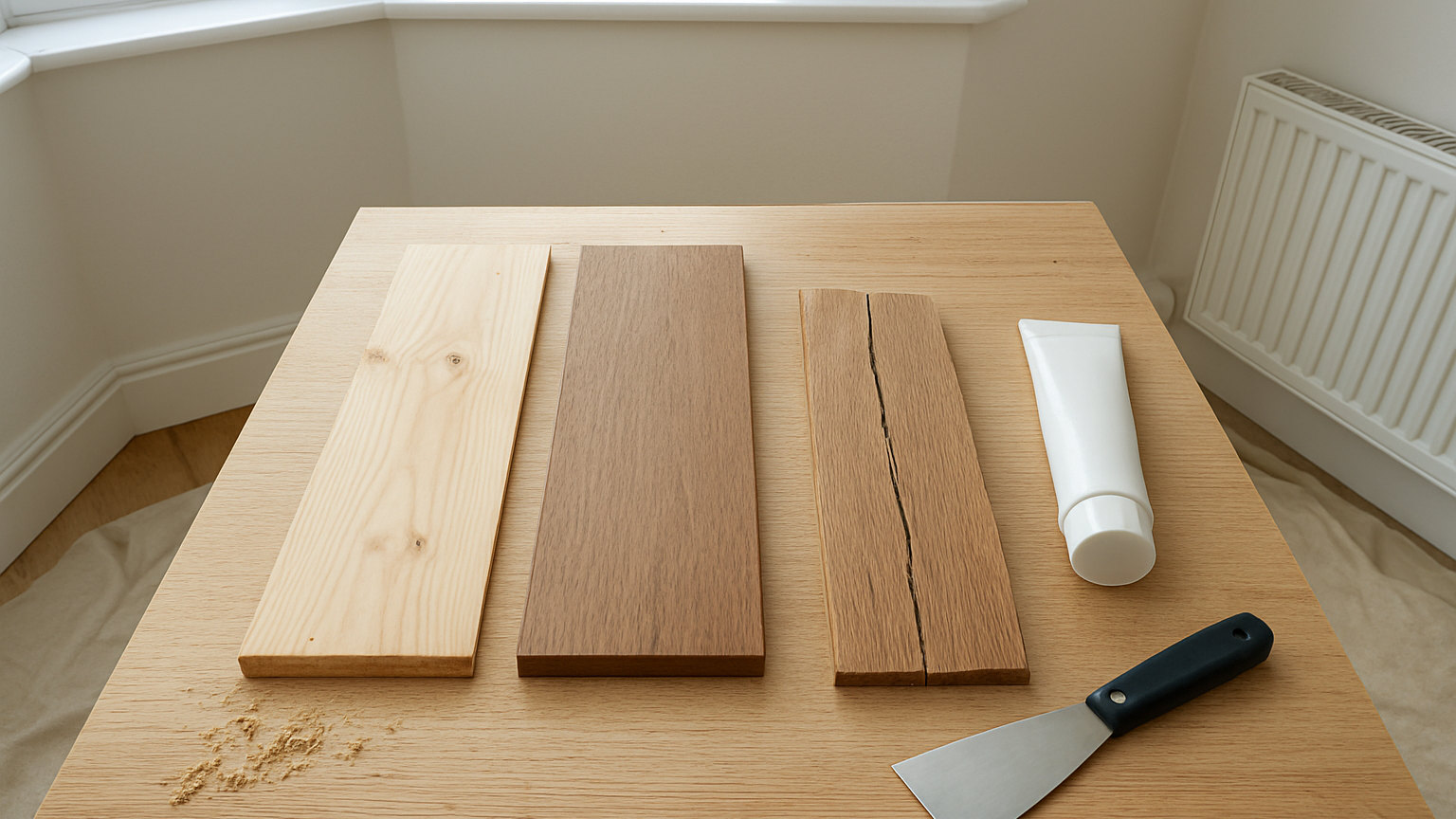
The distinction is botanical, not a measure of hardness. Balsa is a hardwood and yew is a softwood considerably harder than many hardwoods.
What the terms mean
Softwood comes from conifers: evergreen, needle-leaved, cone-bearing trees. Fast growing, widely planted, and inexpensive.
Hardwood comes from broadleaved trees, generally deciduous. Slower growing, more varied, and more expensive.
In practice softwoods are usually softer and cheaper, and the exceptions are real enough that the terms are best treated as categories rather than descriptions.
Common UK softwoods
European redwood, also called Scots pine or simply redwood. The general purpose joinery softwood. Reddish, works well, takes paint and stain, accepts preservative treatment. Used for skirting, architrave, doors and general joinery.
European whitewood, spruce. Paler, lighter, cheaper. The usual structural timber and the common carcassing and CLS material. Does not accept preservative treatment as readily as redwood.
Douglas fir. Stronger and more attractive, with a pronounced grain. Used structurally and for exposed beams.
Larch. Naturally durable heartwood, used for external cladding and decking.
Western red cedar. Lightweight, dimensionally stable, naturally durable, and it weathers to silver grey. Widely used for cladding. Contains tannins that corrode steel and stain black, so use stainless fixings.
Common UK hardwoods
Oak. Strong, durable, attractive, expensive. Used for flooring, furniture, beams, doors and external joinery. Tannins react with steel, so use stainless. Moves considerably with humidity.
Ash. Tough and flexible, pale, with a strong grain. Traditional for tool handles and sports equipment. Not durable outdoors.
Beech. Hard, dense and even textured, and it moves a great deal with humidity. Interior use only.
Birch. Pale and fine grained. Mostly seen as birch plywood, which is excellent quality.
Sapele and utile. Reddish African hardwoods, widely used for windows, doors and external joinery. Stable and reasonably durable.
Iroko. Very durable, used for external joinery and worktops.
Tulipwood, also sold as poplar or American whitewood. Inexpensive, stable, paints beautifully. An excellent choice for painted interior joinery.
Walnut, maple, cherry. Furniture and decorative work.
Durability classes
Natural resistance to decay, graded 1 to 5.
- Class 1, very durable: teak, iroko
- Class 2, durable: oak, sweet chestnut, western red cedar, larch
- Class 3, moderately durable: sapele, Douglas fir
- Class 4, slightly durable: some pines
- Class 5, not durable: spruce, beech, ash, birch
The critical qualification: durability ratings apply to heartwood only.
- Heartwood is the darker inner wood, no longer living, containing the extractives that resist decay
- Sapwood is the paler outer band. Sapwood of every species is not durable, including oak and cedar
- A cedar board with a wide sapwood band will rot as fast as pine
- Specify heartwood where durability matters
Movement and how it is cut
Timber shrinks and swells with humidity, and the amount depends on how the board was cut from the log.
Through and through, or plain sawn. Cut straight across the log. The cheapest and highest yield. Boards from the outer part have curved growth rings and cup as they dry.
Quarter sawn. Cut radially, so the growth rings run roughly perpendicular to the face.
- Considerably more stable, moving about half as much across the width
- Shows attractive medullary ray figure in oak
- Lower yield from the log, so more expensive
- Worth it for tabletops, wide boards and anything where movement matters
Look at the end grain. Rings running roughly parallel to the face means plain sawn and it will cup. Rings running perpendicular to the face means quarter sawn and it will stay flat.
Choosing timber for a job
- Structural: graded softwood, C16 or C24
- Painted interior joinery: redwood, or tulipwood which paints beautifully
- Clear finished interior joinery: a hardwood chosen for appearance
- External joinery: a durable hardwood such as sapele or iroko, or accoya, or treated softwood
- Cladding: cedar, larch or thermally modified timber
- Decking: treated softwood or a durable hardwood
- In ground contact: treated to the correct use class, or a class 1 durable heartwood
- Flooring: oak, ash or engineered board
- Worktops: oak, beech or iroko
Step 1: reading a timber board
Before buying, a few seconds of looking tells you most of what matters.
- Look at the end grain to see how it was cut and how it will move
- Identify the sapwood band, which is paler and not durable
- Sight along the length for bow and spring
- Check for knots near the edges, which weaken the board most
- Check the weight, which indicates how dry it is
- Note any resin, which will bleed through paint
Sustainability
- Look for FSC or PEFC certification, indicating responsibly managed forestry
- Ask about the source, particularly with tropical hardwoods
- Reclaimed timber is frequently excellent quality and well seasoned, and check carefully for nails and screws before machining
- European and UK-grown timber has a lower transport impact
- Thermally modified timber gives durability without chemical treatment
Health and handling
- Hardwood dust is a recognised carcinogen. Wear an FFP3 respirator and use extraction
- Softwood dust causes asthma and sensitisation, which is permanent once established
- Some timbers cause skin reactions: iroko, western red cedar and some tropical species
- Timber is heavy. Oak is roughly twice the weight of softwood for the same volume
- Check reclaimed timber for nails, which destroy blades instantly
If it goes wrong
Board cupped after a few weeks: plain sawn timber, or one face dried faster. Acclimatise before working.
Cedar or larch rotted quickly: it was sapwood, which is not durable in any species.
Black staining around fixings in oak: tannin reacting with steel. Use stainless.
Timber moved after fitting: not acclimatised before working.
Painted softwood knots bleeding through: apply a knotting solution before priming.


