
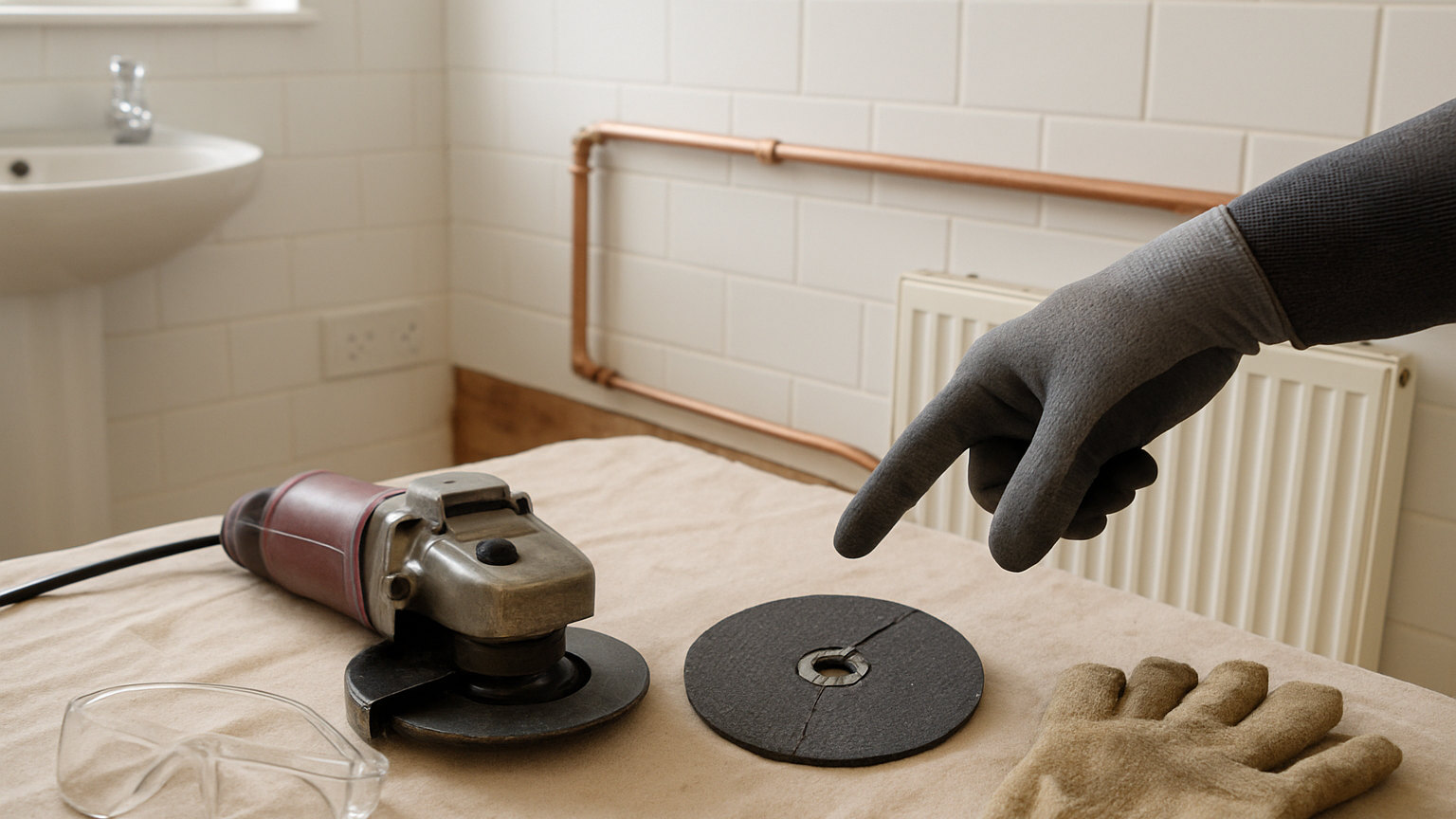
An angle grinder cuts and grinds metal, masonry and tile very effectively. It also has the greatest capacity for serious injury of any tool most people own, and it deserves genuine respect.
Why it is dangerous
- The disc runs at very high speed, commonly 11,000rpm or more on a 115mm tool
- A disc that shatters throws fragments at enormous speed
- It has no clutch and no brake on many models
- Kickback is violent and immediate
- It throws a stream of hot sparks and particles
- It generates large quantities of hazardous dust
- An unguarded disc contacting a body part causes a severe injury instantly
If you are unsure, use another tool. Many jobs people reach for a grinder for are done more safely with a hacksaw, a multi-tool, a reciprocating saw or a bolster.
Sizes
- 115mm and 125mm: the common domestic sizes. Manageable one or two-handed
- 230mm: large, heavy, far more powerful and far more dangerous. Two hands always, and a much greater kickback risk
Use the smallest tool that will do the job.
Discs: get this right
Match the disc to the material and the tool.
- Cutting disc: thin, for cutting only. Metal or masonry specific
- Grinding disc: thick, with a depressed centre, for grinding on the face
- Diamond blade: a steel disc with a diamond rim, for masonry, tile and concrete. Continuous rim for tile, segmented for masonry
- Flap disc: overlapping abrasive flaps, for finishing metal
- Wire brush: rust and paint removal. Throws wire bristles, so eye protection is critical
The critical checks before fitting any disc:
- The disc's maximum rpm rating must equal or exceed the tool's speed. A disc spun beyond its rating can disintegrate
- The disc diameter and bore must match the tool
- The disc must be rated for the material
- Inspect for cracks, chips and damage. Do not use a damaged disc
- Check the expiry date on bonded abrasive discs; they degrade with age and humidity
- Fit the correct way round, with the flanges the right way, and tighten properly
Never use a cutting disc for grinding. A thin cutting disc is designed for edge loading only. Side pressure on it can shatter it. This is a well-known cause of serious injury.
The guard
Never remove the guard. Never.
- The guard directs sparks and fragments away from you and contains a shattering disc
- Set it so it is between the disc and your body
- Adjust its position for the cut, rather than removing it
- If the guard is in the way, the tool is wrong for the job
- Fit and use the side handle, always
Kickback
The disc grabbing and throwing the tool.
Causes:
- The cut closing and pinching the disc
- Twisting the disc in the cut
- The disc catching on an edge, a corner or a burr
- Cutting with the upper quadrant of the disc
- Forcing the cut
Prevention:
- Grip firmly with both hands, using the side handle
- Stand to the side of the disc plane, never in line with it
- Support the work so the cut opens rather than closes
- Let the offcut fall free
- Keep the disc straight in the cut and never twist it
- Let the tool cut at its own rate; do not lean on it
- Be especially careful entering and leaving a cut
- Never use a grinder above shoulder height if it can be avoided
Step 1: before switching on
- Unplug or remove the battery to fit the disc
- Check the disc rating, condition and type
- Check the guard is fitted and positioned correctly
- Fit the side handle
- Clamp the work. Never hold the work and the grinder
- Clear flammable material from the area: sparks travel a long way and start fires hours later
- Have a fire extinguisher or a bucket of water if cutting metal near anything combustible
- Warn anyone nearby
- Let the tool run up to full speed and run for 30 seconds before use, holding it away from you. A defective disc usually fails in the first seconds
Step 2: cutting
- Position so sparks go away from you, others and anything flammable
- Bring the disc to the work at full speed
- Cut with the disc square to the work
- Use light steady pressure and let the disc do the work
- Make several shallow passes rather than one deep plunge
- Do not twist or lever
- Never set the tool down until the disc has stopped completely
- The disc and the workpiece will be extremely hot
Step 3: silica dust
Cutting masonry, concrete, paving, tile and mortar with a grinder produces very large quantities of respirable crystalline silica.
- It is invisible in the air and causes irreversible lung disease
- A few minutes of dry cutting produces an enormous exposure
- Cut wet where the tool permits, or use on-tool extraction with a shroud and an M-class extractor
- Wear an FFP3 respirator, correctly fitted, with no facial hair breaking the seal
- Work outdoors or with strong ventilation
- Keep others well away
- Do not use a domestic vacuum for the clean-up
Do not dry cut masonry indoors.
PPE
An angle grinder needs the full set.
- A face shield over safety glasses. Glasses alone do not protect the face from a shattering disc
- Ear defenders
- FFP3 respirator
- Close-fitting clothing in a natural fibre; synthetics melt when sparks land
- Leather gloves for metal work, and never loose gloves near the disc
- Stout boots
- No loose sleeves, cords, jewellery or untied hair
Never do these
- Remove or tie back the guard
- Use a cutting disc for grinding
- Use a damaged, cracked or out-of-date disc
- Use a disc rated below the tool's speed
- Lock the trigger on
- Set the tool down while the disc is spinning
- Cut anything hand-held
- Use it one-handed
- Cut a container that has held fuel or chemicals
- Use a wood cutting blade in a grinder, which is extremely dangerous
If it goes wrong
Disc shattered: stop, check for injury, and inspect what went wrong before continuing.
Kickback: reassess the support and your stance before restarting.
Sparks landing out of sight: stop and check. Fires start hours later.
Guard in the way: the tool is wrong for the job. Do not remove it.
Fragment in the eye: do not rub or attempt removal. Cover lightly and get medical help immediately.


