
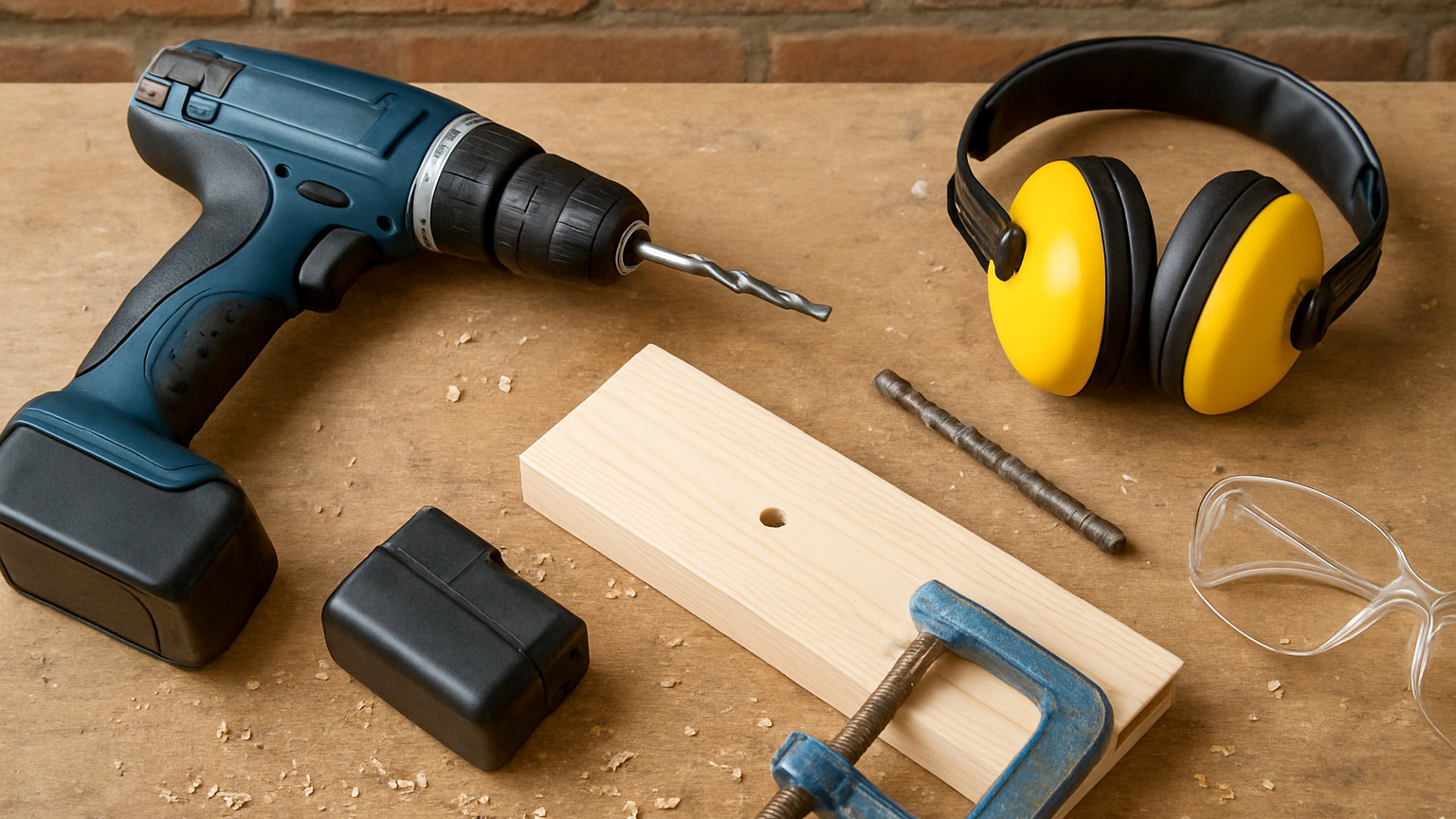
Power tool injuries are rarely caused by exotic circumstances. The same small number of mistakes cause most of them, and the same small number of habits prevent them.
The five rules
1. Isolate before touching an accessory. Unplug it, or remove the battery, before changing a blade, a bit or a disc, or making any adjustment.
2. Clamp the work. If both hands are on the tool, the work must be held some other way.
3. Never defeat a guard. If the guard is in the way, the tool is wrong for the job.
4. Let it stop. Never put a tool down until the blade, disc or bit has stopped completely.
5. Use the right tool. Forcing the wrong tool through a job is where things go wrong.
Before every use
- Inspect the lead along its full length for cuts, nicks and damage
- Check the plug for cracks, bent pins and scorching
- Check the casing for cracks
- Check the guard springs back freely
- Check the accessory is sharp, undamaged and correctly fitted
- Check the trigger operates and returns
- Check vents are clear
- Check any safety feature, such as a riving knife, is fitted
Do not use a tool with a damaged lead, a cracked casing or a missing guard. Repair or replace it.
Electrical safety
- Use 30mA RCD protection with every power tool, and always outdoors. Where the circuit has none, use a plug-in RCD adaptor and test it before each use
- On building sites, 110V tools with a centre-tapped transformer are standard, halving the voltage to earth
- Unwind extension cable drums completely. A coiled drum under load overheats and can melt or ignite, and drums have a much lower rating when coiled
- Use outdoor-rated leads and connectors outside, and keep connections off wet ground
- Keep the lead behind you and clear of the cutting path
- Never carry a tool by its lead, or pull the plug out by the cable
- Do not use electric tools in wet conditions
PPE
- Eye protection, every time. Safety glasses as a minimum, and a face shield over them for a grinder
- Ear protection for grinders, SDS drills, mitre saws, routers, planers and impact drivers. If you must raise your voice at arm's length, wear it
- FFP3 respirator for silica, hardwood, MDF and plaster dust, correctly fitted with no facial hair breaking the seal
- Stout footwear, steel toecap for heavy work
- Knee pads for floor work
Never wear gloves near a rotating blade, disc, bit or chuck. A glove caught in a rotating tool pulls your hand in, and this is worse than a cut. Gloves are for handling material, not for operating rotating tools.
Tie back long hair, remove rings, watches and necklaces, and avoid loose sleeves, cords and lanyards.
Setting up
- Work at a comfortable height with a stable stance
- Good lighting: most mistakes involve not seeing clearly
- Clear the floor. Trips while holding a running tool are serious
- Plan where the offcut will go
- Plan where the lead will be
- Check for cables and pipes before drilling or cutting into any wall, floor or ceiling
- Check reclaimed timber for nails and screws
- Have a first aid kit within reach
Operating
- Let the tool reach full speed before entering the work, and withdraw before releasing the trigger
- Both hands on the tool where it has two handles
- Fit and use the side handle on a drill or a grinder; it is a safety feature
- Never lock a trigger on for a hand-held cutting or grinding tool
- Let the tool cut at its own rate; forcing it causes binding and kickback
- Stand to the side of the blade or disc line, not in front of it
- Anticipate what happens when the cut completes
- Do not overreach, particularly on a ladder or a step
- Stop when tired. Most accidents happen at the end of the day
Kickback
The common mechanism behind most serious injuries with saws, grinders and routers.
- It happens when the cutting edge binds and the tool moves instead of the work
- Support the work so the cut opens, not closes
- Let the offcut fall free rather than supporting it
- Keep the tool straight in the cut and never twist it
- Use the correct feed direction, particularly with a router
- Keep a firm grip and stand out of the line
- If a tool binds, release the trigger and hold it still until it stops
Working alone
- Tell someone what you are doing and how long you expect to be
- Keep a phone on you, not on the bench
- Avoid using high-risk tools alone: grinders, circular saws, anything at height
- Have a first aid kit in the same room
Storage and hire
- Store tools dry, with batteries at moderate temperature
- Keep guards and accessories with the tool
- Keep manuals, which contain the specific safety information for that tool
- Read the manual for any tool you have not used before. Hire shops will demonstrate a tool; ask them to
- Inspect a hired tool thoroughly before leaving with it
- Keep tools away from children, and remove batteries when stored
If someone is injured
- Isolate the tool first, then attend to the person
- Bleeding: firm direct pressure with a clean dressing, and raise the limb. Seek medical help for anything deep or heavily bleeding
- Eye injury: do not rub or attempt to remove anything embedded. Cover lightly and get medical help immediately
- Amputation or severe injury: call 999. Control bleeding with direct pressure. Keep any severed part clean, wrapped, and cool but not in direct contact with ice
- Electric shock: do not touch the person until the supply is isolated. Then call 999
- Deep puncture: seek medical attention and check tetanus status
- Any doubt at all: call 999
If it goes wrong
Tool binding repeatedly: the work is not supported properly.
Guard sticking: clean out resin and sawdust; do not tie it back.
Lead damaged: stop using the tool until it is repaired or replaced.
Tool getting hot or smelling: stop, let it cool, and check the vents and the accessory.
Uncertain about a job: stop and get advice. That instinct is usually right.


