
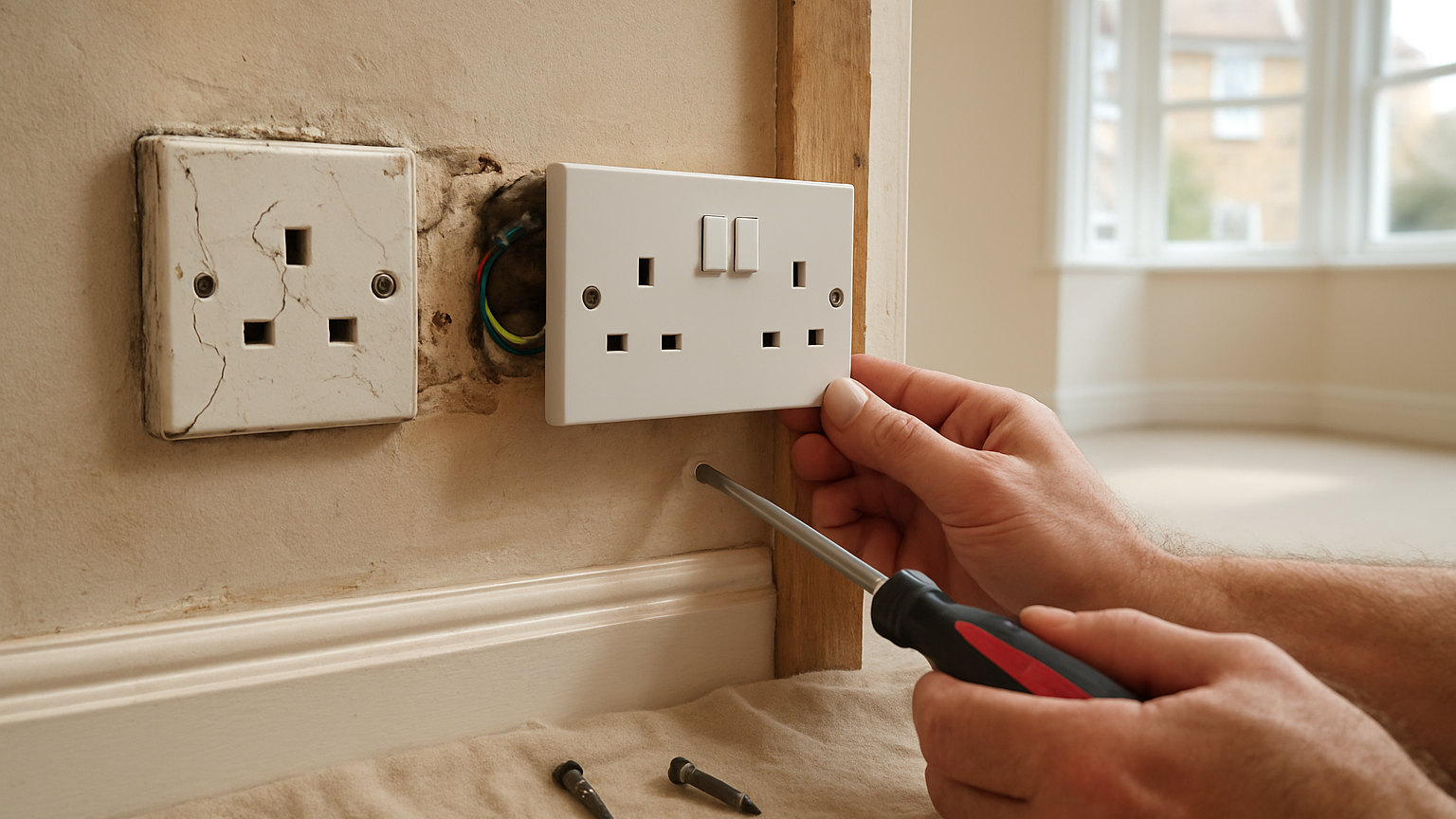
Workshops are wet, dusty, full of metal and full of tools with trailing leads. The electrical arrangements matter more here than anywhere else in the house.
The non-negotiable
30mA RCD protection on every circuit and every tool.
- An RCD detects current leaking to earth, frequently through a person, and disconnects in a fraction of a second
- An MCB protects the cable. Only an RCD protects you
- Where the circuit has no RCD protection, use a plug-in RCD adaptor and test it before each use
- Test every RCD twice a year with the test button
- A device that does not trip on test is not protecting anyone
Extension leads are not a supply
A common and genuinely poor arrangement: a long extension lead from a house socket to a shed or garage.
- Not designed for permanent use
- Frequently coiled, which overheats under load
- Vulnerable to damage, water and being driven over
- No protection at the outbuilding end
- Voltage drop over a long run, which is hard on motors
- Easily overloaded
A proper supply is a dedicated circuit from the consumer unit, in armoured cable, with its own small consumer unit at the far end.
Supplying an outbuilding
A job for a registered electrician, and worth understanding.
- A dedicated circuit from the house consumer unit
- Steel wire armoured cable for the buried run, sized for the load and the length
- Buried at an adequate depth, typically at least 450mm under a garden and deeper under a drive, with marker tape above it
- A small consumer unit in the outbuilding, with its own main switch and RCD protection
- Proper earthing arrangements, which need care depending on the supply type
- Installing a new circuit is notifiable under Building Regulations, and the electrician certifies and notifies it
- Keep the certificate with the house papers
Having a main switch in the outbuilding means you can isolate everything at the end of a session, which is worth doing.
Step 1: how many sockets
Far more than you think, and then some more.
- Every tool has a plug, and swapping plugs constantly is how extension leads proliferate
- A double socket every metre or so along a bench is not excessive
- Sockets at each machine position
- Sockets near the door for a vacuum or a heater
- A socket at high level for a light or a radio
- Consider sockets in the ceiling for a lead drop, keeping cables off the floor
Step 2: where to put them
- At or just above bench height, not at skirting level. Reachable without bending, and out of the way of dust and spills
- Along the back of the bench, at the front edge, or on a raised gantry
- Not where they will be covered by stored material
- Not directly above a sink or a wet area
- Consider switched sockets, so a machine can be isolated without unplugging
Step 3: load
- A 13A socket delivers about 3kW
- A large machine, a heater and a dust extractor together will exceed a single circuit
- Note the ratings of your tools: a table saw and an extractor running together is a substantial load
- Spread high-load items across circuits where you can
- An electric heater is usually the largest single load in a workshop
- Never fit a larger breaker to stop nuisance tripping. The rating protects the cable
Step 4: cable management
Trailing leads are the commonest workshop trip hazard.
- Overhead lead drops or retractable reels, keeping cables off the floor entirely
- Cable hooks along the wall
- Route leads behind you and to one side, never across a walkway
- Coil and hang leads immediately after use
- Do not run leads under mats or through doorways where they are crushed
- Where a lead must cross a floor, use a cable protector
Step 5: outdoor sockets
- IP-rated weatherproof sockets with a sealing hinged cover
- Rated with a plug inserted, not just when closed
- Positioned under an overhang where possible
- RCD protection without exception
- An outdoor socket makes garden and outdoor work far easier and safer than trailing a lead from indoors
Step 6: 110V and site tools
- Site tools run at 110V from a centre-tapped transformer, halving the voltage to earth
- Not necessary domestically, and worth knowing if you buy or hire ex-site tools
- A 110V tool needs a transformer, which is heavy and adds cost
- Check what a hire tool runs on before collecting it
Step 7: what to check regularly
- Test every RCD twice a year with the test button
- Inspect every lead along its length for damage
- Check plugs for cracks, bent pins and scorching
- Feel plugs and sockets after use: warmth means a problem
- Check for scorching or discolouration at any socket
- Keep sockets and the consumer unit free of dust
- Check nothing is stored against or on top of electrical equipment
Step 8: dust and electrics
- Fine dust gets everywhere and is conductive when damp
- Use sockets with covers or flaps where dust is heavy
- Blow out and vacuum around electrical equipment periodically
- Keep the consumer unit closed and accessible
- Never store anything against the consumer unit, which must be reachable in an emergency
Step 9: emergency isolation
- Know where the main switch is and keep the route to it clear
- A main switch in the outbuilding lets you isolate everything at once
- Consider an emergency stop for a machine that could trap someone
- Turn everything off at the end of each session
- Keep a torch by the switch
If it goes wrong
RCD tripping repeatedly: unplug everything and reconnect one at a time to find the fault.
Breaker tripping under load: the circuit is overloaded. Spread the load or add a circuit.
Plug or socket warm: stop using it. A loose connection or an overload.
Extension leads everywhere: you need more sockets. Have them installed.
Lights dim when a machine starts: voltage drop. Have the supply assessed.


