Most merchants will scan a sample and mix a match. It gets close and it will not be identical, and understanding why saves disappointment.
Why matches are never exact
- The existing paint has aged. It has faded, yellowed or been cleaned, and the new paint matches the aged colour rather than the original
- The scanner reads a small area. Any dirt, sheen or variation affects the reading
- Different bases produce different results. A colour mixed in a matt base looks different in an eggshell base
- Two colours can match under one light and differ under another, because the pigment mixes are not identical
- The finish differs. Sheen changes how a colour reads
Step 1: find out what it actually was
Always worth trying before resorting to matching.
- Look for leftover tins in the loft, garage or under the stairs
- Check any records left by a previous owner
- Ask the previous owner or the decorator if you can
- Look for a colour written on the back of a socket faceplate or inside a cupboard door, which decorators sometimes do
The tin is always better than a match.
Step 2: take a good sample
The quality of the match depends entirely on the sample.
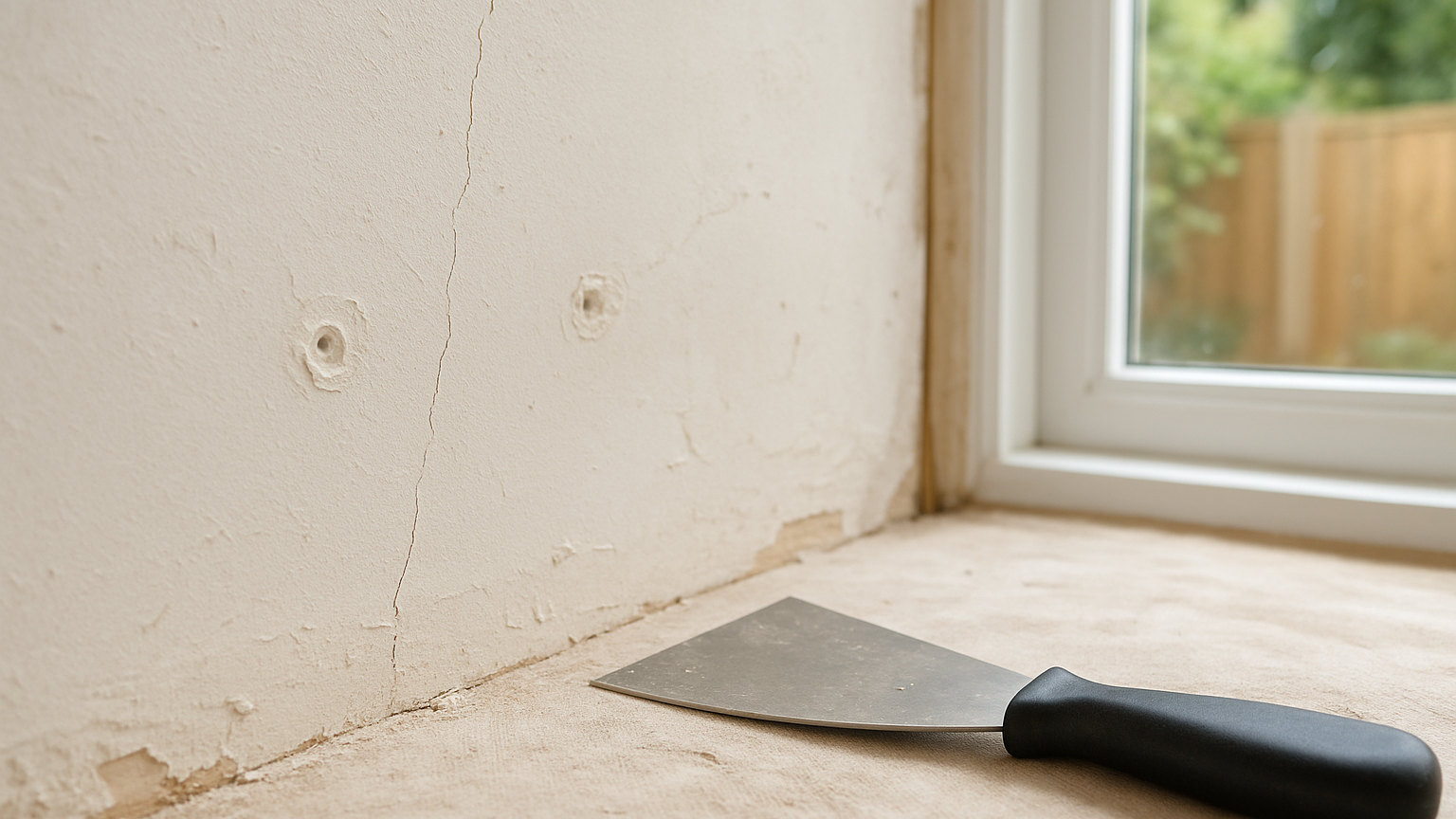
- Choose a spot that is hidden: behind a radiator, inside a cupboard, behind a door, under a light switch faceplate
- Choose an area that has not been faded by sunlight or dirtied by handling
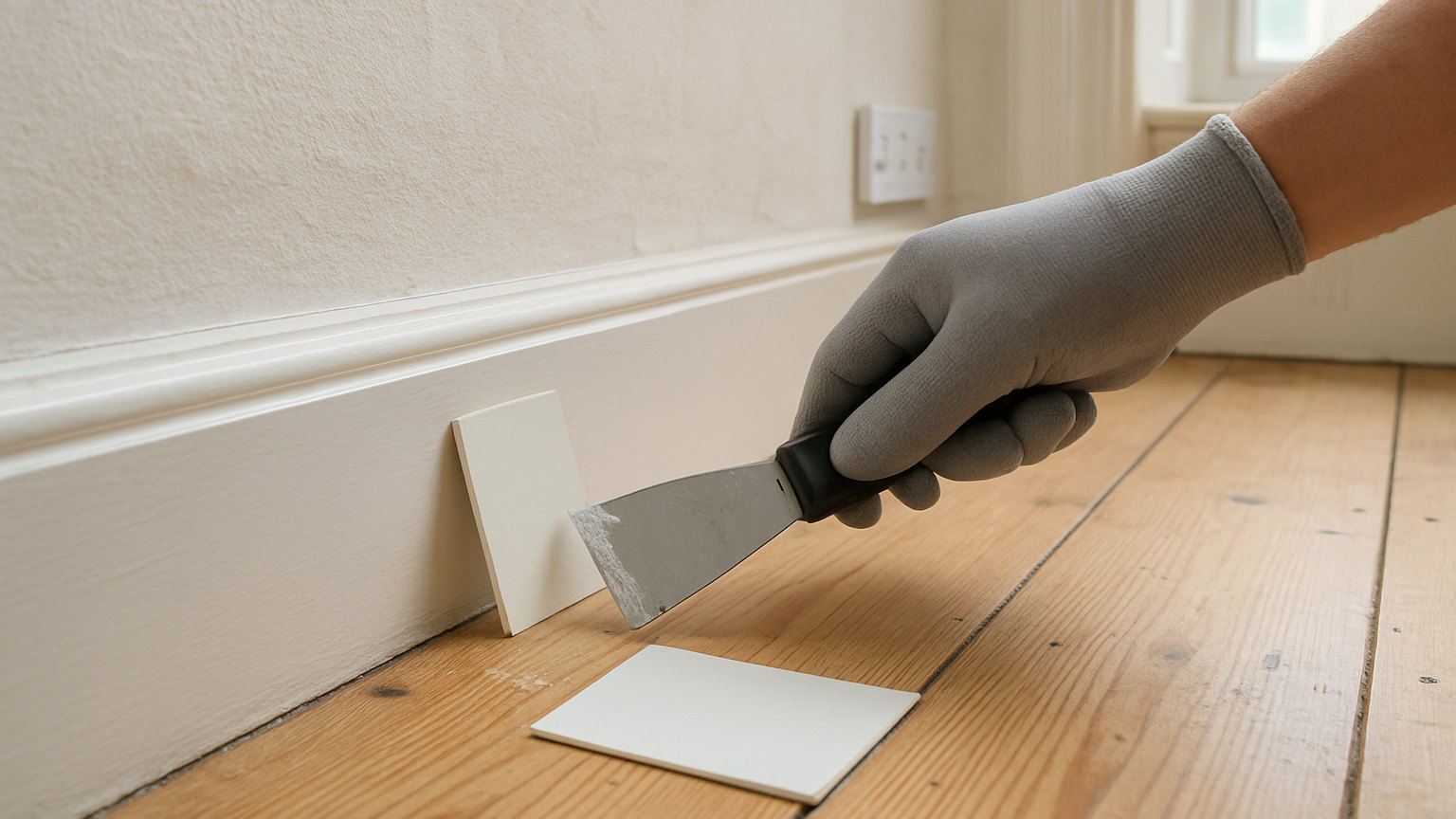
- Cut a chip at least 50mm square with a sharp blade, taking the paint layer cleanly
- Or unscrew a socket faceplate and take the chip from the area it covered, which is unfaded
- Handle it by the edges and keep it clean and flat
- Take it to the merchant in an envelope, not loose in a pocket
A chip from behind a faceplate is the best sample available, because it has never seen daylight or been cleaned.
Step 3: get it scanned
Most decorating merchants and larger DIY stores have a spectrophotometer.
- Take the chip in and ask for a colour match
- Specify the finish you need, since the same formula in a different base gives a different result
- Ask them to mix a tester first rather than a full tin
- Take the tester home and test it properly
Always test before buying the full quantity.
Step 4: test the match
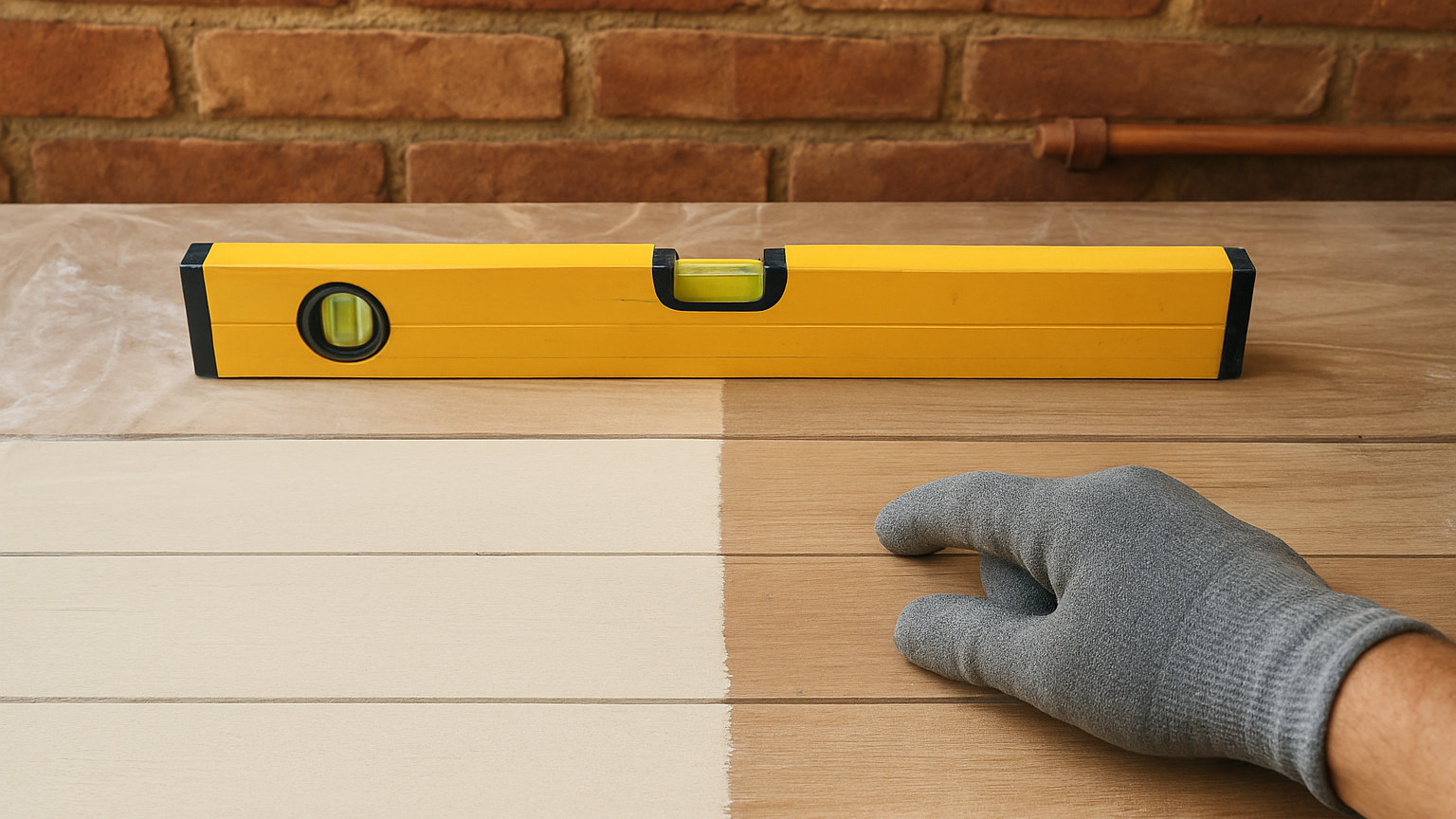
- Paint two coats of the match onto white card
- Let it dry completely
- Hold it directly against the existing paint, in the actual room
- Check in daylight and at night under the room's lights
- Check on more than one wall
A match that looks perfect in daylight can be obviously different under a lamp.
Step 5: decide whether to touch up or repaint
Touching up works when:
- You have the original tin
- The paint is matt, which touches up best
- The area is small and in a low-traffic position
- The existing paint is recent and has not faded
Repaint the whole wall when:
- The paint has any sheen. Silk and gloss almost never touch up invisibly
- The existing paint has aged or faded
- The repair is in a prominent position
- The match is close but not right
Paint to a corner, not to an arbitrary line. Where a whole wall must be repainted, take it to the internal corners, which is where the eye accepts a change.
Touching up technique
- Clean the area first
- Prime any filler, since bare filler absorbs differently and flashes
- Apply with the same tool used originally: roller for a rolled wall, brush for brushed woodwork
- Feather the edges rather than stopping at a hard line
- Apply thinly and build up, rather than one thick patch
- Let it dry fully before judging it, since emulsion changes as it dries
Matching between brands
A colour from one brand mixed in another brand's base will be close and not identical.
The pigments and the base differ, so it can look right in one light and shift in another.
Where accuracy matters, buy the original brand.
Keeping records for the future
The problem is avoidable next time.
- Write down the brand, colour name, code and finish for every surface in every room
- Note the date
- Keep the list with the house paperwork, and a copy on a phone
- Keep a small labelled quantity of each colour
- Some decorators write the colour inside a cupboard door or behind a faceplate, which is worth copying
If it goes wrong
Match visible as a patch: repaint the whole wall to the corners.
Match right in daylight, wrong at night: the pigment mixes differ. Repaint the wall.
Touch-up on silk showing: sheen finishes do not touch up. Repaint the wall.
Sample too small to scan: take a larger chip, at least 50mm square.
Match nothing like the wall: the sample was faded or dirty. Take one from behind a faceplate.
Matching a colour you have seen elsewhere
The same service works for anything: a fabric, a tile, a piece of furniture.
- Take the actual object where you can, rather than a photograph
- Photographs are unreliable, since the camera and screen both alter the colour
- A flat matt sample scans better than a textured or shiny one
- Expect to soften the result, since a colour that works on a cushion is frequently too strong across a wall
A summary
- Look for the original tin before anything else
- Take a chip from behind a faceplate, which is unfaded
- Specify the finish when getting it matched
- Test the match on card, in the room, day and night
- Repaint to the corners rather than touching up a sheen finish