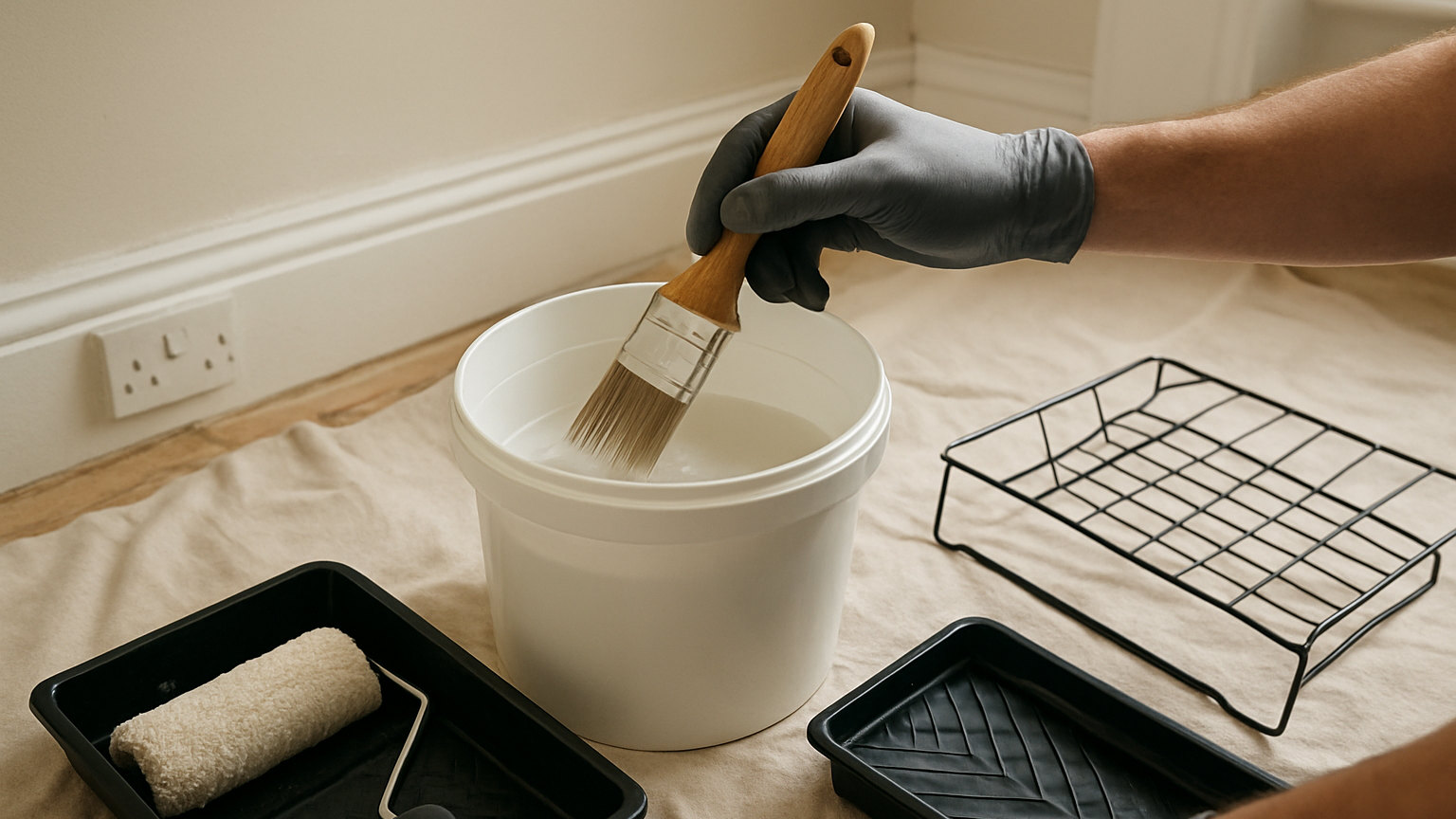
A quality brush repays cleaning many times over. The two things that ruin brushes are letting paint dry in the heel of the bristles, and loading too deep in the first place.
What you need
- Warm water and washing-up liquid for water-based paint
- White spirit or brush cleaner for solvent-based paint
- Two or three jars or a small container for solvent
- A brush comb or a wire brush
- A 5-in-1 tool or a scraper for rollers
- Kitchen roll and clean rags
- Gloves
Between coats: do not clean at all
Washing a brush between coats on the same day wastes time and paint, and never gets the brush fully dry.
Instead, exclude the air:
- Wrap the brush tightly in cling film or a plastic bag, squeezing the air out, and fold it over the ferrule
- Do the same with the roller sleeve, still on the frame
- They will be usable the next day, and often two or three days later
- Store somewhere cool, not in a warm room
Some people refrigerate wrapped brushes for longer storage. Wrap them thoroughly and label them if you do, and keep them away from food.
Cleaning a brush: water-based paint
- Scrape out the excess paint first, drawing the brush across the rim of the kettle or the edge of a scraper. Most of the paint should come out before water touches it
- Rinse under warm running water, working the bristles between your fingers
- Work from the ferrule outwards, pushing paint out towards the tip
- Add a drop of washing-up liquid and work it right into the heel of the bristles
- Rinse until the water runs completely clear
- Check the heel, where the bristles meet the ferrule. This is where paint hides and hardens. Squeeze it and look
- Comb the bristles straight with a brush comb
- Shake or spin out the water
Cleaning a brush: solvent-based paint
- Scrape out as much paint as possible
- Work the brush in a jar of white spirit, pressing and flexing the bristles
- Move to a second jar of clean spirit and repeat
- A third jar gets it properly clean
- Then wash with warm water and washing-up liquid to remove the spirit
- Rinse, comb and dry
Reuse the spirit: let the used jar stand until the paint solids settle, then pour off the clear spirit into a clean jar. The sludge goes to hazardous waste.
Ventilate the room and wear gloves. Do not work with solvents near a naked flame.
Drying and storing brushes
- Comb the bristles straight while wet
- Wrap the brush in a piece of stiff paper or its original keeper, folded around the bristles, to hold the shape as it dries
- Hang it bristles down, or lay it flat. Never stand a brush on its bristles
- Let it dry completely before storing
- Store hanging or flat, not crammed in a tin
A brush dried into a splayed shape stays that shape and will never cut a clean line again.
Cleaning a roller sleeve
Be honest about whether it is worth it. Cheap sleeves are frequently not.
- Scrape the excess paint out with the curved edge of a 5-in-1 tool, running it down the sleeve, back into the tin
- Rinse under running water, squeezing repeatedly
- Work washing-up liquid through it
- Keep going until the water runs clear, which takes longer than you expect
- Spin out the water by spinning the frame inside a bucket or outdoors
- Stand it on end to dry, not lying down, so it dries evenly
Clean the frame and cage too, since dried paint on the cage stops the sleeve rotating.
Reviving a hardened brush
Possible if the brush is good.
Soak in a proprietary brush restorer following the instructions, then work the bristles, comb through and wash thoroughly.
Water-based paint sometimes softens in hot water with washing-up liquid and patience.
A brush with paint hardened solid in the heel is usually finished.
Disposing of the waste
Do not pour paint or solvent down a drain or a sink.
- Let rinse water stand so solids settle, then dispose of the sludge with household waste once dried
- Let used white spirit settle, decant the clear liquid to reuse, and take the residue to a household waste recycling centre
- Harden leftover paint with a paint hardener, sawdust or sand before disposal
- Take liquid paint and solvents to a household hazardous waste facility
If it goes wrong
Brush splayed and will not cut a line: dried out of shape. Soak, comb straight, wrap in paper and dry flat. It may recover.
Brush stiff at the heel: paint dried in the ferrule. Try a restorer, and load less deeply next time.
Roller sleeve matted: not rinsed enough. It will shed and leave marks; replace it.
Bristles shedding into the paint: a cheap brush, or one that has been over-cleaned with solvent.
Cleaning specific products
- Emulsion: warm water and washing-up liquid
- Water-based satinwood and eggshell: as emulsion, and clean promptly since they set harder
- Oil-based gloss and undercoat: white spirit, then soap and water
- Shellac and stain block: methylated spirit, not white spirit
- Masonry paint: water, and clean immediately since it sets very hard
- Two-pack and specialist products: whatever the tin specifies, and nothing else
The cheap brush question
For shellac, stain block and primer, a cheap brush used once and thrown away is a reasonable decision.
For cutting in a finish coat, it is not. The brush is doing the work.
How long it takes
Cleaning a brush properly takes three to five minutes. A roller sleeve takes five to ten.
Wrapping them between coats takes thirty seconds, which is why you should not clean until the job is finished.