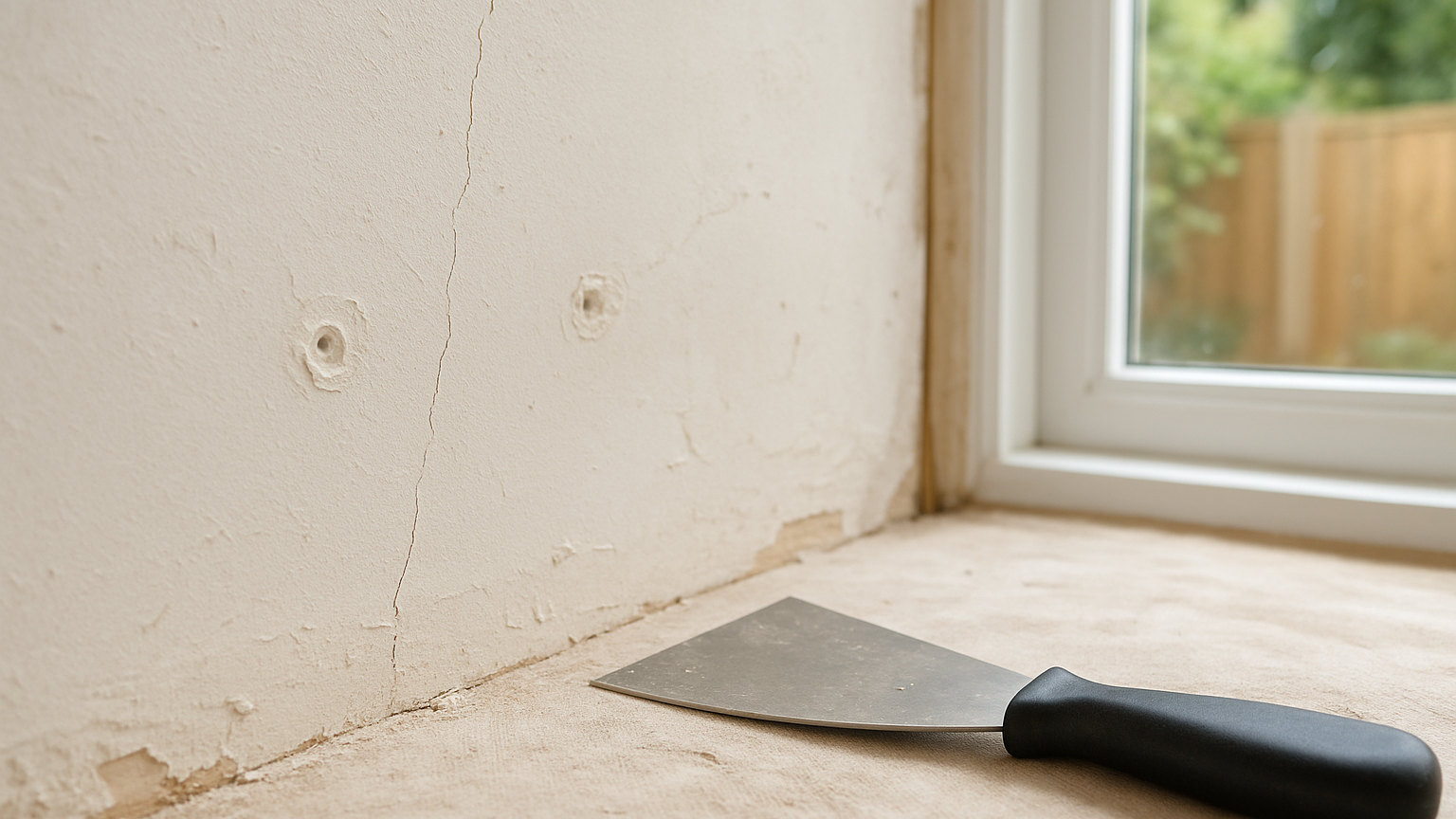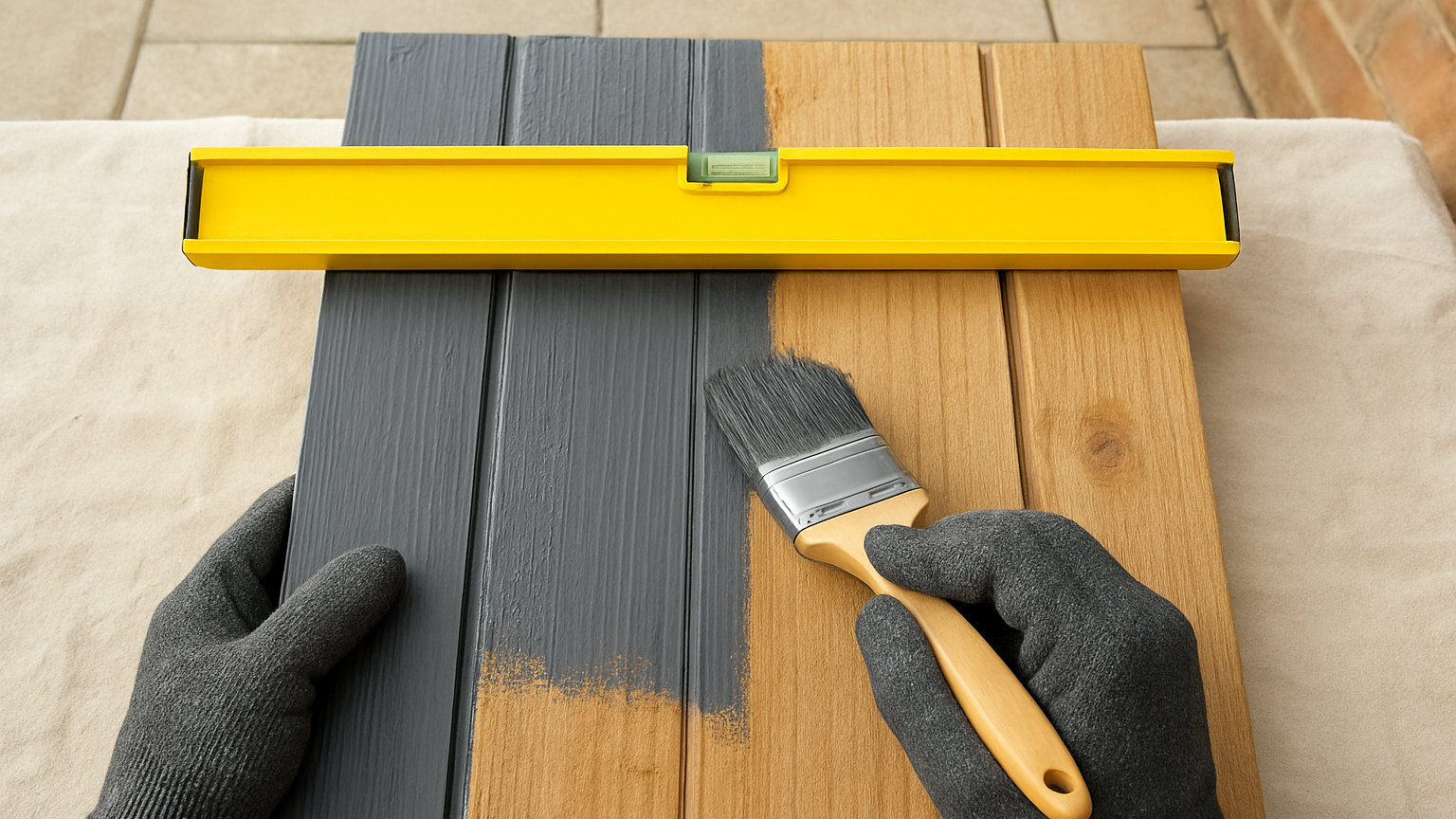
Almost every paint fault is easy to fix in the first ten minutes and a proper job once it has hardened. Checking as you go is the whole technique.
What you need
- Abrasive: 180 and 240 grit, plus a sanding block
- A sharp knife or a scraper
- A brush and some of the original paint
- A damp cloth
- A torch
- A tack cloth
Catching faults early
Build this into the routine.
- After finishing each wall or each item of woodwork, step back and look at it from an angle
- Shine a torch across the surface at a shallow angle, which reveals runs, misses and nibs that flat light hides
- Check again after ten minutes, since runs develop as the paint settles
- Check the underside of anything horizontal, and the bottom edges of panels
Runs and sags: still wet
The easy case.
- Brush the run out immediately with a nearly dry brush, working along the surface
- Spread the excess paint out into the surrounding area rather than trying to remove it
- Lay off lightly in one direction
- Check again in five minutes in case it re-forms
If the paint has started to skin, leave it alone. Brushing a skinned run tears the surface and makes it far worse than the run was.
Runs and sags: dry
Wait until it is fully hard, which for a thick run may be several days, since the middle stays soft long after the surface.
- Slice the bulk of the run off with a sharp knife or a scraper held flat, if it is proud
- Sand with 180 grit on a block, keeping the block flat so you do not dish the surface
- Work outwards, feathering into the surrounding paint
- Finish with 240
- Dust off and wipe with a tack cloth
- Apply a thin coat over the whole surface, corner to corner, not just the repair
Sanding a run that is not fully hard just smears it.
Missed patches
Usually visible only once the paint has dried, and typically behind radiators, above doors, in corners and where the light was poor.
Touching up a missed patch mid-wall almost always shows, because fresh paint has a different sheen from paint that has begun to cure.
Repaint the whole surface from corner to corner. Corners are natural breaks; the middle of a wall is not.
On woodwork, repaint the whole component: the whole door, the whole length of skirting between breaks.
Bits and nibs in the finish
Small lumps in the dry film, caused by dust, dried paint from the tin rim, or bristles.
- Sand lightly with 240 grit once fully dry, just enough to take the nib off
- Wipe with a tack cloth
- Apply a further coat
Prevention: strain the paint through a paint strainer or an old stocking if the tin has been opened before, work from a kettle rather than the tin, vacuum the room before painting, and do not wear woolly jumpers.
Brush marks
Ridges left by the bristles that have not flowed out.
Causes: paint too thick, too cold, brushed for too long after application, or a poor brush.
Fix: sand with 240 when hard, then apply a thinner coat. Lay off in one direction with light pressure and stop working the paint.
Adding a small amount of the manufacturer's recommended conditioner or thinner helps the paint flow, particularly in warm conditions.
Paint on the wrong surface
Water-based, still wet: wipe with a damp cloth immediately.
Water-based, dry, on glass: a window scraper with a fresh blade, held at a shallow angle, with the glass wetted with soapy water.
On carpet: blot, do not rub. Water-based paint may lift with warm water and washing-up liquid if caught immediately.
On a hard floor: scrape carefully with a plastic scraper, then a suitable solvent tested in a hidden spot.
Solvent-based anywhere: white spirit on a cloth, immediately, testing first.
Wrinkling and crazing
Cause: recoated too early, applied too thickly, or forced drying with direct heat.
Fix: let it dry completely, sand back to a sound flat surface, and recoat thinly with proper drying time between coats.
Touching up invisibly
Difficult, and these help:
- Use paint from the same tin, well stirred
- Use the same application method: a roller mark cannot be matched with a brush
- Feather the edges rather than stopping abruptly
- Accept that on a sheen finish it will show, and repaint the whole surface
If it goes wrong
Sanding a run made a hollow: you sanded without a block. Fill, sand flat, and recoat the whole surface.
Touch-up patch clearly visible: repaint corner to corner.
Run reappeared after recoating: the coat was too thick again. Thin coats.
Sanded through to the primer: spot-prime and apply two coats over the whole surface.
Preventing faults in the first place
- Work from a kettle, not the tin, so dried rim material never reaches the wall
- Strain paint that has been opened before
- Load the brush a third of the bristle depth and tap rather than scrape
- Apply thin coats and lay off in one direction
- Vacuum the room before painting and do not sweep
- Check each surface with a torch before moving on
- Do not overwork the paint once it has started to set
Knowing when to stop
Chasing a small fault frequently makes it larger.
If the paint has begun to skin, walk away and deal with it properly when hard.
Almost every fault is easier to correct with fresh eyes and a fully cured surface than by fiddling with it wet.