Running out halfway through a wall is worse than over-buying, because the second batch may not match and the join will show. The calculation takes two minutes.
What you need
- A tape measure, ideally 5m
- A calculator and something to write on
- The coverage figure from the tin or the manufacturer's website
Step 1: measure the walls
The quickest method for a whole room:
- Measure the perimeter of the room: add the length of all four walls together
- Measure the height from floor to ceiling
- Multiply the two. That is your total wall area in square metres
For example, a room 4m by 3m has a perimeter of 14m. At 2.4m high, that is 33.6 square metres of wall.
For a ceiling, multiply length by width. The same room gives 12 square metres.
Step 2: do not deduct doors and windows
Unless they take up a very large proportion of a wall, leave them in the figure.
The extra covers the cutting in, the waste in the tray, and the second tin you would otherwise have to open.
Deduct only for something substantial, such as a large patio door or a full-width window.
Step 3: use a realistic coverage figure
Tins usually quote something in the region of 12 to 14 square metres per litre per coat.
That figure is a best case: one coat, on a smooth, sealed, previously painted surface, applied efficiently.
Reduce it for real conditions:
- Bare or new plaster: expect roughly half. It drinks the first coat
- Textured surfaces, artex, woodchip: a third to a half less
- Masonry and render outside: as little as 4 to 6 square metres per litre
- Previously painted, smooth, similar colour: close to the quoted figure
- Cheap paint: covers less and needs more coats, so it frequently costs more overall
Step 4: multiply by the coats
Two coats is the normal minimum on emulsion.
Three if you are going light over dark, using a strong colour, or covering a stain.
New plaster needs a mist coat first, which counts as an extra coat although it uses less paint.
Step 5: the calculation
Wall area, divided by coverage per litre, multiplied by the number of coats.
Taking the example room: 33.6 square metres, at 12 square metres per litre, for two coats.
33.6 ÷ 12 = 2.8 litres per coat. Two coats = 5.6 litres.
Round up to the next tin size. Buy the 5 litre tin plus a smaller one, or a 5 litre and accept you may need a top-up.
In practice, most people find 5 litres does two coats on an average bedroom's walls with a little left over.
Rules of thumb
Useful for a quick answer.
- Average bedroom walls, two coats: around 5 litres
- Average bedroom ceiling, two coats: around 2.5 litres
- Average living room walls, two coats: 5 to 7.5 litres
- Woodwork in one room, undercoat and two topcoats: around 1 to 1.5 litres of each
- A single door, both sides: around 0.5 litres
Buying
Buy all the paint for one room at once and check the batch numbers match.
Colours vary slightly between production runs, and the difference shows on a large wall.
If you have two batches, mix them together in a larger container before starting, which is called boxing. That way any variation is spread across the whole room rather than appearing as a line.
Larger tins are cheaper per litre, usually noticeably so.
Keep the leftovers, labelled with the room and the date, for touching up.
Getting the colour right first
Buy a tester pot before buying five litres.
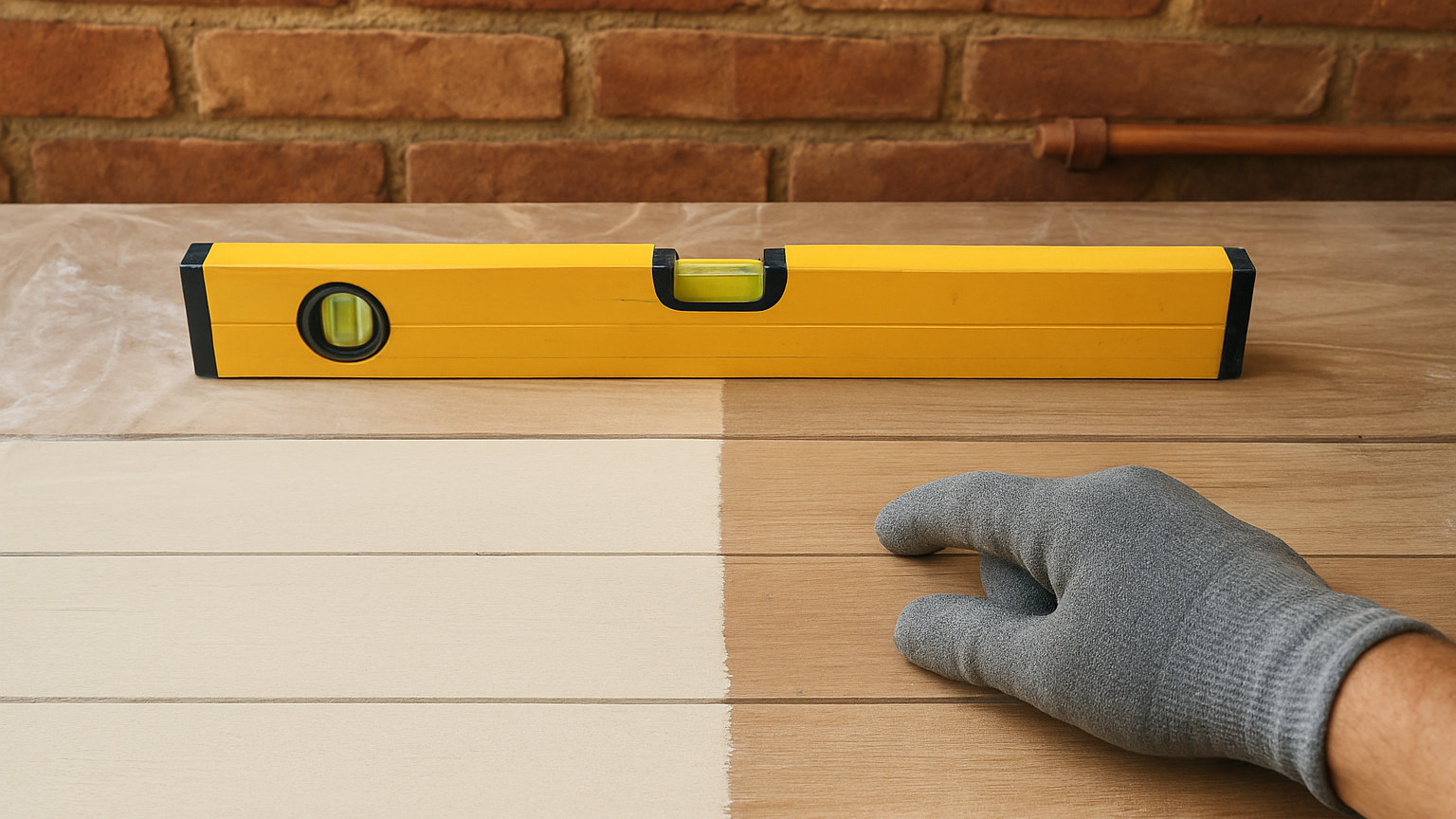
Paint a large patch, at least A4 size, or paint a piece of card you can move around.
Look at it in daylight, in the evening under artificial light, and on different walls in the room. Colour changes dramatically with light and aspect.
Let the tester dry fully, since most paints look different wet.
If it goes wrong
Ran out mid-wall: stop at a corner rather than mid-surface if you can, since a join at a corner is invisible.
New tin does not match: different batch. Mix the new tin with what is left of the old, and repaint the whole wall.
Coverage far worse than expected: the surface is porous, or the paint is thin. Seal the surface and use better paint.
Bought too much: keep it sealed and labelled. Do not pour paint down a drain; take surplus to a household waste recycling centre.
Storing leftovers
- Wipe the rim clean before replacing the lid, or it will not seal
- Tap the lid down all round with a rubber mallet or a block and hammer
- Label the tin with the room, the colour code and the date
- Store frost free. Emulsion that has frozen separates and cannot be recovered
- Decant a small amount into a jar for touch-ups, so you are not opening the big tin
Disposing of the rest
Never pour paint down a drain or a sink.
Harden leftover emulsion with a proprietary paint hardener, or with sawdust or sand, then dispose of the solid at a household waste recycling centre.
Many centres accept liquid paint directly, and some run reuse schemes. Check before travelling.
Community reuse projects and charities frequently take usable full tins, which is better than sending them to landfill.
Ordering online
Colours on a screen are unreliable. Order a tester or a colour card before committing to a large quantity.
Check the tin size, since paint is sold in 1, 2.5, 5 and 10 litre tins and the price per litre varies considerably between them.