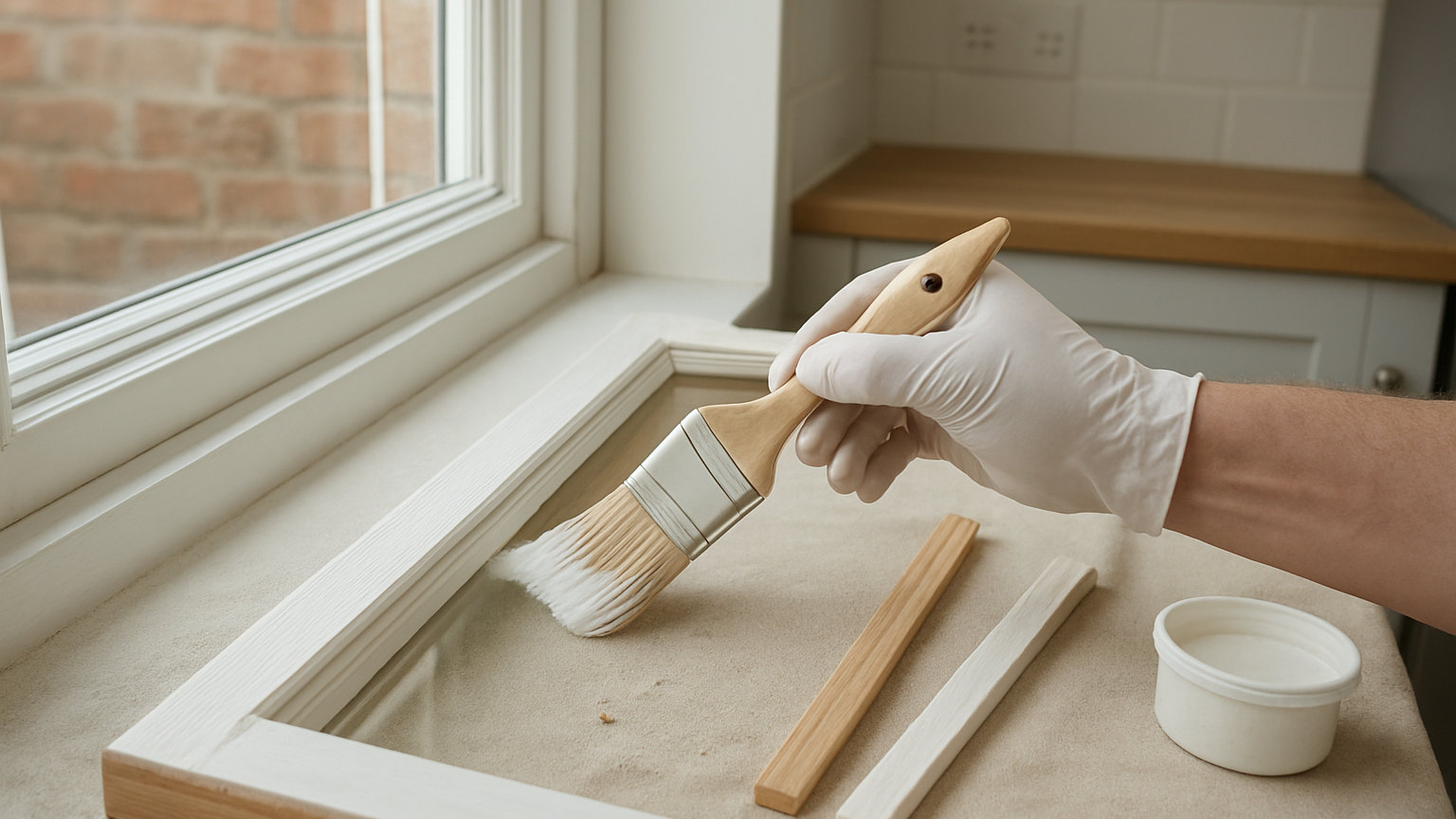
Windows are the fiddliest painting in a house: many small members, glass to cut against, and moving parts that will stick together if you get it wrong.
What you need
- A 25mm and a 38mm angled brush
- Paint kettle
- A window scraper with fresh blades
- 180 and 240 grit abrasive, and sanding sponges
- Sugar soap, tack cloth
- Filler, and putty or frame sealant if the glazing needs attention
- Masking tape and masking film
- Wedges or matchsticks
Step 1: prepare
- Open the window and clean the whole frame with sugar soap, including the rebates and the underside of the opening light
- Rinse and dry
- Sand with 180 until the shine has gone, using a sponge on the mouldings
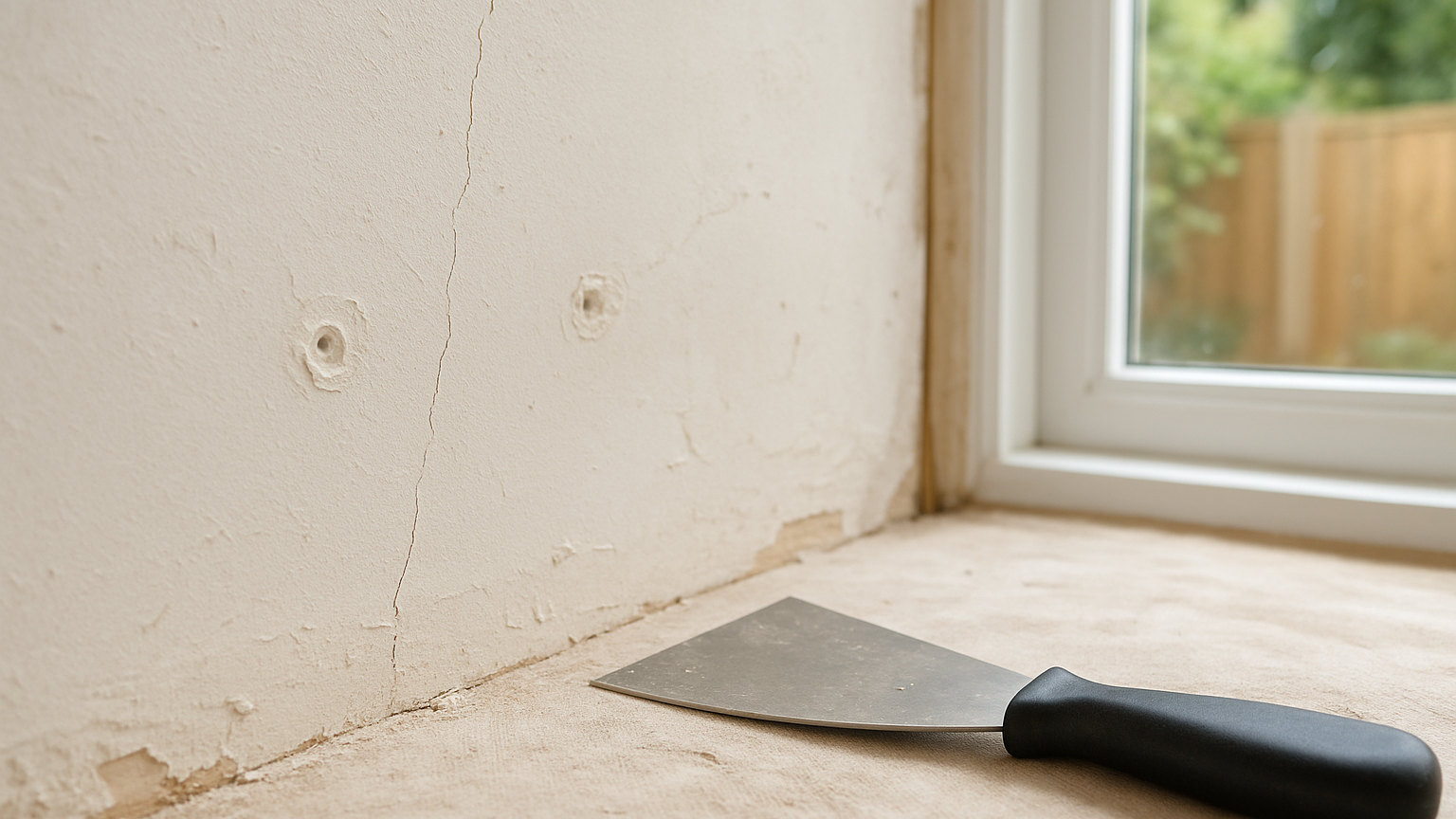
- Cut out and replace any failed putty or sealant, and let it cure as the product requires
- Fill splits and holes, sand and spot-prime
- Check the drainage slots in the bottom of the frame are clear, and do not paint them shut
- Dust off and wipe with a tack cloth
Step 2: the order for a casement window
Work from the middle outwards, and from the opening parts to the fixed frame.
- Glazing bars, if there are any
- The top and bottom rails of the opening casement
- The stiles of the casement, the vertical members, in one pass each
- The edges of the casement, including the rebate that meets the frame
- The outer frame: the head, then the jambs, then the sill
- The sill last, since it collects drips from everything above
Open the casement fully and paint it before the frame, so you can reach the edges.
Step 3: sash windows
The order depends on being able to reach both sashes.
- Raise the bottom sash and lower the top sash so they are almost reversed
- Paint the accessible parts of the top sash: the bottom rail and as much of the stiles as you can reach
- Let it dry
- Return the sashes almost to their normal positions and paint the remainder of the top sash
- Then the whole bottom sash
- Then the frame, the linings and the sill
Do not paint the sash cords, which stiffens them and causes them to fail.
Do not paint the parting bead or the running surfaces heavily, or the sashes will bind.
Step 4: cutting against the glass
Two approaches, and both are acceptable.
Freehand, taking the paint deliberately about 1 to 2mm onto the glass.
This is not sloppiness. It seals the joint between the putty or bead and the glass, so water cannot get behind and rot the frame. A paint line stopping short of the glass leaves that joint open.
Masked, using masking film on the pane with the tape set 2mm from the frame.
Whichever you use, scrape the excess off the glass afterwards with a window scraper and a fresh blade, held at a shallow angle with the glass wetted.
Step 5: stop it sticking shut
The commonest complaint after painting windows.
- Paint in the morning so there is a full day of drying
- Open and close the window gently several times during drying, every hour or so
- Or wedge it slightly open with matchsticks or folded card, so the surfaces cannot touch
- Do not close it fully overnight on the day it is painted
- Keep paint out of the rebate where the casement seats, and off any weather seal
- Never paint over a rubber or brush seal
If it does stick, run a filling knife or a blade down the joint before forcing it.
Step 6: coats
Two coats of finish, sanding lightly with 240 between them.
On bare timber outside: knotting, exterior primer, undercoat, two finish coats, with all end grain sealed.
Exterior windows take the worst weather in the house, so preparation and coat build matter more here than anywhere.
If it goes wrong
Window painted shut: score the joint with a sharp blade all round, then ease it open. Never force it.
Paint on the glass: a window scraper with a fresh blade, glass wetted with soapy water, blade at a shallow angle.
Runs in the corners: too much paint in the angle. Brush out while wet.
Casement binding: too much paint build-up in the rebate. Sand it back.
Water getting in after painting: the paint line does not bridge onto the glass, or the putty has failed. Repair the glazing and take the paint 2mm onto the glass.
Exterior windows
These need more coats and more attention than internal frames.
- Check the weather for 24 hours ahead, not just the day
- Do not paint onto damp timber or if rain is forecast within the recoat window
- Follow the shade round the building; do not paint in direct hot sun
- Prime all bare timber the same day it is exposed
- Give end grain and the bottom rail extra coats, since that is where rot starts
- Stop by mid-afternoon in autumn so the surface dries before dew
Order for a whole window
- Opening casement, off its catch and fully open
- Fixed lights and glazing bars
- The frame: head, jambs, then the sill
- The window board inside, last
Ironmongery
Remove stays, catches and handles rather than painting round them. Bag the screws.
Painted-over window furniture stops working and looks poor, and removing it takes minutes.
How long it takes
A single casement window takes around an hour to prepare and half an hour per coat.
A large sash window is considerably longer, since the sashes must be painted in two stages with drying in between.