Some stains are soluble in water. Emulsion is water-based, so it dissolves them and carries them straight to the surface. Applying more coats simply moves more stain up.
Find the cause first
Sealing a stain does not fix what caused it.
A water stain on a ceiling means water has been there. Establish whether the leak is fixed and the area is dry before doing anything else.
Feel it, and use a moisture meter if you have one. A damp patch sealed and painted will simply reappear and take the paint with it.
Common causes: a roof leak, a failed shower seal, an overflowing gutter, a condensation problem, a leaking pipe in a void.
Fix it, let the area dry fully, which can take weeks, then seal.
What you need
- Shellac-based stain block, usually sold in aerosol and in tins
- Or an oil-based stain-blocking primer for large areas
- Methylated spirit for cleaning brushes used with shellac
- A cheap synthetic brush, or an aerosol for spot work
- Fungicidal wash if mould is present
- Sugar soap, sponges, gloves and eye protection
- P2 respirator and good ventilation
- Dust sheets and masking
Which stains bleed
These will come through emulsion no matter how many coats you apply.
- Water and rust marks
- Nicotine and smoke damage
- Soot and fire damage
- Wood knots and resin
- Tannin from oak and some hardwoods
- Felt tip, biro, crayon and permanent marker
- Grease and cooking residue
- Some timber preservatives and old bitumen
Which product for which stain
Shellac-based blockers are the strongest and the fastest drying. They stop virtually everything: water stains, nicotine, smoke, knots, tannin, pen and crayon. They dry in about fifteen minutes to an hour and can be overpainted with anything.
Shellac has a strong smell and needs ventilation, and brushes clean in methylated spirit rather than water.
Oil-based stain-blocking primers work well on most stains, take longer to dry, and are easier to apply over a large area with a roller.
Water-based stain blockers are low odour and easier to use, and are less reliable on the worst stains. Fine for light marks, not for a heavy nicotine wall.
Ordinary primer and undercoat do not block stains. Nor does more emulsion.
Step 1: clean the surface
Wash the area with sugar soap and rinse thoroughly.
On nicotine, wash the whole wall rather than just the visible staining, since the film is everywhere.
On mould, treat with a fungicidal wash following the contact time on the bottle, then rinse and dry. Do not simply seal over live mould.
Let it dry completely.
Step 2: apply the blocker
For spot stains, an aerosol is quick and gives an even coat. Shake it well and spray from about 250mm in light passes.
For larger areas, brush or roller.
Take the blocker well beyond the visible edge of the stain, by at least 100mm. Stains spread further than they show.
Apply one full coat and let it dry.
Ventilate the room throughout, and wear a respirator with shellac and solvent-based products.
Step 3: check before painting
Apply one coat of your finish paint over the sealed area and let it dry.
If any stain shows, apply a second coat of blocker rather than a second coat of emulsion.
Checking with one coat is far quicker than painting the whole room and discovering the stain has come through.
Step 4: paint
Two full coats over the sealed area, and across the whole wall or ceiling rather than just the patch, or the repair will show as a different sheen.
Particular cases
Nicotine: wash the whole room, then seal the whole surface with a shellac or oil-based blocker rather than spot treating. Nicotine is everywhere, not just where it looks worst. Expect to seal ceilings as well.
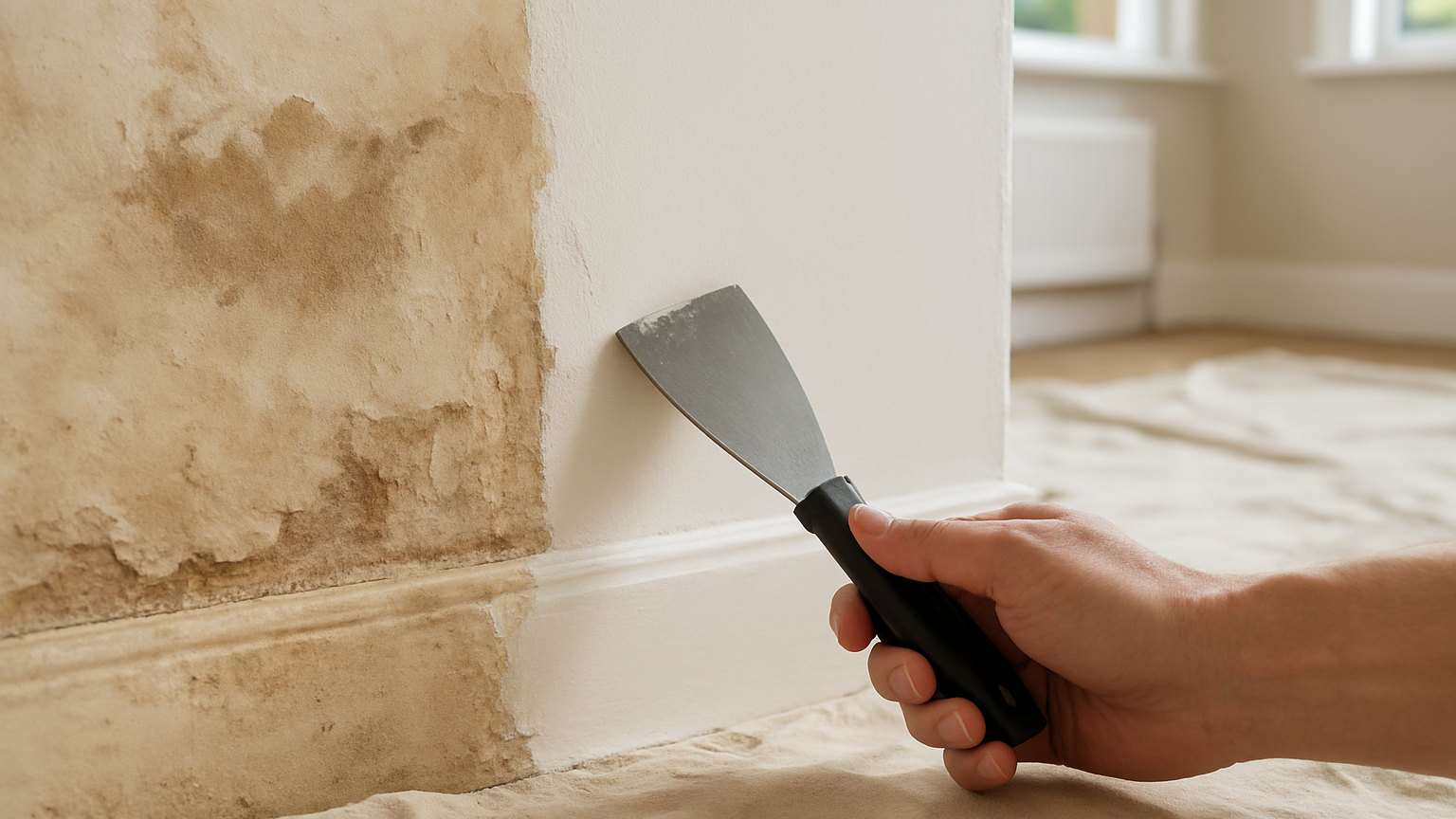
Water stains on a ceiling: confirm the leak is fixed and the plaster is dry. Seal, then paint the whole ceiling, since a patch always shows.
Fire and smoke damage: wash thoroughly, seal with shellac, and expect to seal every surface.
Knots in woodwork: shellac knotting solution specifically, two coats, before priming.
Pen and crayon: spot seal with an aerosol shellac blocker. Emulsion alone will never cover it.
If it goes wrong
Stain still coming through: insufficient blocker, or the wrong type. Use shellac and apply a second coat.
Stain reappearing weeks later: the source is still active. Find the leak.
Sealed patch showing as a different sheen: paint the whole wall or ceiling, not just the patch.
Blocker showing through the finish: two full coats of finish paint over it.
Using an aerosol properly
- Mask around the area generously, since the spray drifts further than you expect
- Shake for a full minute
- Hold about 250mm from the surface
- Apply in light passes, starting the pass before the target and finishing after it
- Two light coats rather than one heavy one, which runs
- Invert the can and spray until clear to stop the nozzle blocking
Ventilation and safety
Shellac and solvent-based blockers give off strong vapours.
Open windows, work with the door shut to the rest of the house, and wear a respirator with the correct filter rather than a dust mask.
Keep them away from any ignition source, and do not use them in an unventilated room.
How much you need
An aerosol covers a few square metres and suits spot work.
For a whole nicotine-stained room, buy it in a tin and apply with a roller. Two and a half litres covers an average room's walls and ceiling.