Wallpaper comes off when water reaches the paste behind it. Everything about the job is getting water through the face of the paper and then scraping at the correct angle.
What you need
- A wallpaper scoring tool
- A stripping knife, 75 to 100mm, with a stiff blade
- A garden sprayer or a sponge and bucket
- Wallpaper stripping solution, or washing-up liquid
- A steam stripper, hired or bought
- Heavy-duty dust sheets and plastic sheeting
- Rubber gloves, eye protection, and a P2 mask
- A bin bag or two, and a bucket for scrapings
- Sugar soap and a sponge for the paste afterwards
Step 1: prepare the room
Wet wallpaper is heavy, sticky and lands everywhere.
Take everything out. Cover the floor with plastic sheeting and a dust sheet on top, taped at the edges.
Turn off the electricity to the room at the consumer unit. You are about to spray water at walls with sockets and switches in them.
Mask over sockets and switches with tape.
Step 2: identify what you have
Try lifting a corner with the stripping knife.
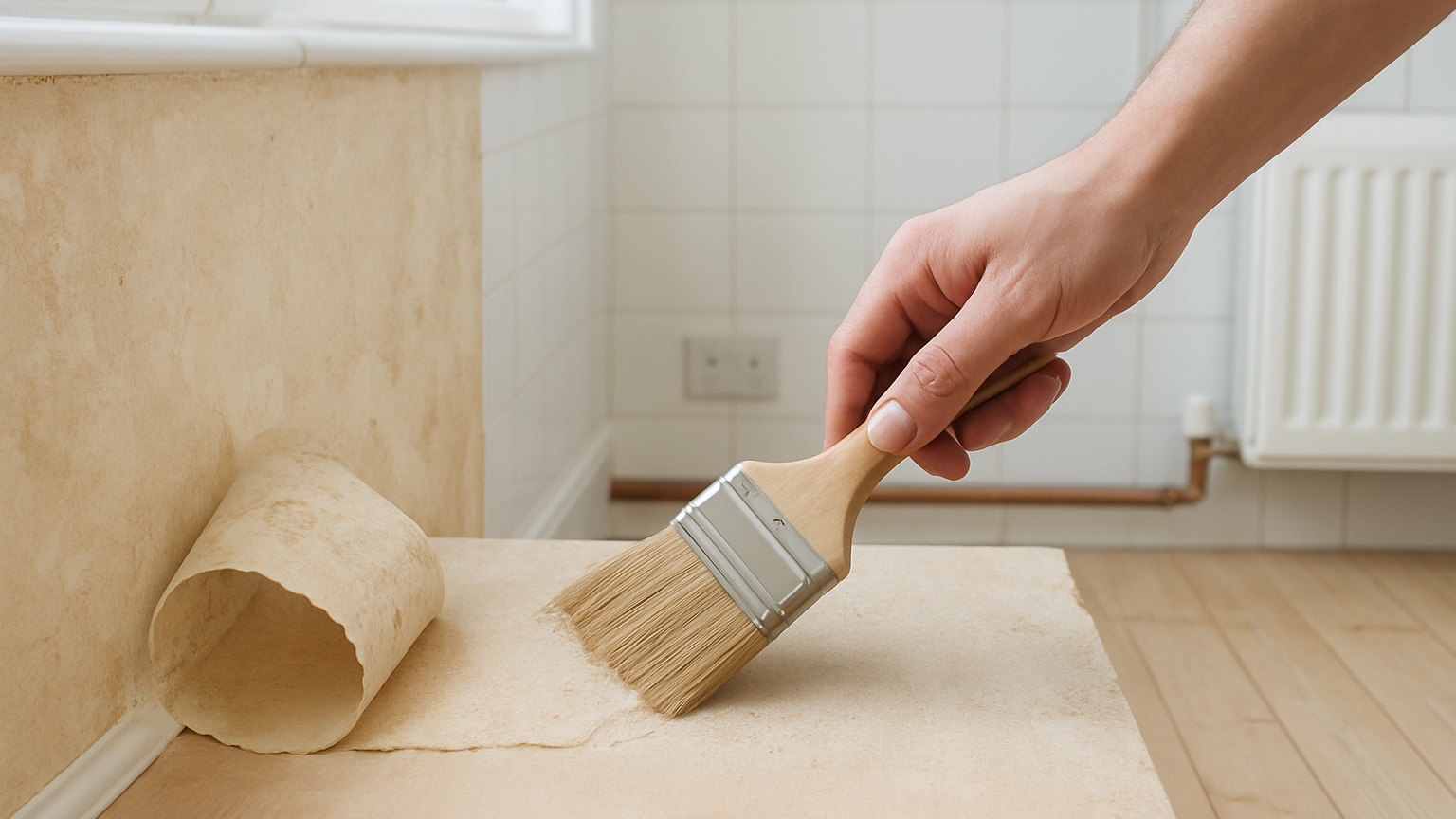
Strippable paper peels away dry in whole lengths, leaving the backing paper on the wall. Peel it all off, then treat the backing as a separate layer.
Vinyl or washable paper has a plastic film that repels water. It must be scored, or the top layer peeled off first.
Standard paper soaks and scrapes off.
Woodchip is thick and slow, and usually comes off in large pieces once soaked properly.
Painted-over paper is the worst case. The paint seals it, so scoring is essential and it will take several soakings.
Step 3: score the surface
Run the scoring tool over the paper in overlapping circles, applying moderate pressure.
You are making small perforations for water to get through.
Do not press hard. Digging into the plaster creates hundreds of small repairs to fill later.
Step 4: soak it
Mix hot water with stripping solution or a squirt of washing-up liquid, which breaks the surface tension.
Apply generously with a sprayer or a sponge.
Wait ten to fifteen minutes, then apply again. The second soaking is what does the work, and it is the step people skip.
Work one wall at a time so the paper does not dry out before you reach it.
Step 5: scrape
Hold the stripping knife at a shallow angle, around 30 degrees, and push under the paper.
A steep angle digs into the plaster and gouges it.
Start at a seam or a corner and work upwards where you can, since gravity helps peel the sheet.
If it is not coming off easily, it needs more water, not more force.
Drop scrapings straight into a bucket rather than the floor, where they get walked around.
Using a steam stripper
Faster for stubborn paper and needs care.
- Fill with clean water and let it reach temperature
- Hold the plate against the wall for around 10 to 20 seconds per position
- Steam one area while scraping the one before it
- Wear gloves and eye protection: escaping steam causes serious scalds
- Never leave the plate resting on one spot
- Keep it away from sockets, switches and light fittings
Be careful on plasterboard. Prolonged steam soaks through the paper face of the board and softens the gypsum, causing permanent damage. Use short bursts and keep moving. On plasterboard, soaking with a sprayer is safer than a steamer.
Ventilate the room, since a steamer produces a great deal of moisture.
Step 6: remove the paste
Old paste left on the wall causes new paint and paper to fail.
Wash the walls down with warm water and sugar soap, working from the bottom up.
Rinse with clean water and a clean sponge.
Run your hand over the dry wall. Any slippery or shiny patches are paste. Wash again.
Step 7: repair and prepare
Let the walls dry fully, which can take a day or two.
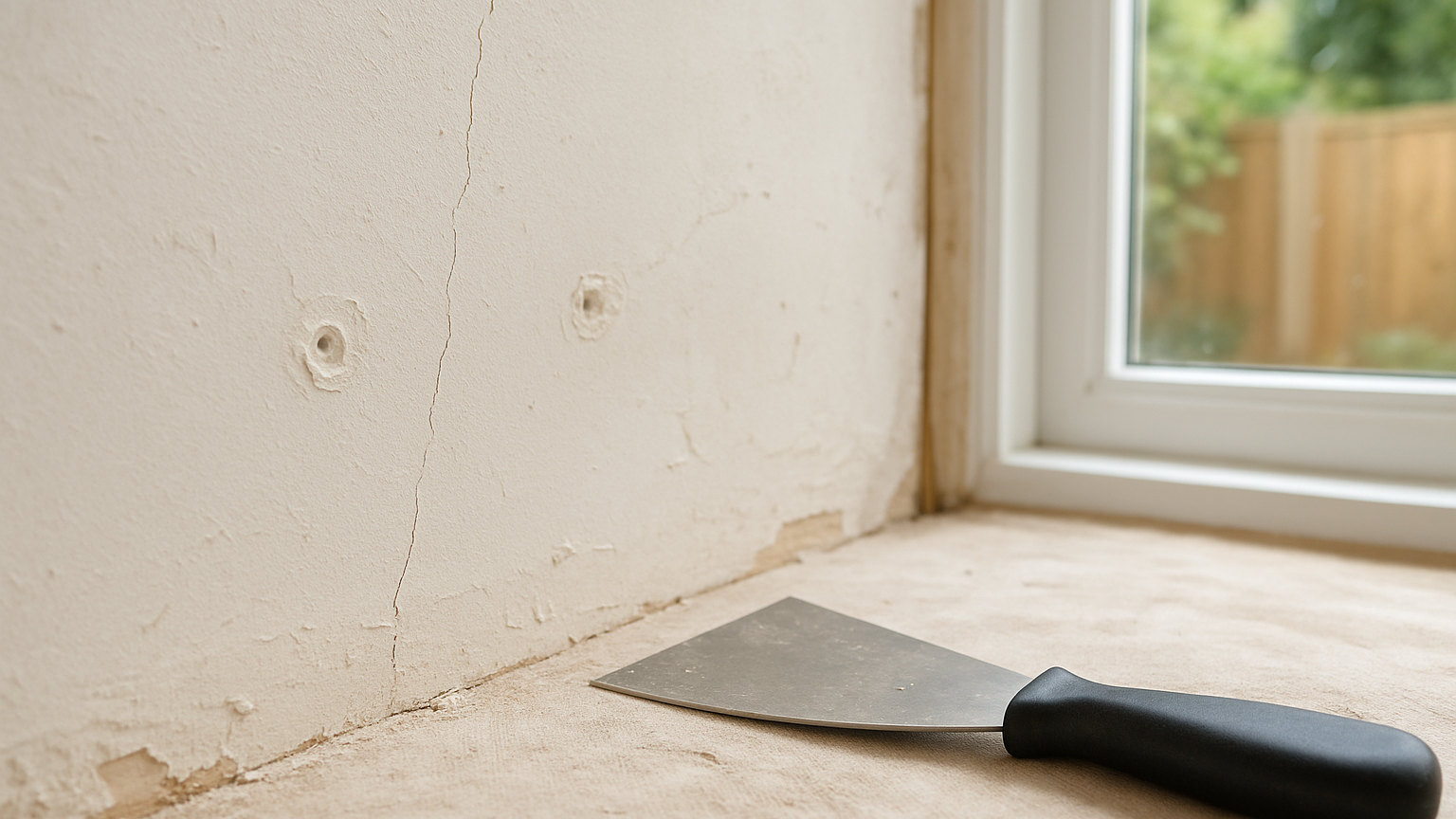
Fill every gouge, tear and hole.
Sand back, then seal any exposed plaster patches before painting or papering.
If it goes wrong
Paper will not come off at all: it has not had enough water, or it is vinyl or painted and needs scoring. Score more thoroughly and soak twice.
Top layer comes off, backing stays: normal with strippable papers. Soak and scrape the backing separately.
Plaster coming off with the paper: the plaster has blown or the scraper angle is too steep. Cut back to sound plaster and patch.
Plasterboard face tearing: too much steam or too aggressive scraping. Stop, let it dry, and skim or patch the damage.
Walls still tacky after washing: paste residue. Wash again with fresh water.
Should you strip it at all
Painting over sound, well-stuck wallpaper is possible and it is a compromise.
The seams will show, embossed patterns will still read through, and the water in the paint can lift the paper.
If you do paint over it, check every seam is stuck down first, and use a solvent-based or specialist primer rather than water-based emulsion for the first coat, which is less likely to lift it.
Never hang new paper over old. The paste soaks through both layers and lifts the lot.
Working out the layers
Older houses often have several layers, sometimes over lining paper, sometimes over distemper.
Peel a corner back and count. Each layer needs its own soaking, and the bottom layer is usually the most stubborn.
Where the bottom layer is stuck to bare plaster with old paste, expect to take some plaster with it and budget for filling.
How long it takes
An average room with one layer of standard paper takes most of a day including washing down.
Painted-over woodchip in an older house can take two full days.
Do not start on a Sunday evening.