Paint bonds to the surface it touches. If that surface is a film of cooking grease, nicotine or dust, the paint bonds to the film and comes off with it.
What you need
- Sugar soap, powder or ready-mixed
- Two buckets: one for solution, one for clean rinse water
- Sponges and lint-free cloths
- A soft brush for textured surfaces
- Rubber gloves and eye protection
- Dust sheets and plastic sheeting
- A fungicidal wash if there is mould
- A stepladder
Safety
Sugar soap is alkaline and irritates skin and eyes. Wear gloves and eye protection, and ventilate the room.
Turn off the electricity to the room at the consumer unit before washing walls with sockets and switches in them.
Never let water run into an electrical accessory.
Step 1: dust first
Washing a dusty wall makes mud.
Vacuum the walls with a brush attachment, or brush them down, working from the top.
Pay attention to the tops of skirting, picture rails, door frames and the ledge above a door.
Step 2: mix the solution
Follow the dilution on the packet. Stronger is not better and leaves residue.
Use warm water, not hot.
Fill the second bucket with clean water for rinsing.
Step 3: work from the bottom up
This is counter-intuitive and it matters.
Dirty water running down a washed wall leaves streaks that are difficult to remove. Running down an unwashed wall does nothing, because you are about to wash it.
So wash from the bottom of the wall upwards, and rinse from the top down.
Step 4: wash
Wring the sponge out so it is damp, not dripping.
Work in sections of about a metre square.
Use circular motions, and a soft brush on textured surfaces.
Do not scrub hard enough to burnish the paint or take the surface off.
Change the solution as soon as it looks dirty. Washing with dirty water spreads grease around.
Step 5: rinse
The step that is most often skipped, and it is essential.
Sugar soap residue left on the wall stops paint adhering, exactly like the grease it removed.
Rinse each section with clean water and a clean sponge, working top to bottom.
Change the rinse water frequently.
Run a dry hand over the surface when it has dried. If it feels at all slippery or leaves a film on your fingers, rinse again.
Step 6: let it dry
Allow the walls to dry completely before painting, typically several hours with ventilation, longer in a cold room.
Open windows and use the extractor.
Particular problems
Kitchen grease. Above the hob and around the cooker, grease builds into a hard film. Use a degreaser rather than sugar soap alone, and expect to wash twice. Test that paint will adhere before doing the whole room.
Nicotine. Wash thoroughly with sugar soap, then rinse. Nicotine also stains, and washing removes the film but not the discolouration. Seal with a shellac-based stain block before painting, or the brown will bleed through several coats of emulsion.
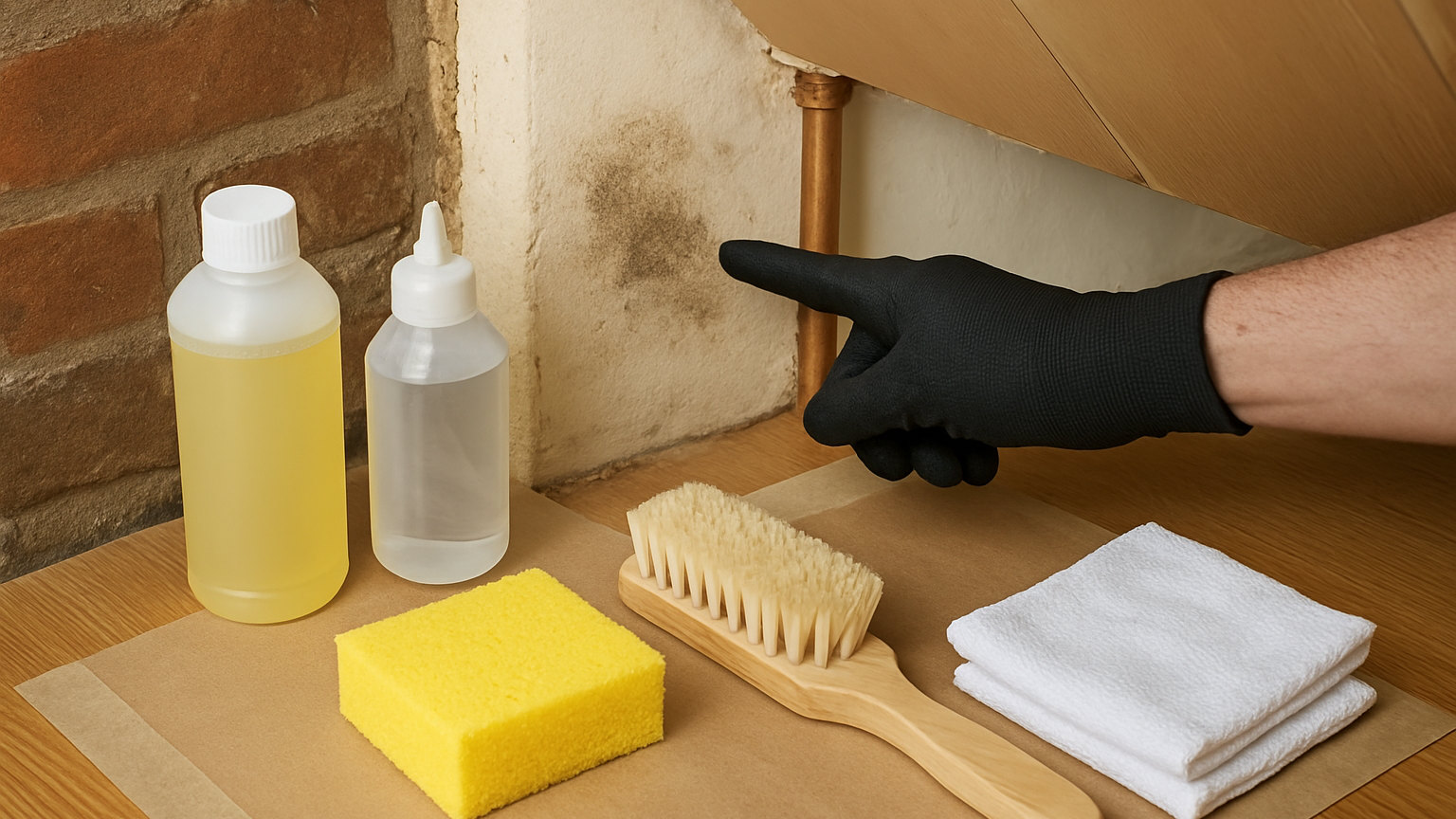
Mould. Do not just wash and paint over it.
- Wear gloves, eye protection and a P2 mask
- Treat with a proprietary fungicidal wash, following the contact time on the bottle
- Wipe rather than brush, to avoid releasing spores
- Rinse and dry thoroughly
- Find and fix the cause, which is almost always condensation from inadequate ventilation
Painting over mould without treating it means it grows back through the new paint within months.
Crayon, marker and scuffs. Wash first, then spot-prime with a shellac-based stain block, since these bleed through water-based paint.
Distemper or limewash on old walls comes off on a wet finger as a chalky residue. Modern emulsion will not stick to it. Wash it all off, or seal with a stabilising primer.
Testing adhesion
On a surface you are unsure about, paint a test patch about 300mm square and let it dry fully.
Press masking tape firmly onto it and pull off sharply. If paint comes away, the surface needs more preparation or a different primer.
If it goes wrong
New paint peeling in sheets: grease or residue underneath. Strip back, wash properly, rinse, and prime.
Brown or yellow bleeding through: nicotine or water staining. Seal with a shellac-based stain block, not another coat of emulsion.
Streaky marks after washing: dirty water ran down clean wall. Rewash the affected area from the bottom up.
Chalky residue on your hand: distemper or a very old finish. Seal with a stabilising primer.
Woodwork
Skirting, architrave and doors carry more grease and grime than walls, particularly around handles and at the bottom of doors.
Wash them with sugar soap solution, rinse, and let them dry before sanding.
Wash before you sand, not after. Sanding a greasy surface drags the grease into the scratches you have just made and contaminates them.
Pay attention to the top edge of skirting and the ledge above a door, which collect dust that then falls into wet paint.
How long the whole job takes
An average room takes an hour to an hour and a half to wash and rinse properly, plus drying time.
A kitchen takes longer because of the grease.
It is the least interesting part of decorating and the part that most reliably determines whether the paint stays on.
When you can skip it
Rarely, and there are cases: a recently decorated room in good condition, in a bedroom, with no smokers and no cooking, may need only a dust down.
Everywhere else, wash it.