
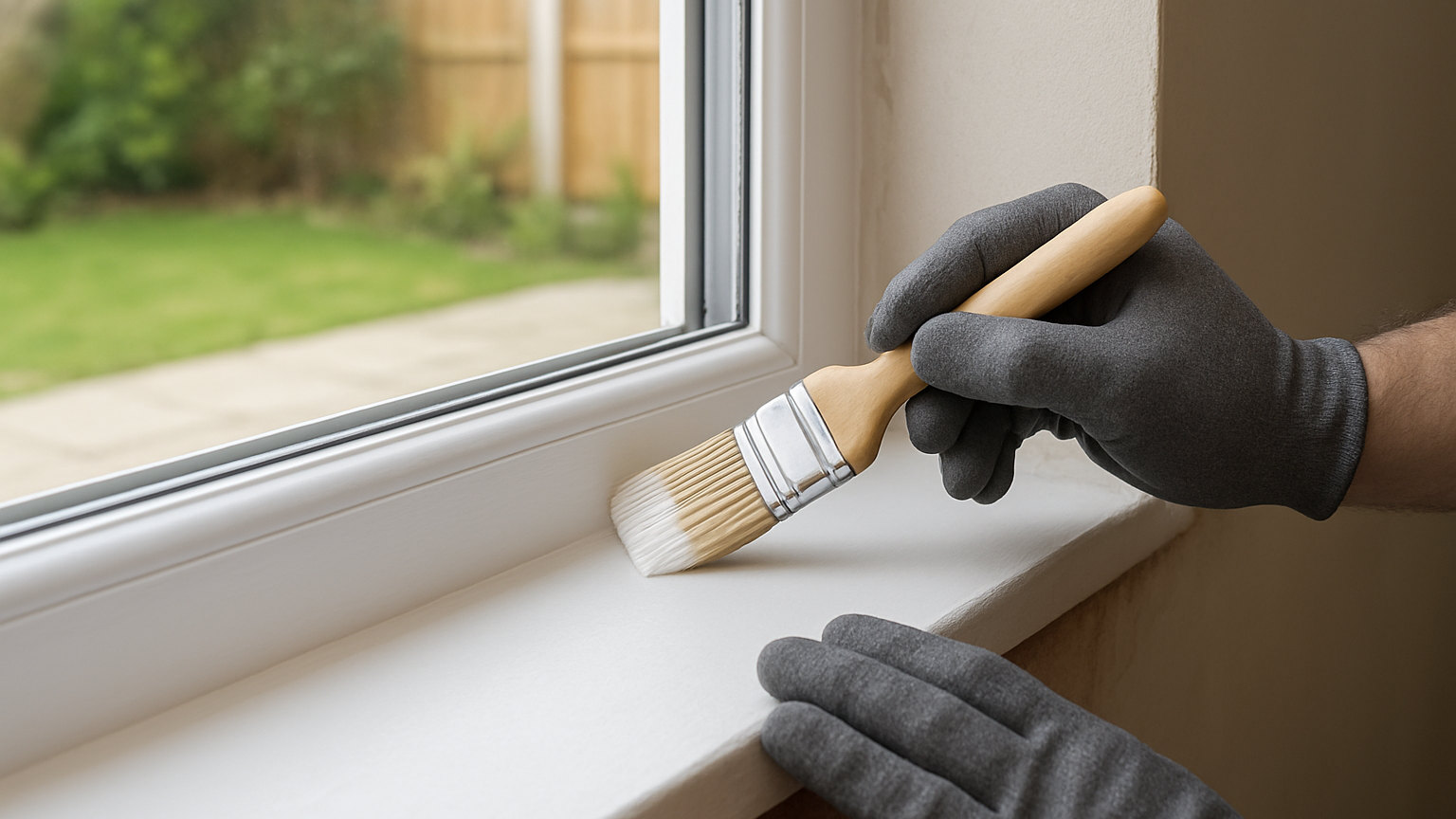
Windows produce two different damp problems that look similar: condensation on cold reveals, and water leaking in around the opening. The fixes are completely different.
Step 1: tell them apart
Condensation:
- Water on the glass, particularly in the morning
- Black mould on the sealant, the frame and the reveals
- Worse in winter, better in summer
- Worse in bedrooms and bathrooms
- Not related to rainfall
Water ingress:
- A defined damp patch, frequently below or beside the window
- Worse during and after rain, especially wind-driven rain
- Staining and tide marks on the plaster
- Blown or soft plaster
- May affect the wall below the sill
Test: watch it during heavy rain from the prevailing direction.
Condensation on windows
Glass is the coldest surface in a room, so it is where moisture condenses first.
The reveals, the returns of the wall each side of the opening, are also cold because the wall is thinner there and the lintel bridges the cavity.
What to do:
- Open the trickle vents and leave them open all year
- Air bedrooms for 10 to 15 minutes each morning
- Wipe the condensation off the glass and sill with a cloth or a window vacuum before it runs down and soaks the frame
- Keep the bathroom door shut while showering and run the extractor for 15 minutes after
- Do not dry washing on radiators under windows
- Keep low background heat rather than short bursts
- Keep curtains clear of the radiator so warm air reaches the glass
- Insulate the reveals if the problem persists
Condensation between the panes of a double glazed unit is different: the seal has failed and the unit needs replacing. Nothing you do in the room will affect it.
Water ingress: what to check outside
- The sill. Cracked, damaged, or with no fall away from the window
- The drip groove. A channel on the underside of the sill that makes water drop clear of the wall. If it is blocked with paint, render or dirt, water runs back along the underside and into the wall. Rake it clear
- The sealant around the frame. Cracked, missing or perished
- The pointing or render around the opening
- The lintel above, and any cavity tray or flashing
- Trickle vents and drainage slots in the frame, which must be clear
- The glazing seals or putty
Repairing the seal around a frame
- Cut out all the old sealant with a sharp blade and scrape the residue off
- Clean the joint and let it dry completely
- Use a low-modulus exterior frame sealant, not a general purpose product
- Cut the nozzle to suit the joint width
- Apply one continuous bead, pushing the gun along
- Tool it in one pass with a wetted tool
- Do not seal the drainage slots in the bottom of the frame
Clearing the drip groove
A simple job that solves a surprising number of damp problems below windows.
- Look at the underside of the external sill for a groove running along it
- Rake it out with a screwdriver or a raking tool
- Remove all paint, render and debris
- Where a sill has no drip groove, a proprietary plastic drip strip can be bonded on
Without a working drip groove, water runs along the underside of the sill by surface tension and into the wall.
Repairing a sill
- Timber: cut out rot back to sound wood, treat with hardener, fill with two-part exterior filler, prime and paint. Seal all end grain
- Stone or concrete: repair with a suitable mortar or repair compound, and re-form the drip groove
- Tiled sills: check the pointing and the fall
- The sill must fall away from the window, so water runs off rather than back
Mould on the sealant
Black spotting in the internal sealant is condensation, not a leak.
- Treat with a fungicidal wash and leave the contact time
- Where the mould is growing within the silicone, cleaning only removes the surface
- Cut it out and reseal with a sanitary grade silicone containing a fungicide
- Improve the ventilation, or it will return
Damp after new windows
Common, and usually condensation rather than a defect.
New windows are far more airtight than what they replaced, so the ventilation the house relied on has gone.
- Open the trickle vents
- Air rooms daily
- Check the extractor fans work
- Where there are no trickle vents, ask whether they can be retrofitted
If it goes wrong
Damp below the sill after rain: blocked drip groove, or a cracked sill.
Water inside the frame: blocked drainage slots. Clear them.
Condensation between the panes: the sealed unit has failed and must be replaced.
Mould returning on the sealant: ventilation, not the sealant.
Damp above the window: the lintel, cavity tray or flashing. Usually needs a builder.
A summary
- Establish whether it responds to rain or to heating and ventilation
- For condensation: open trickle vents, air the room, wipe the glass, insulate reveals
- For ingress: check the sill, the drip groove, the sealant and the pointing
- Clear the drip groove and the frame drainage slots
- Reseal with a low-modulus exterior frame sealant, not a general purpose one
Window vacuums and wiping
A practical measure while the underlying causes are addressed.
- Wipe or vacuum the condensation off the glass each morning before it runs down
- Water left to run soaks the frame, the sealant and the sill, which is where the mould starts
- Wring the cloth out into a sink rather than leaving it on the sill
- It takes a minute a window and makes a noticeable difference
Insulating the reveals
The reveals are frequently the coldest part of a room, since the wall is thinnest there.
Thin insulated plasterboard or a thermal board on the reveals raises the surface temperature and stops the mould, and it costs some of the opening width.


