
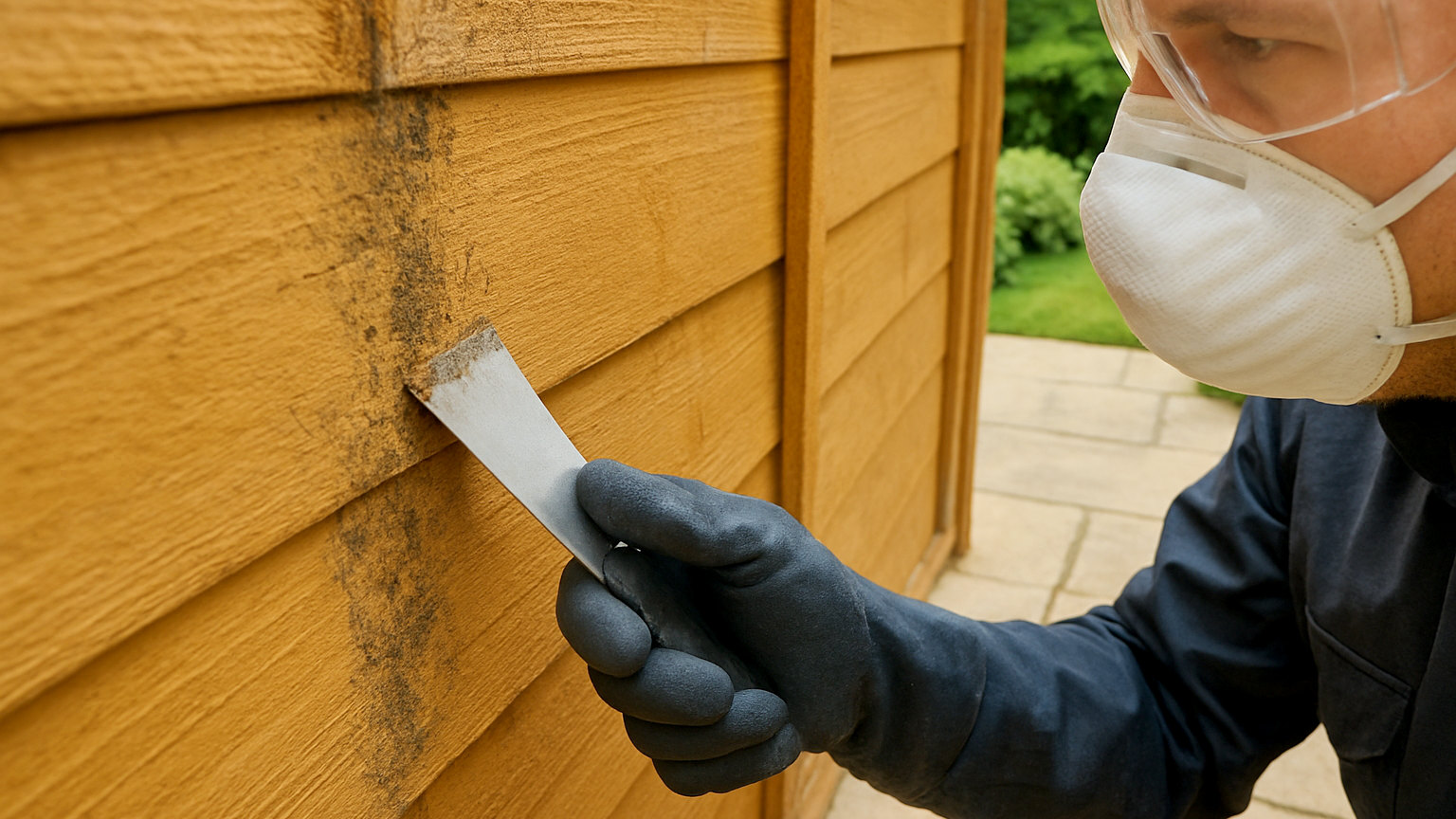
Mould on a wall is a symptom. Removing it is worth doing properly, and it will return within months unless the moisture causing it is dealt with.
Health first
Damp and mould in the home can affect health, particularly for babies and children, older people, and anyone with asthma, allergies, or a respiratory or immune condition.
Disturbing mould releases spores into the air, so cleaning it needs protection and ventilation.
If anyone in the household has a health condition that mould could affect, it is worth getting advice rather than living with it, and worth having someone else do the cleaning.
What you need
- A proprietary fungicidal wash or mould remover
- Disposable cloths, or cloths you will throw away
- An FFP2 or FFP3 disposable respirator
- Rubber gloves, ideally long ones
- Eye protection, preferably goggles rather than glasses
- Old clothes that can be washed hot, or disposable coveralls
- Plastic bags for disposal
- A bucket of clean water
- Fungicidal or anti-mould paint, for afterwards
Step 1: prepare the room
- Open the windows for ventilation, and close the internal doors so spores do not spread through the house
- Move furniture and soft furnishings out of the room, or cover them
- Take up or cover any carpet
- Keep children and pets out
- Put on the respirator, gloves and eye protection
Step 2: do not brush or vacuum it dry
Never dry brush, scrub or vacuum mould.
Dry disturbance throws spores into the air where they are breathed in and settle elsewhere in the house.
A domestic vacuum cleaner will not retain the spores and simply distributes them.
Step 3: clean it
- Apply the fungicidal wash directly to the mould, following the product instructions
- Leave it for the stated contact time, which is what actually kills the mould. Wiping it straight off does very little
- Wipe gently with a disposable cloth, working from the outside of the patch inwards so you do not spread it
- Put used cloths straight into a plastic bag and seal it
- Use a fresh cloth for each area
- Rinse the surface with clean water and a clean cloth
- Let it dry thoroughly
- Repeat where the mould was heavy
Why not bleach
Household bleach is widely used and is not the best choice.
- Bleach is mostly water, so it adds moisture to a surface that already has too much
- On porous surfaces such as plaster and grout, it bleaches the colour out of the mould without killing what is below the surface, so it looks clean and returns
- It gives off fumes and irritates skin, eyes and airways
- Never mix bleach with ammonia or with any other cleaning product, which produces toxic gases
A proprietary fungicidal wash is designed for the job and is not expensive.
Step 4: dispose of it properly
- Seal all cloths, wipes and disposable items in a bag and put it straight in the outside bin
- Wash any reusable clothing on a hot cycle, separately
- Do not shake anything out indoors
- Wash hands thoroughly afterwards
Step 5: soft furnishings and clothes
- Mould-affected clothing and bedding: wash hot where the fabric allows, or specialist clean
- Curtains: wash or dry clean
- Heavily affected soft furnishings, mattresses and carpet underlay frequently cannot be salvaged
- Do not simply dry them out and put them back in the same place
Step 6: fix the cause
This is the only part that stops it returning.
- Work out which type of damp it is: condensation, penetrating or rising
- Condensation, which is most likely: improve ventilation, reduce moisture at source, and keep surfaces warmer
- Move furniture away from cold external walls
- Check the extractor fans actually work
- Open trickle vents
- Fix any leak or external defect
Step 7: redecorate
- Make sure the wall is completely dry
- Treat the area with a fungicidal wash again as a precaution
- Apply a stain-blocking primer if there is staining
- Use an anti-mould or fungicidal emulsion, particularly in bathrooms and kitchens
- Paint the whole wall rather than the patch
Anti-mould paint slows regrowth. It does not fix the underlying moisture.
When to get help
- Mould covering a large area, roughly more than a square metre
- Mould behind or inside the structure rather than on the surface
- Anyone in the household with a relevant health condition
- Mould that returns quickly despite cleaning and improved ventilation
- If you rent: report it to the landlord in writing, with photographs and dates
If it goes wrong
Mould back within weeks: the moisture source has not been addressed.
Stain remains after cleaning: use a stain-blocking primer before repainting.
Mould inside a wardrobe or on clothes: a cold external wall with no air movement. Move the furniture out.
Cleaning made you feel unwell: stop, ventilate, and use proper respiratory protection or get someone else to do it.
Mould under wallpaper or behind panelling: strip it back and address the wall itself.
Preventing regrowth
- Improve ventilation: open trickle vents, run extractor fans with an overrun
- Reduce moisture at source: dry washing outside or in one ventilated room
- Move furniture at least 50mm off external walls
- Keep low background heat rather than short bursts
- Monitor humidity with a hygrometer and aim for 40 to 60 per cent
- Check for and fix any leak or external defect
Cleaning alone buys a few months. The list above is what makes it stop.
Vinegar and other remedies
White vinegar is frequently suggested and is better than bleach on porous surfaces, since it penetrates rather than just bleaching the colour out.
It is less effective than a proprietary fungicidal wash, and it still adds moisture.
For a small area it is a reasonable option. For anything significant, use the product designed for the job.


