
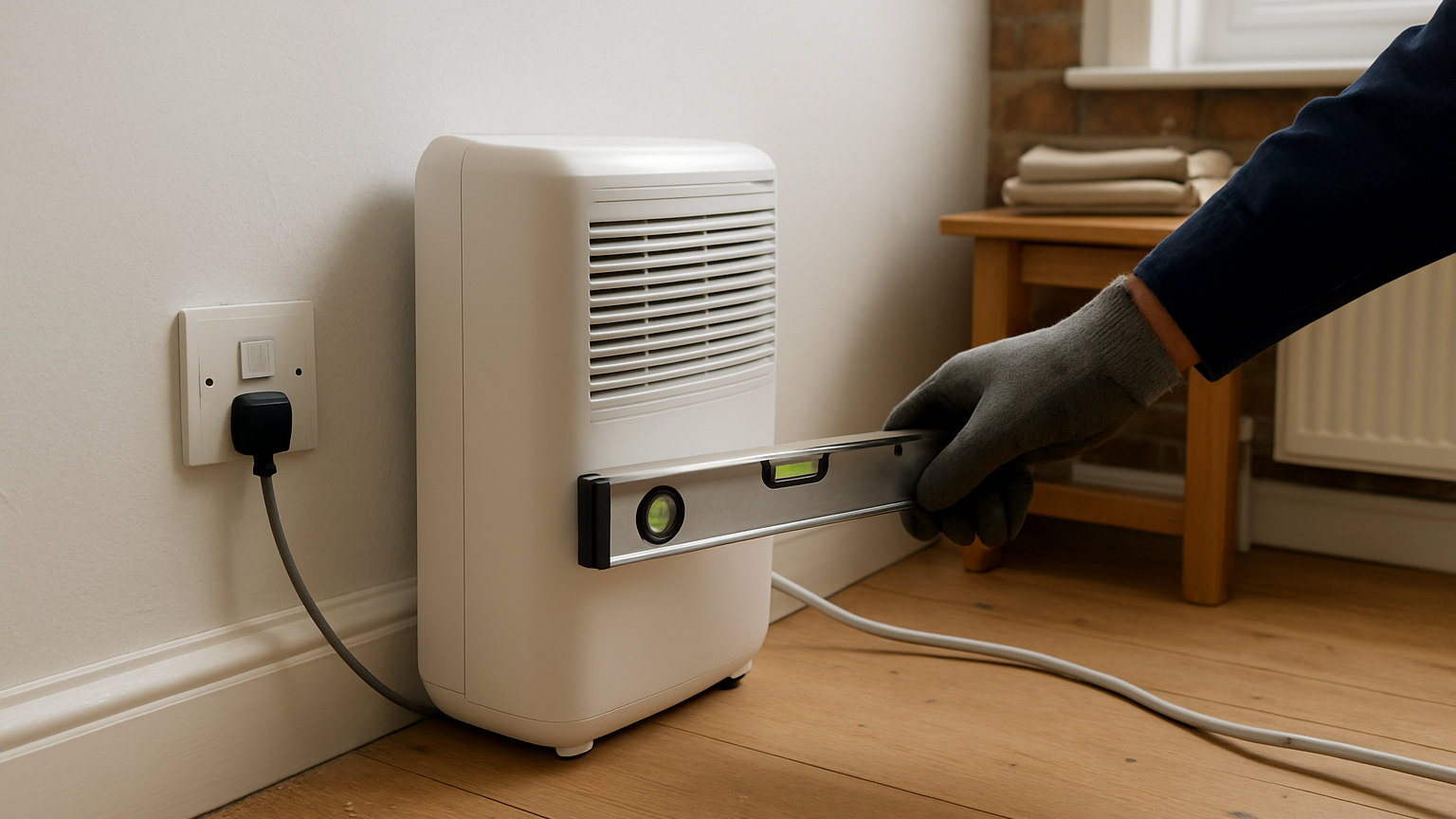
A dehumidifier removes water from the air and collects it in a tank. It is a useful tool for specific jobs and it does not address why the air is moist in the first place.
What it is good for
- Drying washing indoors, which is the single most useful application. It captures the moisture the washing releases
- Drying out a wall or a room after a leak or flood
- A specific problem room that cannot be ventilated well
- Unheated spaces such as a garage, cellar or caravan
- Winter, when opening windows is unappealing
What it will not do
- It does not fix penetrating or rising damp, both of which introduce water through the structure
- It does not replace ventilation, which also removes stale air and pollutants
- It does not warm cold surfaces, which is half of the condensation equation
- It does not work well in a cold room, depending on the type
Treat it as a tool alongside ventilation and heating, not instead of them.
The two types
Refrigerant, also called compressor. Cools a coil so moisture condenses onto it.
- Efficient in warm rooms, above about 15 degrees
- Performance drops sharply in the cold
- Cheaper to run in a heated house
- Heavier and generally noisier
- The usual choice for a normally heated home
Desiccant. Uses an absorbent wheel rather than cooling.
- Works well in cold rooms, down to a few degrees
- Lighter and quieter
- Uses more electricity for the same water removed
- Gives out some warmth, which is useful in a garage or a cold utility
- The choice for unheated spaces
Sizing
Rated by litres of water extracted per day under test conditions.
- 10 to 12 litres: one or two rooms, a small flat
- 16 to 20 litres: an average family house, or serious laundry drying
- 25 litres and above: a large house or drying out after a flood
The quoted figure is achieved under warm humid test conditions and real-world extraction is lower, so err upward.
Step 1: set it up
- Place it centrally in the room, with clear space around the inlet and outlet
- Keep it away from walls and furniture, typically 200 to 300mm clear
- Close the windows and doors of the room being treated, or it will simply dehumidify the outside
- Set the target humidity to 50 per cent, or 45 to 55
- Let it run until it reaches the target, then it will cycle
Setting it lower than 40 per cent wastes electricity and makes the room uncomfortably dry.
Step 2: use it for laundry
The application where it earns its keep.
- Put the airer and the dehumidifier in one room
- Close the door and the window
- Use the laundry mode if it has one, which runs continuously rather than to a humidity target
- Point the outlet airflow at the washing where the machine allows
- Empty the tank as needed, or it stops
A load of washing releases around two litres of water. Dried in a closed room with a dehumidifier, that water ends up in the tank rather than on the walls.
Step 3: the tank and drainage
- Most units stop automatically when the tank is full
- Empty it regularly; it fills faster than expected at first
- For continuous use, most models take a drain hose to a sink or a drain, which removes the emptying entirely
- The hose must run downhill throughout
Running costs
- Typical domestic units draw between 150 and 500 watts
- They cycle rather than running constantly once the target is reached
- Desiccant models use more electricity for the same water removed
- Running one in a closed room to dry washing is generally cheaper than a vented tumble dryer, and slower
- Check the wattage on the plate and work it out at your own unit rate
Step 4: measure the result
Use a hygrometer, which costs very little.
- Aim for 40 to 60 per cent relative humidity
- Above 65 per cent sustained encourages mould
- Watch how the reading responds to cooking, showering and the dehumidifier running
Measuring turns the whole problem from guesswork into something you can manage.
Maintenance
- Clean the filter every few weeks; a blocked filter cuts performance
- Empty and rinse the tank regularly to prevent it going stale
- Keep the vents clear
- Store it upright, and let a refrigerant model stand upright for a few hours before use after being moved
If it goes wrong
Collecting very little water: the room is too cold for a refrigerant model, or the door and windows are open.
Running constantly: moisture is entering faster than it can remove it. Look for a leak, penetrating damp, or a window left open.
Damp returns as soon as it is switched off: it is masking a problem rather than solving one. Reassess the cause.
Noisy: refrigerant models are, particularly at night. A desiccant model is quieter.
Tank filling constantly in one room: that room has a specific source. Investigate rather than just emptying it.
Drying out after a leak
The situation where a dehumidifier is most valuable.
- Fix the leak first
- Remove wet carpet, underlay and any wet insulation
- Lift skirting where water has got behind it
- Close the room and run the dehumidifier continuously, with a drain hose if possible
- Add gentle background heat, which helps considerably
- Use a moisture meter to confirm progress rather than guessing
- Expect weeks rather than days for a soaked wall
A summary
- Refrigerant for heated rooms, desiccant for cold spaces
- Size generously, since real-world extraction is below the quoted figure
- Close the room being treated
- Set the target to around 50 per cent
- Use it for indoor washing, which is where it earns its keep
- Treat it as a tool alongside ventilation, not instead of it


