
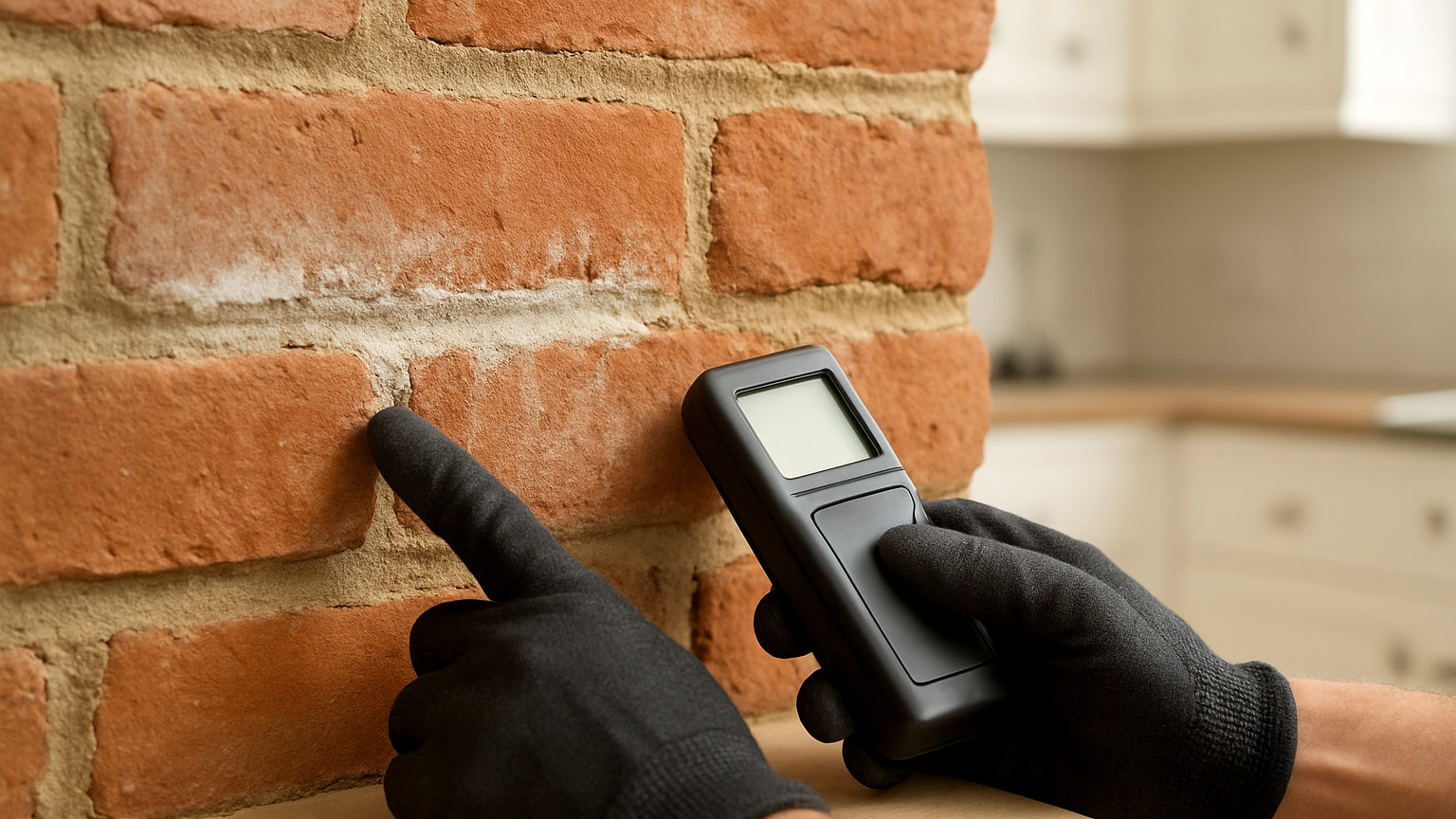
Damp is one of the few household problems where the person diagnosing it frequently also sells the cure. That is worth knowing before you pick up the phone.
When you can manage without one
- Black mould in corners and on window reveals, worse in winter: almost certainly condensation. Address ventilation, heating and moisture at source first
- A damp patch that appeared suddenly with no weather pattern: look for a leak
- Damp below a window after rain: check the sill and the drip groove
- Damp behind a wardrobe on an external wall: move the furniture
- An overflowing gutter above a damp patch: clear the gutter
Try the free and cheap measures first. A great deal of household damp resolves with ventilation and gutter clearance.
When a survey is worth paying for
- Damp that persists after ventilation and external maintenance have been addressed
- You are being quoted for injection, replastering or tanking
- A pre-purchase survey has flagged damp and recommended a specialist report
- Damp with structural implications: rot, movement, failed lintels
- An older, solid-walled or listed building, where the wrong treatment causes harm
- You have had treatment already and the damp has returned
- A dispute with a contractor, a landlord or an insurer
The problem with a free survey
Many damp companies offer a free survey and then quote for the work.
- The surveyor's employer benefits if remedial work is recommended
- Diagnosis is frequently based on conductance meter readings alone, which are affected by salts and metal and are not a measurement of water
- Injection and replastering is a standard recommendation regardless of the actual cause
- Condensation, which is by far the most common cause, produces no work for a damp proofing contractor
A free survey is a useful second data point. It is not an independent diagnosis.
What an independent survey looks like
Commission someone with no financial interest in the remedial work.
- A chartered building surveyor with damp and timber experience
- Or an independent damp and timber surveyor who explicitly does not carry out remedial work
- Expect to pay a fee, typically a few hundred pounds
- Check the qualification and ask directly whether they or any associated company undertake the repairs
What a good report contains
- A description of the property, its construction and its age
- External inspection findings: ground levels, DPC, drainage, pointing, render, roof
- Internal findings room by room
- Readings recorded with their locations, and an explanation of what they mean and their limitations
- Environmental readings: relative humidity, air and surface temperatures
- A reasoned diagnosis that explains why the evidence points to that cause
- Consideration and elimination of the alternatives
- Recommendations in order of priority, starting with the cheapest and most likely
- Photographs
A report that lists meter readings and recommends injection without explaining why the alternatives were ruled out is not a diagnosis.
Questions to ask before commissioning
- Do you or any associated company carry out remedial work?
- What qualifications do you hold?
- What methods do you use beyond a conductance meter?
- Will the report explain how you ruled out condensation and penetrating damp?
- Will I get photographs and recorded readings?
- What is the fee, and what does it include?
Before the surveyor arrives
Preparation makes the visit far more productive.
- Move furniture away from the affected walls
- Write down when the damp appears and what it responds to: rain, season, heating
- Photograph it at its worst, with dates
- Note any recent works: new windows, insulation, a new patio, render, a loft conversion
- Have deeds, previous reports and any guarantee paperwork available
- Provide access to the loft and to the external walls
Getting a second opinion
Worth it whenever significant expenditure is proposed.
- Two contractors will frequently give two different diagnoses
- An independent surveyor gives a third view with no interest in the outcome
- The cost of a survey is small against a full injection and replastering job
- Take advice before agreeing to anything on the day of a visit
Guarantees
- Damp proofing guarantees are common and vary considerably in what they cover
- Many are worthless if the contractor ceases trading, unless independently insured
- Check whether the guarantee is insurance backed
- Check whether it transfers on sale
- Read what is excluded, which is frequently more informative than what is included
If you rent
Report damp and mould to the landlord or the managing agent in writing, keeping a copy.
Include photographs with dates and a description of when it occurs.
Keep a record of every report and every response.
Damp and mould can affect health, particularly for children, older people and anyone with a respiratory condition, so it is worth pursuing rather than living with.
If it goes wrong
Two contractors disagree: get an independent survey from someone who does no remedial work.
Treatment did not work: the diagnosis was probably wrong. Start again with an independent assessment.
Pressured to sign on the day: do not. Take the quote away and get a second opinion.
Report gives readings but no reasoning: ask for the reasoning, or commission a better report.
A summary
- Try ventilation, gutter clearance and ground levels before commissioning anything
- A free survey from a contractor is a sales visit, not a diagnosis
- Pay for an independent surveyor with no interest in the remedial work
- Expect reasoning, not just readings
- Get a second opinion before any significant expenditure
What a survey typically costs
An independent damp and timber survey is usually a few hundred pounds, depending on the property and the travel involved.
Set against a full injection and replastering job, which runs into thousands, that is a small proportion to spend on getting the diagnosis right.
It is also the only part of the process where the person advising has no interest in the answer.


