
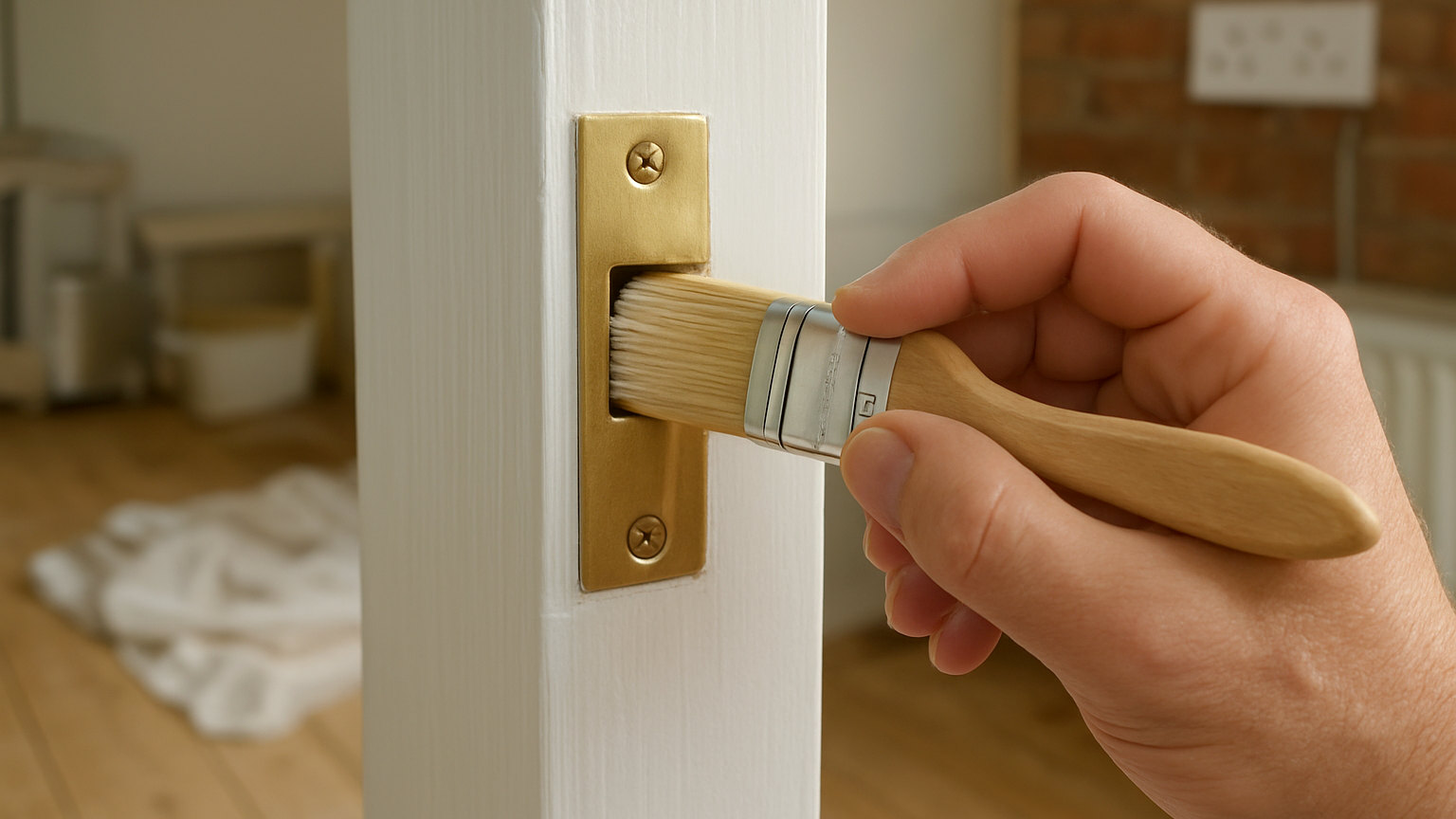
A door that will not latch is almost always a small misalignment between the latch and the striking plate. Finding out by how much and in which direction is the whole job.
Step 1: find where it strikes
Three methods, in order of usefulness.
The lipstick method:
- Put a smear of lipstick, chalk or a marker on the end of the latch bolt
- Close the door firmly against the frame
- Open it and look at the striking plate
- The mark shows exactly where the latch is hitting
Visual check: close the door slowly and look through the gap with a torch to see where the latch meets the plate.
Wear marks: look for a bright rubbed area on the plate, which shows where the latch has been catching.
Step 2: read the direction
- Latch hitting above the hole: the door has dropped, or the frame has risen
- Latch hitting below the hole: the door has lifted, or the plate has moved down
- Latch not reaching the plate: the door is not closing far enough; the plate needs moving in, or the stop adjusting
- Latch reaching but the door rattles: too much play; the plate needs moving out slightly
- Latch catches then springs back: the plate lip is bent or the latch is sticking
Step 3: check the hinges first
If the door has dropped, correcting the hinges is better than moving the plate.
- Lift the handle edge of the open door and feel for movement
- Tighten every hinge screw
- Replace one screw per hinge with a 60mm screw into the structure behind the frame
- Repair any spinning screw holes with glued dowel
- Retest before touching the plate
A door that has dropped 2mm will latch again once the hinges are pulled back up.
What you need
- Screwdrivers
- A sharp chisel and a mallet
- A round or flat file
- A marking knife or a sharp pencil
- Wood glue and dowels or matchsticks
- Filler, if the plate moves
- A bradawl and a drill
Fix 1: file the plate
For a misalignment of about 1 to 2mm, which is most cases.
- Remove the striking plate
- Clamp it or hold it firmly
- File the opening in the direction the latch needs to move, a little at a time
- Keep the edges square and the cut clean
- Refit and test frequently
- Where filing has enlarged the hole beyond the plate's frame, chisel the recess behind it to suit
- Deburr the filed edge so the latch runs smoothly
Filing a brass or mild steel plate is quick. A hardened plate is harder work and still possible.
Fix 2: move the plate
For a misalignment beyond about 2mm.
- Remove the plate
- Mark the new position accurately, using the latch mark as a guide
- Plug the old screw holes with glued dowel so the screws do not wander back into them
- Score the new outline with a marking knife
- Chisel the recess so the plate sits exactly flush
- Chisel or drill the mortice behind the plate so the latch has somewhere to go
- Drill pilot holes and fit
- Fill and make good the old recess, then sand and paint
Fix 3: adjust the packing behind the plate
Where the door rattles when closed, or the latch does not quite reach.
- Rattling: pack thin card behind the plate to bring it forward, reducing the play
- Not reaching: deepen the recess so the plate sits further back, or adjust the door stop
- Some plates have an adjustable or bendable lip; bending it slightly alters how far the door closes
Fix 4: the door stop
On a rebated frame the stop is part of the frame; on a planted stop it is a separate strip pinned on.
- A planted stop can be prised off carefully and refitted a millimetre or two either way
- This alters how far the door closes into the frame
- Useful where the door closes too far and the latch overshoots, or not far enough
- Work carefully with a bolster and a block, and pin and fill afterwards
Fix 5: the latch itself
- Check the latch bolt springs back freely when pressed. A sticking latch may just need lubricating
- Apply a dry PTFE or graphite lubricant rather than oil, which collects dust
- Check the handle spindle is not binding, and that the follower returns fully
- Check the latch is not painted in
- A worn latch is inexpensive to replace, and the mortice is already cut
If it goes wrong
Latches now but rattles: pack behind the plate, or fit a plate with a deeper lip.
Filed too far: pack behind the plate, or move it and fill the old position.
Screws pulling out of the new position: plug and redrill, and consider longer screws.
Latch sticks in the closed position: the latch mechanism is worn or dry. Lubricate or replace it.
Problem returns after a few months: the door is dropping again. Fix the hinges properly.
A summary
- Mark the latch bolt and close the door to see exactly where it strikes
- Check and correct the hinges before moving anything
- File the plate for a misalignment of 1 to 2mm
- Move the plate for anything larger, plugging the old holes first
- Pack behind the plate to cure rattling
- Lubricate the latch with a dry lubricant, not oil
How long it takes
Filing a plate is fifteen minutes. Moving one properly, including filling and painting the old position, is an hour or two spread over a day.


